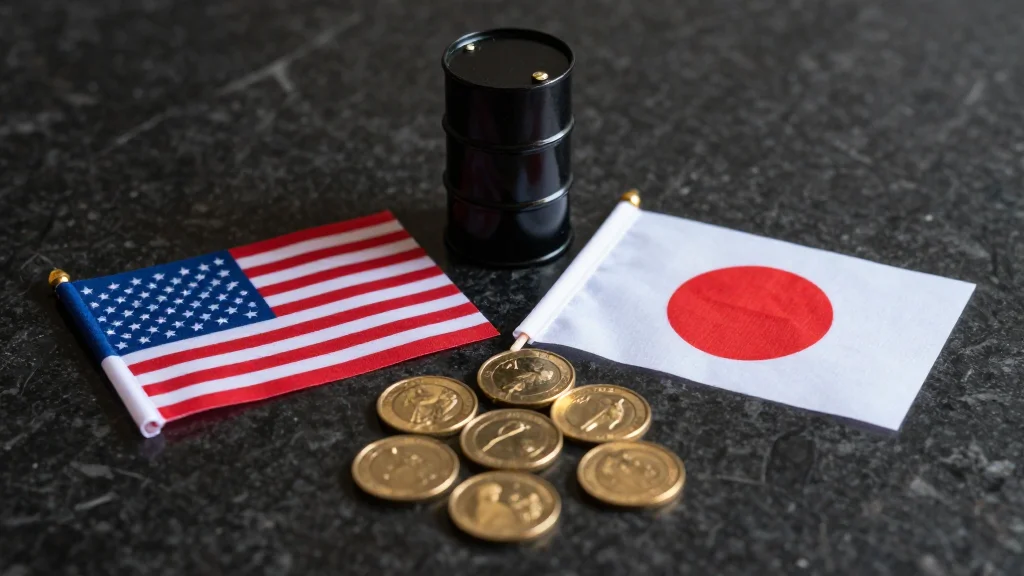
Yen Holds Near Two‑Month High as Dollar Gains on Middle East Tensions


Why It Matters
The yen’s near‑two‑month high underscores the limits of outright market intervention in a currency beset by structural headwinds. Japan’s $35 bn spend illustrates the scale of effort required to curb a steep sell‑off, yet the underlying carry trade dynamics remain unfavorable. Meanwhile, the dollar’s modest gain highlights how geopolitical risk continues to dominate global capital flows, reinforcing its role as the primary safe‑haven asset. For investors, the interplay between intervention, risk sentiment, and commodity price shocks will dictate positioning across major FX pairs and influence broader asset‑class allocations. A prolonged Middle East standoff could keep oil prices elevated, sustaining inflation pressures worldwide and prompting central banks—particularly the RBA and the Federal Reserve—to adopt tighter monetary stances. Such policy tightening would further widen yield differentials, reinforcing the dollar’s appeal and keeping the yen under pressure. Conversely, any diplomatic breakthrough could revive risk appetite, prompting a rotation out of the dollar and into higher‑yielding currencies, testing the durability of Tokyo’s intervention.
Key Takeaways
- •Yen steadied at 157.22 per dollar, near two‑month peak.
- •Tokyo likely spent about $35 bn buying yen to curb sell‑off.
- •Dollar index rose to 98.45 as safe‑haven demand surged.
- •Brent crude held above $113 per barrel amid Gulf strikes.
- •RBA expected to raise rates for a third straight meeting.
Pulse Analysis
The latest FX moves reveal a classic tug‑of‑war between policy‑driven market support and deep‑seated structural imbalances. Japan’s hefty $35 bn intervention mirrors past attempts to arrest rapid yen depreciation, yet history shows such actions provide only temporary relief when the fundamental carry trade remains unattractive. The yen’s proximity to the psychologically sensitive 160 level adds a layer of political risk; any breach could trigger sharp short‑covering, but sustained intervention would strain the Ministry of Finance’s reserves.
On the other side, the dollar’s modest rally is less about domestic strength and more about the global risk premium. The Middle East conflict has re‑ignited safe‑haven flows, a pattern that typically benefits the greenback and depresses risk‑on currencies like the Australian dollar and emerging‑market units. As long as the Strait of Hormuz remains a flashpoint, oil‑price volatility will keep inflationary pressures alive, prompting central banks to stay hawkish. This environment supports a higher‑yielding dollar and could see the yen further pressured if Japan does not adjust its ultra‑low‑rate stance.
Looking ahead, the market’s next inflection point will likely be a combination of geopolitical resolution and monetary policy cues. A de‑escalation in the Gulf could lift risk appetite, prompting a dollar pullback and testing the yen’s resilience. Simultaneously, the RBA’s upcoming decision will set the tone for the broader Asia‑Pacific FX arena; a more aggressive stance could buoy the Australian dollar, creating a counterweight to the dollar’s safe‑haven narrative. Investors should monitor these dual drivers closely, as they will dictate short‑term volatility and longer‑term positioning across the currency spectrum.
Yen Holds Near Two‑Month High as Dollar Gains on Middle East Tensions
Comments
Want to join the conversation?
Loading comments...