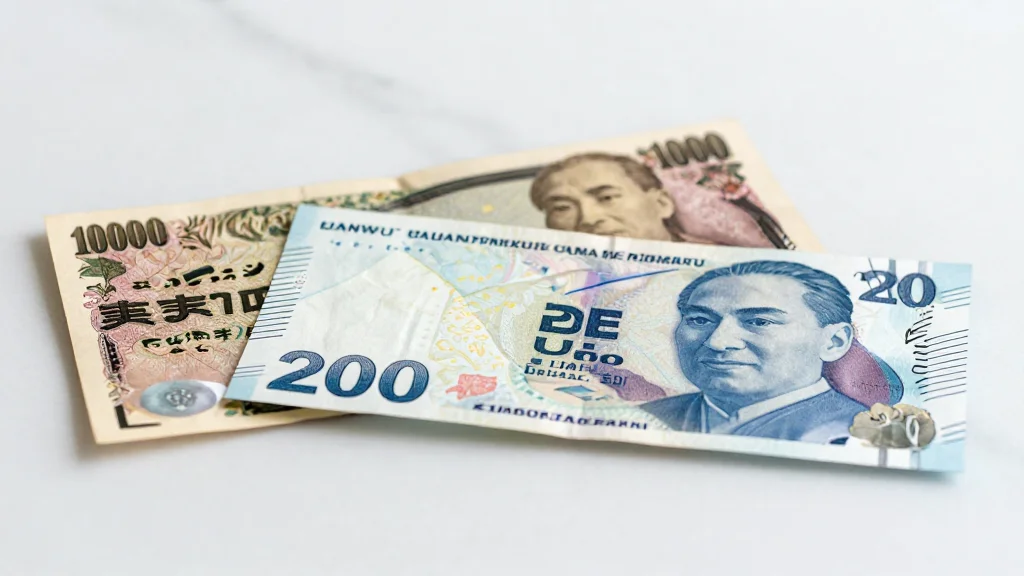
Yen Slides Below Lira, Becomes World's Weakest Currency Amid Japan's Debt Burden

Companies Mentioned
Why It Matters
The yen’s slide below the lira reshapes global currency hierarchies, signaling that traditional safe‑haven assets can lose their appeal amid structural debt and policy constraints. For multinational corporations and investors, a weaker yen raises import costs, squeezes profit margins, and alters hedging strategies across Asia. For policymakers, the episode underscores the limits of monetary tools when fiscal imbalances dominate. Japan’s inability to raise rates without jeopardizing debt sustainability may prompt a re‑evaluation of fiscal consolidation, potentially influencing other high‑debt economies facing similar dilemmas.
Key Takeaways
- •Robin Brooks declares the yen the world’s weakest currency, overtaking the Turkish lira, based on REER analysis.
- •Japan’s government has intervened with roughly 10 trillion yen ($67 bn) to defend the currency since late April.
- •SMBC Nikko projects a potential annual trade deficit of about 5 trillion yen ($33 bn) if yen weakness persists.
- •Japan’s public debt exceeds 250% of GDP, limiting the BOJ’s ability to raise interest rates.
- •Rising oil prices and Middle‑East instability further pressure Japan’s trade balance and yen value.
Pulse Analysis
The yen’s descent into "world’s weakest" territory is less a sudden shock than the culmination of decades‑long structural challenges. Japan’s fiscal position—public debt over 250% of GDP—creates a fiscal‑monetary trilemma: the BOJ cannot hike rates without inflating debt‑service costs, yet low rates erode the yen’s attractiveness. The $67 bn intervention illustrates a short‑term fix that may exhaust the Ministry of Finance’s foreign‑exchange reserves if the trend continues.
Historically, safe‑haven currencies thrive on credibility and the ability to absorb shocks. The yen’s failure to rally during recent geopolitical tensions suggests a credibility gap. If the BOJ eventually opts for a modest rate increase, it could restore some confidence, but the move would need to be carefully calibrated to avoid a fiscal backlash. Alternatively, a shift toward fiscal consolidation—perhaps through targeted spending cuts or tax reforms—could provide the fiscal space needed for a more aggressive monetary stance.
Looking ahead, the yen’s weakness could catalyze a broader re‑pricing of Asian currencies. Investors may seek higher‑yielding assets, accelerating capital flows out of Japan and into emerging markets with more aggressive rate policies. The next BOJ policy meeting and the government’s budget deliberations will be critical junctures that determine whether the yen can arrest its decline or whether it will cement its place as the world’s most vulnerable currency.
Yen Slides Below Lira, Becomes World's Weakest Currency Amid Japan's Debt Burden
Comments
Want to join the conversation?
Loading comments...