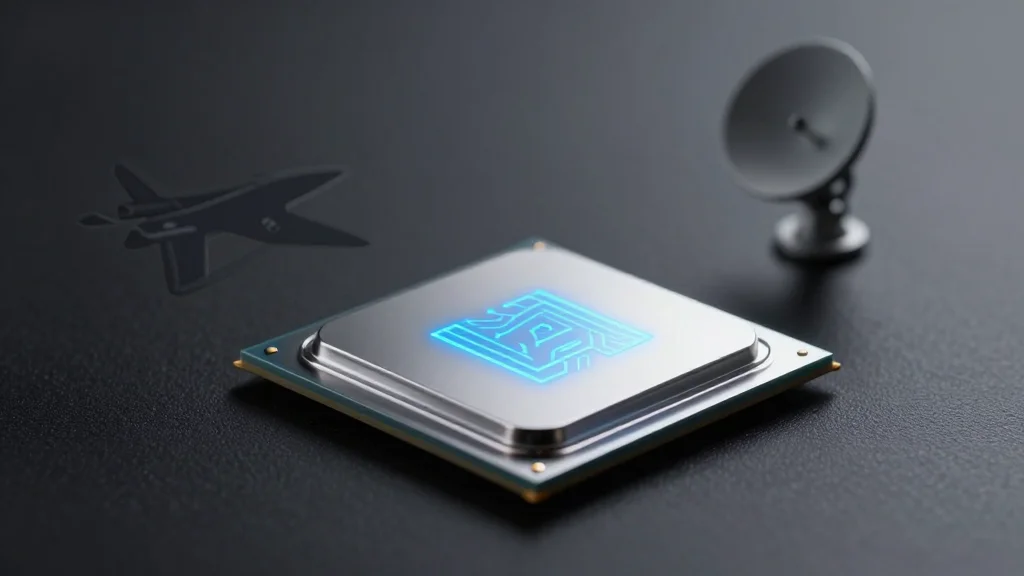
Defense Watch: DoD AI Deals, P-8 Upgrade, Drone and Counter-Drone News
Companies Mentioned


Why It Matters
Integrating frontier AI into classified networks accelerates decision‑making while the budget and contract awards signal a rapid scale‑up of U.S. warfighting capabilities across air, sea and cyber domains.
Key Takeaways
- •Pentagon signs AI agreements with SpaceX, OpenAI, Google, Microsoft, AWS, NVIDIA, Reflection
- •$350 billion of the $1.5 trillion FY2027 request is mandatory funding
- •Lockheed Martin receives up to $1.1 billion HIMARS production contract
- •Navy declares IOC for P‑8A Poseidon Increment 3 Block 2 upgrades
- •ThinKom unveils self‑funded high‑power microwave system to counter drone swarms
Pulse Analysis
The Department of Defense’s new AI partnerships mark a watershed moment for military computing. By granting secure access to leading generative‑AI platforms, the Pentagon aims to compress data‑to‑decision cycles on its most sensitive networks, enhancing situational awareness for warfighters in contested environments. This move also reflects a broader strategic shift toward leveraging commercial innovation while navigating political scrutiny, as seen in the ongoing debate over Anthropic’s involvement.
Budgetary dynamics underscore the urgency of these capabilities. With $350 billion of the $1.5 trillion FY2027 request locked in as mandatory spending, Congress is poised to fast‑track funding through a reconciliation bill, sidestepping the usual 60‑vote cloture hurdle. The infusion of capital fuels high‑profile procurements—from Lockheed Martin’s $1.1 billion HIMARS launcher order supporting allies across the Indo‑Pacific, to the Navy’s P‑8A Poseidon Increment 3 Block 2 upgrades that bolster anti‑submarine warfare with advanced sensors and secure communications. These investments collectively reinforce the United States’ ability to project power and maintain maritime dominance.
Parallel advances in unmanned and counter‑UAS technologies illustrate a layered approach to future combat. Companies like ThinKom are fielding self‑funded high‑power microwave systems capable of neutralizing drone swarms without prior target data, while HII and L3Harris deliver autonomous torpedo‑tube launch and recovery solutions for underwater vehicles. Such innovations, coupled with emerging autonomous cargo drones from Pyka and Israel’s AIR, expand logistical reach and resilience in contested environments. Together, these developments signal a rapid convergence of AI, autonomous systems, and high‑budget modernization that will shape the next decade of defense strategy.
Defense Watch: DoD AI Deals, P-8 Upgrade, Drone and Counter-Drone News
Comments
Want to join the conversation?
Loading comments...