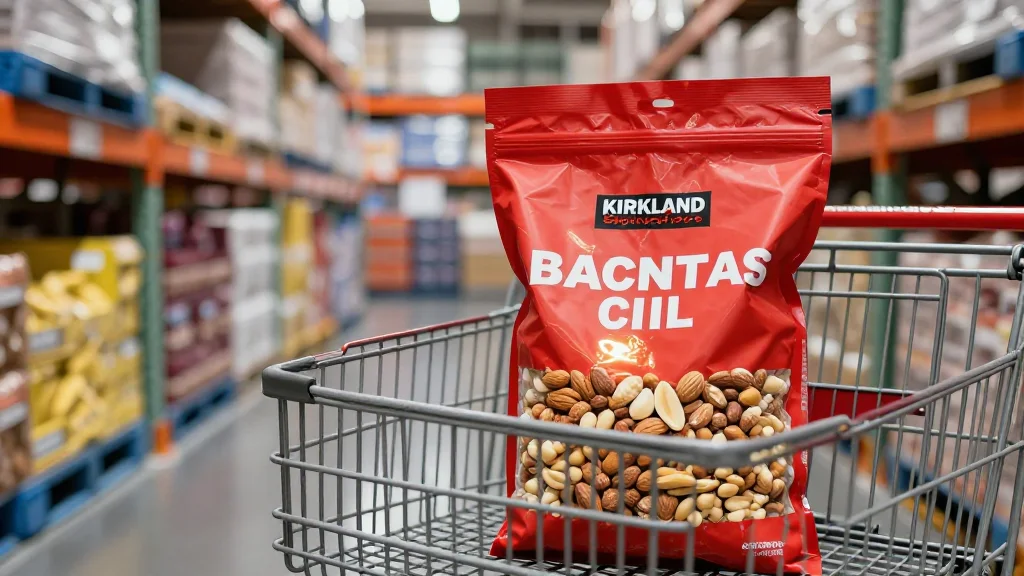
Costco Posts Blowout FY2026 Q3 Earnings and Slashes Kirkland Prices

Companies Mentioned
Why It Matters
Costco’s dual strategy of delivering robust earnings while cutting prices on its flagship private‑label line signals a shift in the retail pricing playbook. By using earnings‑call momentum to announce tangible price relief, the company reinforces its brand promise of maximum member value, a differentiator that could pressure competitors to follow suit. The move also tests the elasticity of demand for Kirkland products, offering a real‑time case study on how price adjustments affect both volume and margin in a high‑inflation environment. For investors, the earnings beat coupled with proactive pricing underscores Costco’s resilience and its capacity to generate growth without sacrificing its low‑price ethos. The price cuts may boost short‑term traffic and basket size, but they also raise questions about long‑term margin sustainability, especially if inflationary pressures persist. The outcome will likely influence how other big‑box retailers calibrate their own pricing and membership strategies.
Key Takeaways
- •FY2026 Q3 sales rose 11.6% YoY; EPS increased to $4.93 from $4.28.
- •Membership base grew 4.1% with renewal rates at 92.2% in North America.
- •Digital sales surged 21.5% YoY, driven by buy‑online‑pick‑up and same‑day delivery.
- •Four Kirkland Signature items saw price cuts of $1‑$10, e.g., KS Crispy Wings to $14.99.
- •CEO Ron Vachris pledged Costco will be "first to lower prices and last to raise them."
Pulse Analysis
Costco’s earnings narrative illustrates a rare blend of top‑line acceleration and strategic price moderation. Historically, the retailer has relied on membership fees and scale to protect margins, but the current inflation backdrop forces a more aggressive pricing stance. By cutting Kirkland prices, Costco is effectively leveraging its private‑label advantage to capture price‑sensitive shoppers who might otherwise drift to discount chains. This approach could set a new benchmark for value‑centric retailers, compelling competitors like Walmart and Target to re‑evaluate their own private‑label pricing tactics.
From a financial perspective, the earnings beat reflects strong operational fundamentals—membership renewal, gas‑station traffic, and digital sales—all of which are less vulnerable to short‑term macro shocks. However, the margin impact of the Kirkland cuts remains an open question. If the price reductions drive sufficient volume uplift, the net effect could be neutral or even positive for earnings. Conversely, if the cuts merely shift existing demand without expanding the basket, Costco may see margin compression that could temper future EPS growth.
Looking forward, the key metric will be the correlation between price cuts and same‑store sales growth in the next quarter. Investors should watch for any guidance on margin expectations and the company’s willingness to repeat price cuts across a broader product set. Should Costco sustain its growth trajectory while maintaining its low‑price promise, it could reinforce its moat and further entrench the membership model as a durable competitive advantage.
Costco Posts Blowout FY2026 Q3 Earnings and Slashes Kirkland Prices
Comments
Want to join the conversation?
Loading comments...