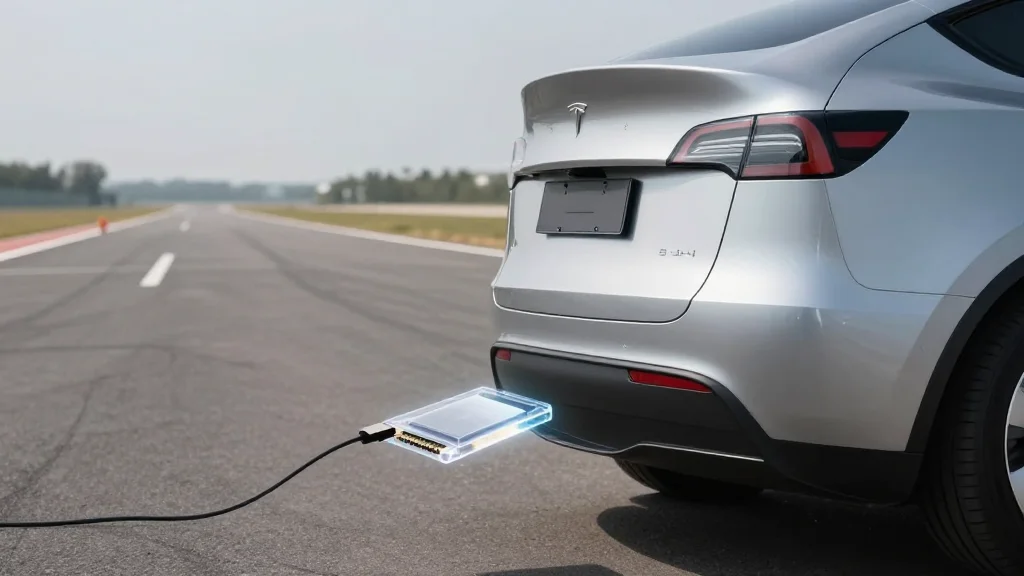
Tesla Admits HW3 Can't Deliver Unsupervised FSD, Sparking Bull‑bear Clash

Companies Mentioned
Why It Matters
The Tesla earnings call illustrates how a single technical admission can reshape market narratives and legal exposure in real time. By openly acknowledging a hardware limitation, Tesla forced analysts to reassess the sustainability of its high‑margin software promises, while investors scrambled to price in the cost of a massive retrofit program. The episode underscores the growing importance of transparency in earnings calls, especially for companies whose valuations hinge on future technology milestones. For the broader earnings‑calls ecosystem, Tesla’s experience signals that investors and regulators will increasingly scrutinize forward‑looking statements for technical feasibility. Companies may need to temper hype with concrete roadmaps, or risk triggering litigation and rating downgrades. The episode also highlights how earnings‑call disclosures can instantly shift stock dynamics, prompting analysts to adjust models and investors to recalibrate risk exposure.
Key Takeaways
- •Elon Musk said HW3 "simply does not have the capability to achieve unsupervised FSD" on the Q1 2026 earnings call
- •Tesla reported $22.4 billion in revenue, beating the $21.1 billion consensus
- •Adjusted EPS came in at 41 cents versus the 30‑cent estimate
- •Free cash flow reached $1.4 billion, aided by a $230 million warranty reserve release
- •Capex guidance rose to $25 billion, raising the cost of retrofitting HW3 vehicles
Pulse Analysis
Tesla’s Q1 earnings call has become a case study in how operational realities can overturn a company’s narrative. The HW3 confession erodes the credibility of the Full Self‑Driving promise, a cornerstone of Tesla’s software‑driven premium pricing. While the revenue beat and strong cash generation provide short‑term cushion, the long‑term valuation hinges on the ability to deliver unsupervised FSD and a profitable robotaxi fleet. The retrofit path is fraught with logistical and financial challenges; building micro‑factories in multiple cities will require capital, supply‑chain coordination, and regulatory approvals, all of which could dilute margins.
Morgan Stanley’s analysis reflects a broader market skepticism: the earnings beat is seen as a one‑off rather than a sustainable trend. The firm’s base case assigns a modest $45 per share to the core EV business, implying that the majority of Tesla’s market cap is speculative. If the HW4 rollout stalls or the robotaxi timeline slips further, the upside could evaporate, leaving the stock vulnerable to a correction. Conversely, a successful retrofit that restores confidence in FSD could reignite the premium pricing model and unlock network effects for the robotaxi service, justifying the lofty $826 bull case.
Investors should monitor three key indicators over the next quarters: the rollout speed and cost per vehicle of the HW4 retrofit, robotaxi mileage growth relative to Musk’s late‑2026 target, and any regulatory actions stemming from the HW3 admission. Each will either validate Tesla’s long‑term vision or reinforce the bearish narrative that the company’s future growth is more promise than performance.
Tesla admits HW3 can't deliver unsupervised FSD, sparking bull‑bear clash
Comments
Want to join the conversation?
Loading comments...