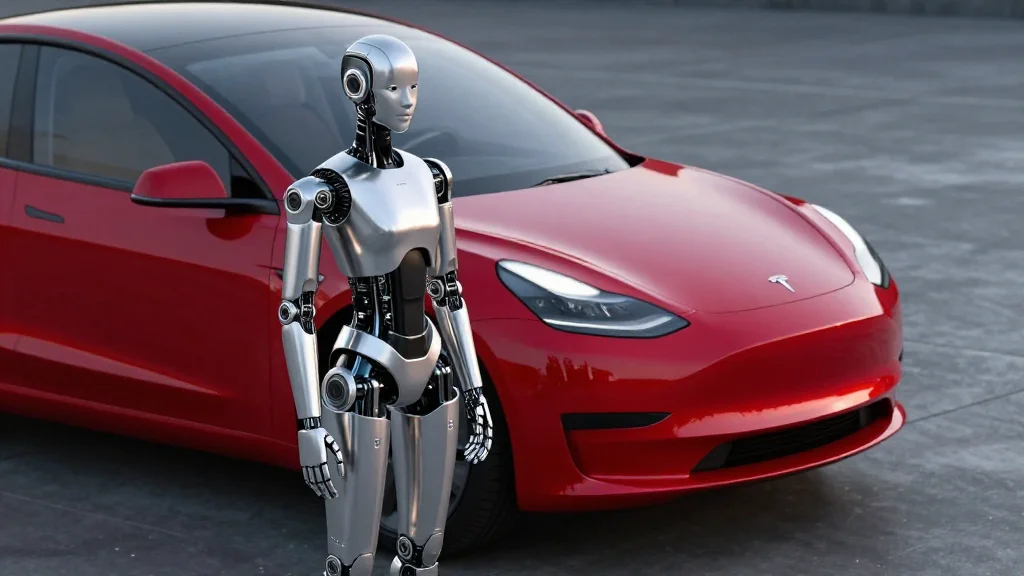
Tesla Shares Slip 2.5% in After‑Hours Despite Q1 Beat

Companies Mentioned
Why It Matters
The Tesla earnings call illustrates how forward‑looking commentary can outweigh a solid beat in the eyes of investors. Musk’s uncertainty about Optimus and the expanded $25 billion cap‑ex plan introduced a risk premium that erased the positive earnings surprise. For the broader earnings‑calls ecosystem, the episode reinforces the importance of narrative management: CEOs who temper expectations on flagship projects can trigger immediate price volatility, even when core metrics exceed forecasts. Furthermore, Tesla’s decision to withhold unsupervised full‑self‑driving updates for 4 million older vehicles signals a shift in product strategy that could affect future software revenue streams. The market’s reaction highlights how non‑financial disclosures—such as product roadmaps and capital allocation—are now integral to earnings‑call analysis, prompting investors to scrutinize every slide for hidden risk.
Key Takeaways
- •Tesla posted Q1 EPS of $0.41 vs. $0.36 estimate and revenue of $22.39 B vs. $22.28 B forecast.
- •Automotive revenue rose 16% to $16.23 B; gross margin hit 21.1%, beating the 17.7% estimate.
- •Vehicle deliveries increased 6% to 358,023 units; manufacturing output grew 13% to 408,386 units.
- •CEO Elon Musk warned Optimus robot production will be "quite slow at first" and unpredictable.
- •Capital spending guidance lifted to $25 B for 2026, up from $20 B previously disclosed.
Pulse Analysis
Tesla’s earnings call serves as a case study in how narrative risk can eclipse financial performance. The company’s core automotive metrics were robust enough to merit a 4% after‑hours rally, yet Musk’s candid remarks on the nascent Optimus line introduced a new uncertainty vector. Investors appear to be pricing in the execution risk of scaling a wholly new manufacturing process, a scenario that historically penalizes high‑growth tech firms when timelines are vague.
The $5 billion increase in cap‑ex guidance also signals a strategic pivot toward vertical integration of robotics and autonomous platforms. While this could unlock long‑term margins, the short‑term cash‑flow impact and the need to fund simultaneous vehicle production create a delicate balance. Analysts will likely adjust their discount rates for Tesla’s future cash flows, reflecting a higher perceived risk until tangible milestones—such as the first Optimus units rolling off the line—are achieved.
Finally, the decision to limit full‑self‑driving updates for older Hardware 3 vehicles may erode a recurring software revenue stream that has become a growth engine for many automakers. If the market interprets this as a sign that Tesla’s software roadmap is stalling, it could pressure the stock further. The upcoming Q2 call will be a litmus test: clear, data‑driven progress on robot production and a reaffirmed software strategy could restore confidence, while continued ambiguity may keep the stock under pressure.
Tesla Shares Slip 2.5% in After‑Hours Despite Q1 Beat
Comments
Want to join the conversation?
Loading comments...