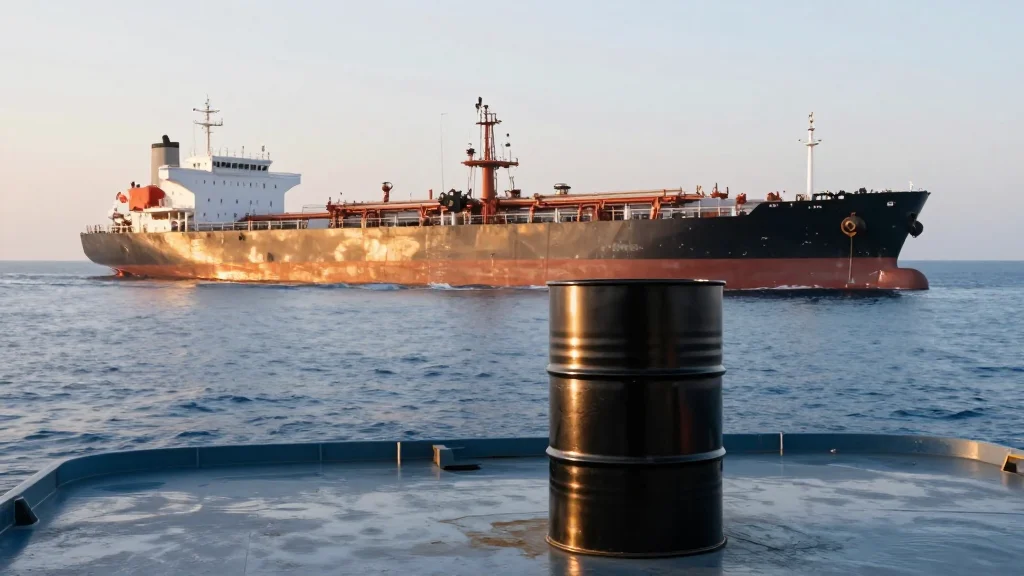
Australia’s $22 Billion Answer to the Question the Hormuz Crisis Asked
Companies Mentioned
Why It Matters
By decoupling from volatile oil imports, Australia can protect its economy from future chokepoint disruptions while meeting climate goals, positioning itself as a leader in renewable‑energy technology and critical‑minerals.
Key Takeaways
- •Australia imports 80% of refined fuel, with only 30‑day reserves.
- •$15 bn “Future Made in Australia” targets 80% renewable electricity by 2030.
- •Solar installed on one‑third of homes provides 26.8 GW rooftop capacity.
- •33.2 GW battery pipeline, 74% using grid‑forming inverters.
- •$9 bn green‑hydrogen incentives aim to replace imported jet fuel.
Pulse Analysis
The Hormuz closure in March 2026 turned a textbook supply‑chain shock into a national emergency for Australia, a nation that imports roughly 80 % of its refined petroleum and holds less than a month’s worth of reserves. Unlike most IEA members, it lacks a strategic petroleum stockpile, leaving its economy exposed to geopolitical turbulence that can instantly spike fuel prices. This vulnerability forced policymakers to view energy security through the same lens as climate resilience, prompting a rapid shift toward domestically generated power.
The $15 bn “Future Made in Australia” package is a bold industrial‑policy experiment that couples climate ambition with national‑security imperatives. By 2025, solar panels now sit on one‑third of Australian rooftops, delivering 26.8 GW of distributed generation, while a 33.2 GW battery pipeline—74 % equipped with grid‑forming inverters—aims to smooth the inevitable day‑night gap. Green‑hydrogen incentives, worth about $9 bn, target a nascent industry that could eventually replace imported jet fuel and diesel. Partnerships such as the April energy‑security accord with South Korea underline a strategic pivot toward domestic critical‑minerals processing, reducing reliance on the same Asian supply chains that once fed Australian refineries.
For investors and corporate strategists, the Australian model illustrates how geopolitical risk can accelerate clean‑energy deployment. The rapid‑install nature of solar and battery technologies offers a timeline that nuclear or fusion cannot match, making them attractive for countries with acute fuel insecurity. However, the programme’s success hinges on overcoming supply‑chain bottlenecks, scaling domestic manufacturing, and converting planned capacity into operational assets before 2030. If Australia can meet these milestones, it will not only safeguard its own economy but also showcase a replicable pathway for other import‑dependent nations seeking to turn energy vulnerability into a competitive advantage.
Australia’s $22 billion answer to the question the Hormuz crisis asked
Comments
Want to join the conversation?
Loading comments...