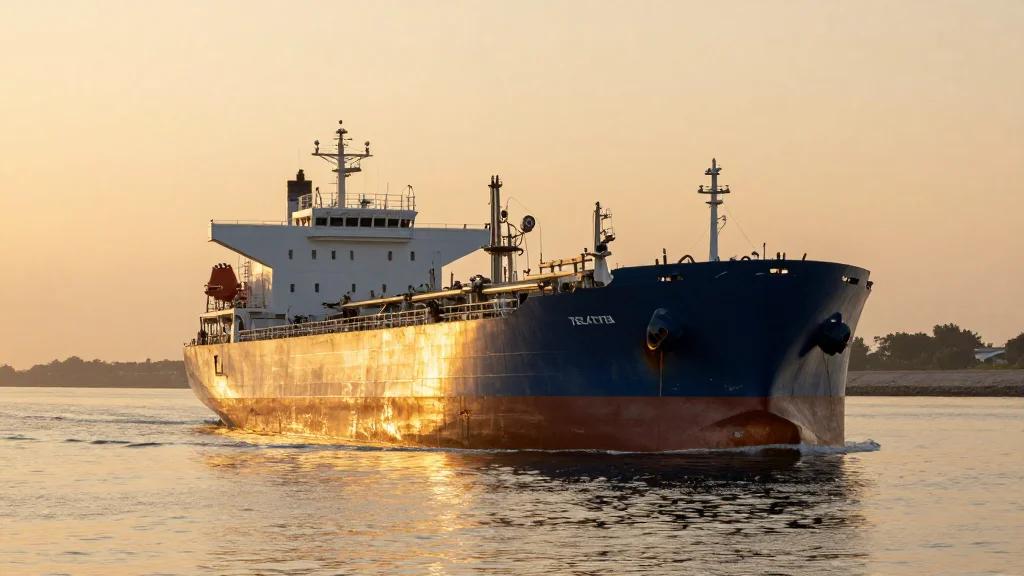
China's Crude Imports Fall 20% as Hormuz Shipments Stall, Gas Down 13%

Why It Matters
The Hormuz bottleneck illustrates how geopolitical flashpoints can instantly reverberate through the world’s largest energy consumer. A 20% drop in crude imports not only trims China’s refinery runs but also ripples through global oil markets, tightening supply and nudging prices upward. For investors and policymakers, the episode underscores the fragility of over‑reliance on narrow maritime corridors and the need for diversified sourcing strategies. Beyond immediate price effects, the crisis may accelerate China’s push for energy self‑sufficiency and greater investment in alternative supply lines, such as overland pipelines from Russia or expanded LNG infrastructure. It also places pressure on U.S. and Iranian diplomatic channels, as any prolonged disruption could force a recalibration of global oil trade flows and reshape the strategic calculus of energy‑dependent economies.
Key Takeaways
- •China’s April crude imports fell 20% YoY to 38.47 Mt, lowest since July 2022
- •Natural‑gas imports dropped 13% YoY to 8.42 Mt in the same month
- •U.S. forces disabled two Iranian‑flagged tankers on May 8, adding to blockade pressure
- •More than 50 commercial vessels were rerouted due to Hormuz restrictions
- •U.S. Secretary of State Marco Rubio warned Iran’s claim to control Hormuz is "unacceptable"
Pulse Analysis
The abrupt contraction in China’s energy imports is a textbook case of supply‑chain vulnerability when a single chokepoint accounts for a disproportionate share of global flows. Historically, Hormuz disruptions have spurred temporary price spikes, but the current convergence of military action, Iranian regulatory moves, and a lack of immediate alternative routes amplifies the shock. Chinese refiners, accustomed to a steady stream of Middle Eastern crude, now face higher freight costs and tighter cargo windows, which could compress margins and force a shift toward higher‑priced, longer‑haul supplies.
From a strategic perspective, the episode may hasten China’s long‑term diversification agenda. The country has already signaled intent to increase oil imports from Russia, Africa, and the Americas, and to expand its domestic shale and offshore production. In the gas arena, the shortfall could accelerate the build‑out of LNG import terminals and spur greater reliance on spot market purchases, potentially reshaping the pricing dynamics that have long favored long‑term contracts.
Finally, the diplomatic dimension cannot be ignored. Rubio’s public admonition of Iran’s “right to control” Hormuz and the U.S. military’s enforcement actions signal a willingness to keep pressure on Tehran, while Iran’s creation of the Persian Gulf Strait Authority suggests a parallel strategy to monetize the waterway. The outcome of these competing approaches will dictate whether Hormuz remains a flashpoint or reverts to a more predictable conduit, with profound implications for global energy stability and the balance of power in the Indo‑Pacific.
China's Crude Imports Fall 20% as Hormuz Shipments Stall, Gas Down 13%
Comments
Want to join the conversation?
Loading comments...