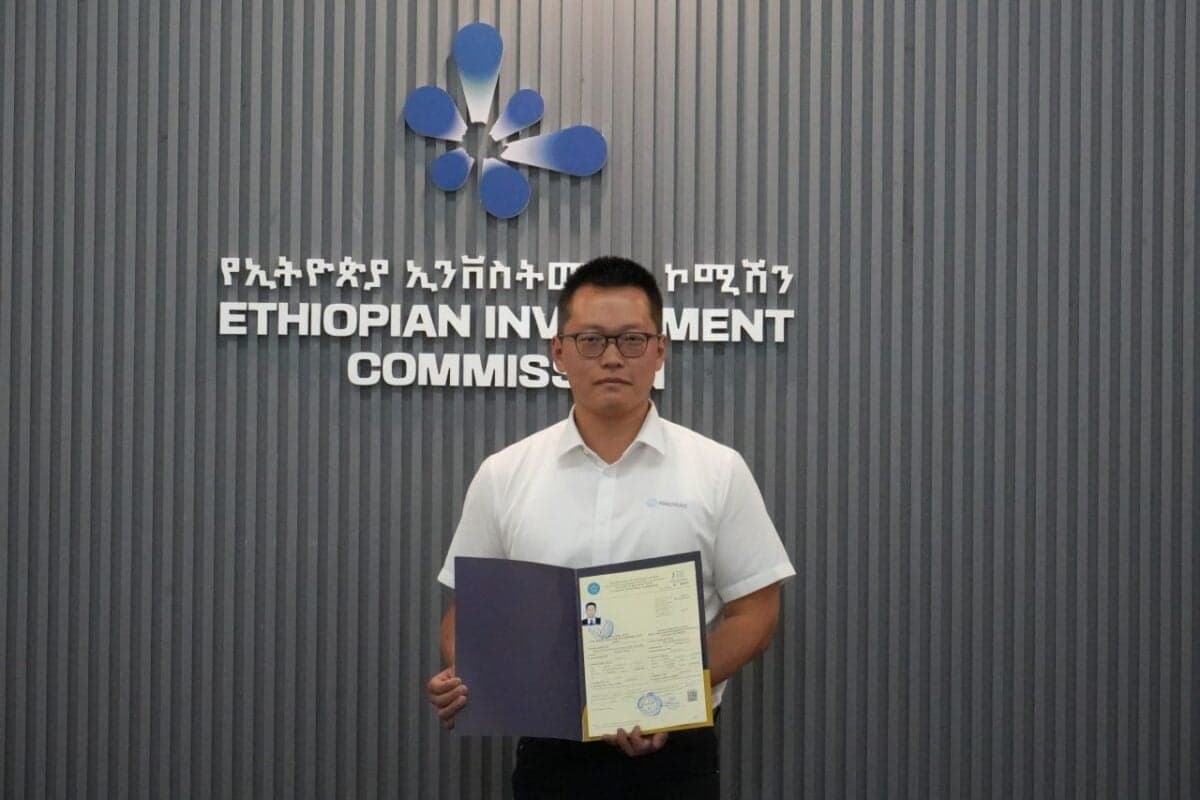
China’s Ming Yang Secures $14.1 Billion, 2.8GW Ethiopia Solar Investment
Why It Matters
The infusion of over $14 billion will accelerate Ethiopia’s renewable‑energy targets, create jobs, and position the country as a hub for green‑technology manufacturing in East Africa.
Key Takeaways
- •$14.1 billion investment makes Ethiopia’s largest renewable project.
- •First phase delivers 8.4 GW capacity: 2.8 GW solar, 5.4 GW wind.
- •$7.3 billion earmarked for green‑ammonia and equipment manufacturing.
- •Project aims to generate jobs and boost foreign‑exchange earnings.
- •Signals growing Chinese involvement in Africa’s clean‑energy sector.
Pulse Analysis
Ethiopia has been racing to close a chronic electricity gap, with demand projected to outstrip supply by more than 5 GW by 2030. The government’s 2024 Renewable Energy Strategy calls for adding 20 GW of clean capacity by 2035, emphasizing solar and wind in the arid southern and eastern regions. The Ming Yang licence aligns with those goals, offering a fast‑track route to grid‑scale generation that could shave years off planned construction timelines and reduce reliance on diesel‑fuelled plants.
Ming Yang Smart Energy Group, a leading Chinese turbine and solar‑panel manufacturer, is leveraging its expertise to deliver an 8.4 GW portfolio in the first phase, split between 2.8 GW of photovoltaic farms and 5.4 GW of on‑shore wind farms. The second phase’s $7.3 billion allocation for green‑ammonia, transmission gear, and turbine production signals a shift from pure power generation to a vertically integrated clean‑energy ecosystem. By embedding manufacturing locally, the project promises technology transfer, a skilled‑labour pipeline, and export‑ready components for neighboring markets.
The deal marks one of the largest single‑country foreign direct investments in Africa’s renewable sector, reinforcing China’s expanding footprint under its Belt‑and‑Road Initiative. For investors, the scale offers a de‑risking effect, as diversified assets—generation, ammonia, and equipment—create multiple revenue streams. Ethiopia stands to gain not only megawatts but also foreign‑exchange earnings from future ammonia exports, positioning the Horn of Africa as a potential green‑hydrogen hub. The partnership could set a template for other resource‑rich African nations seeking capital‑intensive clean‑energy projects.
China’s Ming Yang secures $14.1 billion, 2.8GW Ethiopia solar investment
Comments
Want to join the conversation?
Loading comments...