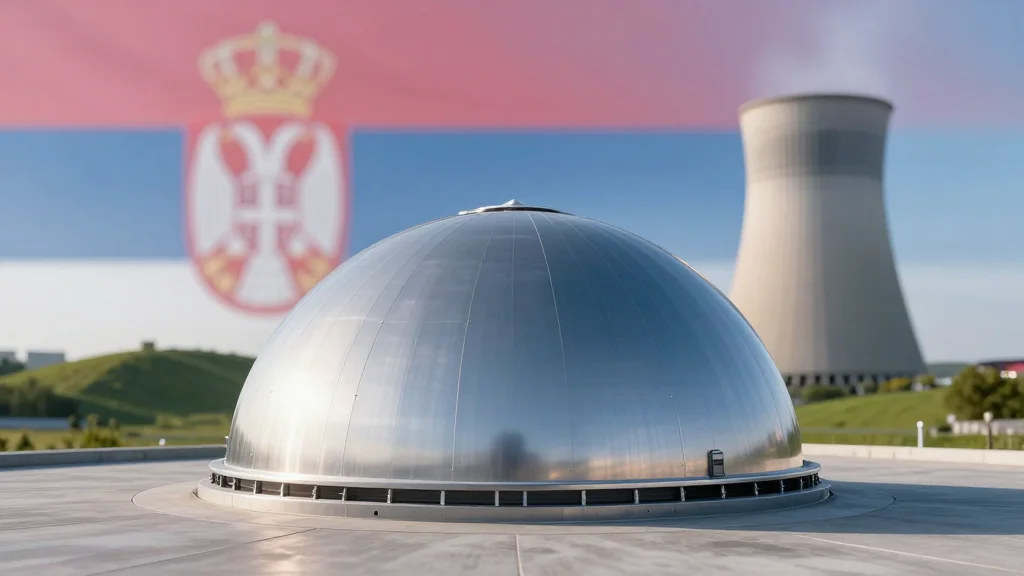
Commentary: Nuclear Needs May Shape Serbia’s Geopolitical Future
Companies Mentioned
Why It Matters
The nuclear choice will determine Serbia’s energy security, its EU accession prospects, and its geopolitical orientation between Russia and the West.
Key Takeaways
- •Serbia lifted its nuclear ban in November 2024, opening market
- •Rosatom offers low‑interest loans but faces Western sanctions and financing risks
- •France’s EDF and South Korea’s KHNP propose EU‑compatible reactor technology
- •Serbia must balance EU accession goals against historic ties to Moscow
- •Nuclear plant could make Serbia a regional electricity exporter via corridor
Pulse Analysis
Serbia’s energy mix remains heavily weighted toward coal and hydropower, leaving the country vulnerable to supply shocks and EU climate requirements. With electricity demand projected to climb sharply, policymakers view nuclear power as the most viable path to replace coal, meet the EU’s decarbonisation benchmarks, and unlock the Trans‑Balkan Electricity Corridor that could turn Serbia into a regional power hub. The strategic calculus is further complicated by the nation’s landlocked status and its reliance on imported fuels, making a domestic, low‑carbon baseload especially attractive.
The contest for Serbia’s first reactor pits Russia’s state‑run Rosatom against Western firms such as France’s EDF and South Korea’s KHNP. Rosatom brings a full suite of services and historically low‑interest financing, but its ability to deliver is increasingly constrained by sanctions, financing delays, and recent quality‑control scandals in other projects. In contrast, EDF and KHNP can tap into the EU‑backed nuclear supply chain, offering technology that aligns with Serbia’s accession ambitions, albeit potentially at higher financing costs. The choice will hinge on whether Belgrade prioritises immediate financial incentives or long‑term regulatory compatibility and political risk mitigation.
Beyond the balance sheet, the nuclear decision carries profound geopolitical weight. Aligning with Rosatom would deepen Serbia’s strategic ties to Moscow, reinforcing a historic partnership but risking further isolation as Western sanctions tighten. Conversely, a partnership with EU‑linked firms would signal a decisive tilt toward Brussels, bolstering Serbia’s EU accession narrative and fostering regional integration. The eventual deal will also influence the broader Balkan energy architecture, shaping export routes, investment flows, and the balance of influence between East and West in a region still navigating post‑Cold War realignments.
Commentary: Nuclear needs may shape Serbia’s geopolitical future
Comments
Want to join the conversation?
Loading comments...