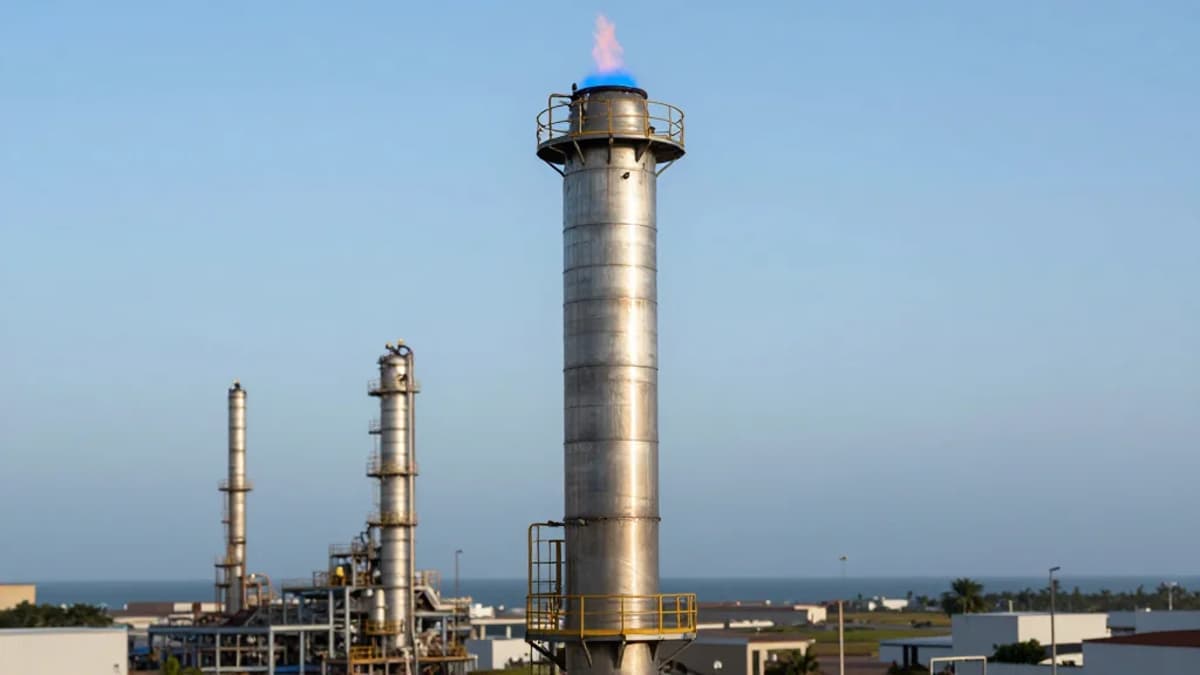
Dangote Drives Nigeria’s Domestic Fuel Supply Above 57% as Imports Retreat
Why It Matters
The refinery’s ramp‑up reduces Nigeria’s reliance on costly fuel imports, strengthening the balance of payments and stabilising domestic fuel prices. It also positions the country as a regional energy hub, attracting downstream investment.
Key Takeaways
- •Domestic output up 25% to 40.1 mln L/day
- •Petrol imports fell over 54% YoY in Q1 2025
- •Ex‑depot petrol price dropped to $0.50 per litre
- •Expansion plan targets 1.4 m bpd capacity
- •Refinery now supplies 62% of premium motor spirit
Pulse Analysis
Nigeria has long relied on imported gasoline and diesel, a vulnerability that strained the nation’s foreign‑exchange reserves and left consumers exposed to volatile global oil prices. The Dangote Refinery, now operating at its full 650,000 bpd single‑train capacity, has shifted the balance dramatically. In January 2026 the plant processed a record 40.1 million litres of crude per day, accounting for 57 % of the country’s total fuel supply and delivering 62 % of premium motor spirit. This operational milestone not only marks the world’s largest privately‑owned refinery but also signals a turning point in Nigeria’s energy self‑sufficiency.
The surge in domestic output has translated into immediate price relief. Ex‑depot petrol fell to roughly $0.50 per litre, while diesel slipped below $0.65, easing inflationary pressure on transport and logistics costs. Analysts estimate that reduced imports could save the government up to $10 billion annually in foreign‑exchange outlays. Moreover, the refinery’s growing export corridor—shipping diesel and jet fuel to Ghana, Togo and Cameroon—positions Nigeria as a regional petro‑chemical hub. These dynamics reinforce the refinery’s role in stabilising the West African fuel market and enhancing Nigeria’s trade balance.
Looking ahead, Aliko Dangote’s ambition to double capacity to 1.4 million barrels per day promises further economic dividends, including expanded petro‑chemical production and job creation. However, scaling up will require sustained investment in ancillary infrastructure, such as pipelines and storage, and careful management of feedstock quality to avoid operational bottlenecks. The refinery’s success also depends on regulatory certainty and continued government support for local content policies. If these challenges are met, the Dangote complex could become a cornerstone of Africa’s downstream sector, reducing the continent’s import dependence and attracting downstream investment.
Dangote Drives Nigeria’s Domestic Fuel Supply Above 57% as Imports Retreat


Comments
Want to join the conversation?
Loading comments...