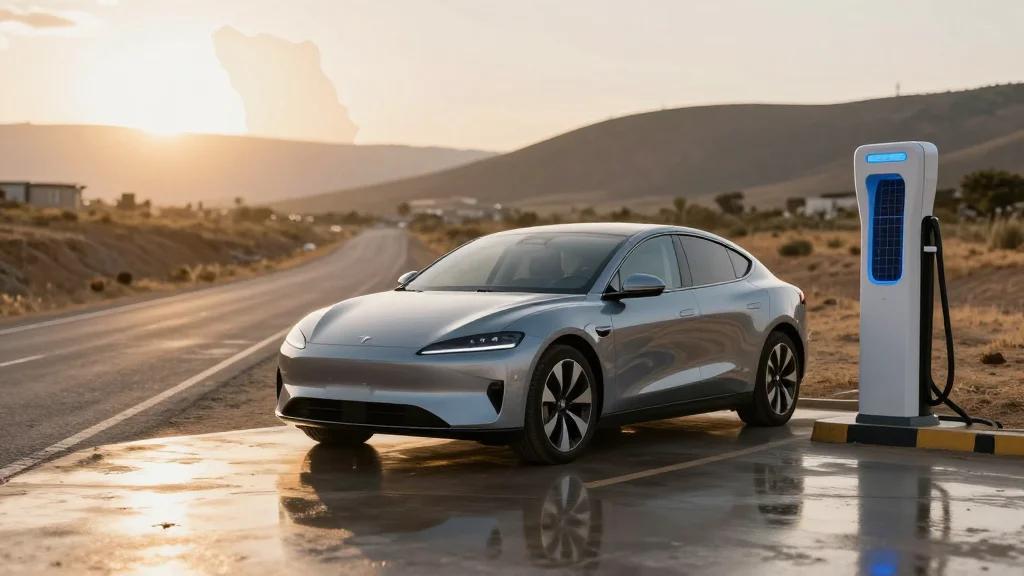
Ethiopia Leads Africa’s EV Boom as Fuel Prices Spike, $200M+ in Chinese Imports Arrive

Why It Matters
The rapid EV uptake in Ethiopia and neighboring countries signals a structural shift in African transport energy demand. By substituting imported gasoline with domestically generated renewable electricity, nations can lower foreign‑exchange outflows, improve trade balances, and reduce greenhouse‑gas emissions. The trend also creates new business opportunities in charging infrastructure, battery recycling and renewable‑energy generation, potentially catalysing a broader green‑economy transition across the continent. At the same time, the surge highlights the fragility of Africa’s fuel‑import dependence. As geopolitical shocks—such as the Iran‑related Strait of Hormuz closure—disrupt oil supplies, countries with higher EV penetration will be better insulated from price spikes. Policymakers therefore face a strategic choice: accelerate EV adoption and infrastructure development now, or risk prolonged exposure to volatile global oil markets.
Key Takeaways
- •Ethiopia imported 44,358 EVs from China in 2025, worth over $200 million.
- •EVs now make up about 8 % of Ethiopia’s vehicle fleet, roughly 115,000 units.
- •Fuel subsidies in Ethiopia total up to $128 million per month; annual fuel imports cost $4.2 billion.
- •Kenya’s diesel price rose 24 % to $1.60 per litre, prompting a $600 million World Bank loan request.
- •A private EV owner in Africa saves roughly $23 per month on fuel versus charging costs.
Pulse Analysis
The Ethiopian case illustrates how a confluence of high fuel prices, renewable‑energy abundance, and policy levers can accelerate EV adoption in emerging markets. Historically, Africa’s auto sector has been dominated by low‑cost internal‑combustion models, but the current price shock is forcing a re‑evaluation of total‑cost ownership. Ethiopia’s near‑total reliance on hydro and solar gives it a comparative advantage that many peers lack, allowing it to market EVs as both an economic and environmental solution.
From a market perspective, the influx of Chinese EVs is likely to pressure local assemblers and used‑car dealers, potentially reshaping supply chains. If charging infrastructure keeps pace, demand could outstrip supply, prompting new entrants—both global OEMs and regional startups—to localise production, which would create jobs and reduce import dependence further. However, the financing gap for charging networks remains a critical bottleneck; public‑private partnerships will be essential to bridge it.
Looking ahead, the sustainability of the EV surge hinges on two variables: the duration of the fuel‑price shock and the speed of infrastructure rollout. Should oil markets stabilise, price‑sensitive consumers may revert to cheaper gasoline models, slowing growth. Conversely, if governments institutionalise EV incentives—tax breaks, subsidies, and renewable‑energy tariffs—the market could retain momentum, cementing a new energy paradigm for the continent.
Ethiopia Leads Africa’s EV Boom as Fuel Prices Spike, $200M+ in Chinese Imports Arrive
Comments
Want to join the conversation?
Loading comments...