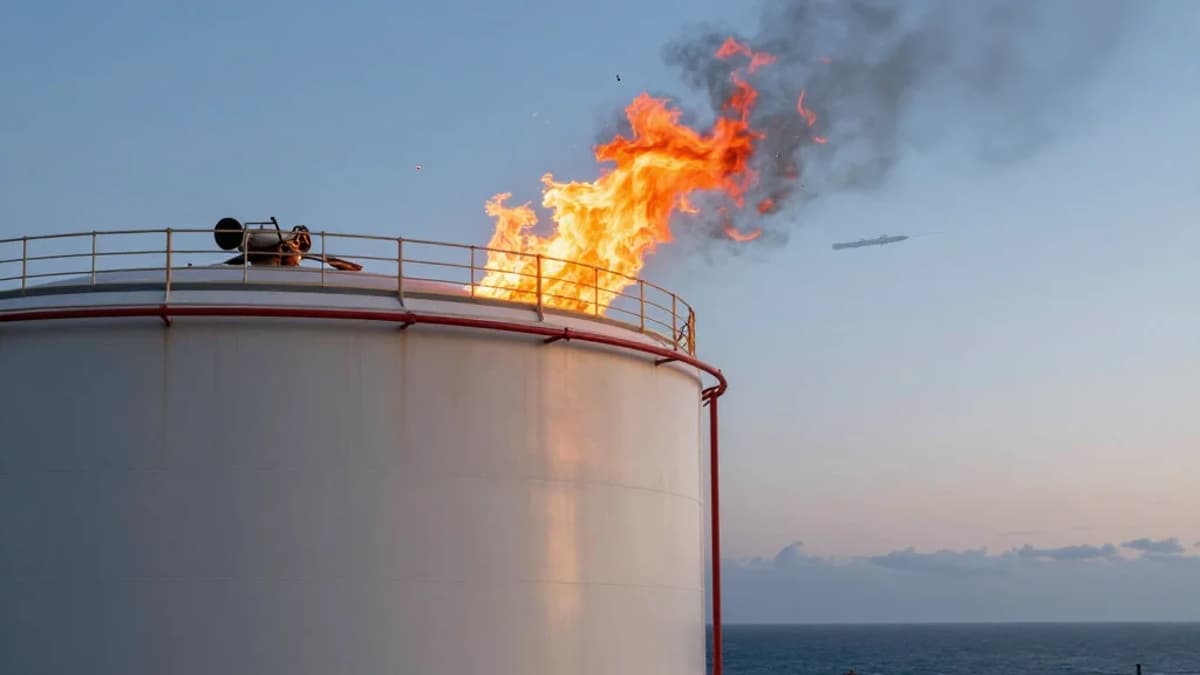
Fujairah Oil Facility Catches Fire From Drone Debris
•March 4, 2026
0
Companies Mentioned
Why It Matters
The fire underscores the growing vulnerability of critical mid‑stream infrastructure to drone attacks, and any disruption in Fujairah could reverberate through global oil supply chains that rely on the emirate as an alternative export route.
Key Takeaways
- •Drone debris sparked fire at Fujairah Oil Industry Zone
- •Fire contained; operations resumed, no injuries reported
- •Fujairah serves as key oil hub outside Strait of Hormuz
- •BPGIC now holds 3.5 million m³ storage, UAE’s largest
- •Incident underscores rising drone risks to mid‑stream assets
Pulse Analysis
The March 3 blaze at the Fujairah Oil Industry Zone (FOIZ) was triggered when fragments of a hostile drone, shot down by the United Arab Emirates’ air‑defence network, fell onto an oil‑storage complex. Firefighters extinguished the flames within a few hours, and the Fujairah Media Office confirmed that operations returned to normal without casualties. While the incident was isolated, it arrived amid heightened Iranian retaliation in the Gulf, reminding stakeholders that even well‑protected hubs can face sudden disruptions.
Fujairah’s geographic advantage—situated on the Indian Ocean and outside the Strait of Hormuz—makes it a critical bypass for roughly 20% of the world’s oil and refined products. The emirate hosts a dense network of terminals operated by ADNOc, Aramco Trading, Shell, and others, with BPGIC emerging as the largest storage provider after three expansion phases that lifted its capacity to 3.5 million cubic metres (about 22 million barrels). This scale enables rapid loading and unloading, supporting both regional exporters and international tankers navigating volatile chokepoints.
The fire highlights a growing security challenge: unmanned aerial systems can threaten mid‑stream assets that are otherwise insulated from geopolitical shocks. As Iran’s anti‑Israel campaign intensifies, insurers and investors are reassessing risk premiums for facilities like FOIZ, while operators accelerate drone‑detection and hardening measures. Any prolonged outage in Fujairah could force shipments back through the congested Strait of Hormuz, tightening global oil markets and potentially nudging prices upward.
Fujairah oil facility catches fire from drone debris
0
Comments
Want to join the conversation?
Loading comments...