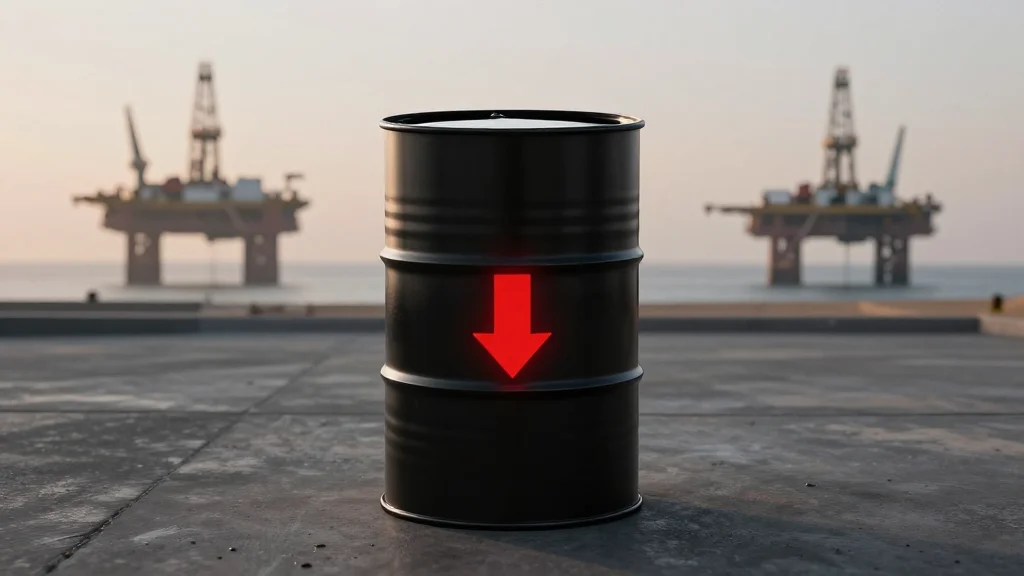
Global Oil Reserves Plunge at Record Pace as Middle East War Strains Supplies
Why It Matters
The rapid depletion of oil reserves tightens global energy markets, driving up prices and feeding inflationary pressure across economies. It also forces policymakers to balance short‑term supply security with longer‑term energy transition goals.
Key Takeaways
- •Global crude inventories fell 12 million barrels, fastest weekly drop since 2020
- •Middle East conflict cut output by ~1 million barrels per day
- •OPEC+ announced an extra 1.2 million bpd cut to stabilize prices
- •Brent crude rose above $85 per barrel, adding inflation pressure
- •US and EU strategic reserves considered for emergency release
Pulse Analysis
The latest plunge in global oil reserves reflects a perfect storm of geopolitical tension and market dynamics. A 12‑million‑barrel weekly drawdown—unmatched since the pandemic‑era lows—was driven largely by the Middle East war, which has disrupted pipelines and reduced output by roughly one million barrels per day. This supply squeeze arrives as demand rebounds from pandemic lows, creating a classic supply‑demand imbalance that pushes crude prices toward historic highs.
Price spikes have immediate macroeconomic repercussions. Brent crude’s breach of the $85‑per‑barrel threshold is already feeding into higher transportation and manufacturing costs, nudging headline inflation upward in both developed and emerging economies. In a bid to curb volatility, OPEC+ announced an additional 1.2 million‑barrel‑per‑day production cut, while the United States and European Union are reviewing their strategic petroleum reserves for potential releases. Such coordinated actions aim to stabilize markets but also signal the fragility of the current energy supply chain.
Looking ahead, the episode underscores the urgency of diversifying energy sources. Persistent geopolitical risk in oil‑rich regions accelerates the case for accelerated investment in renewables, energy storage, and demand‑side efficiency. Policymakers must weigh short‑term interventions against long‑term resilience, ensuring that emergency measures do not delay the transition to a more secure, low‑carbon energy future.
Global oil reserves plunge at record pace as Middle East war strains supplies
Comments
Want to join the conversation?
Loading comments...