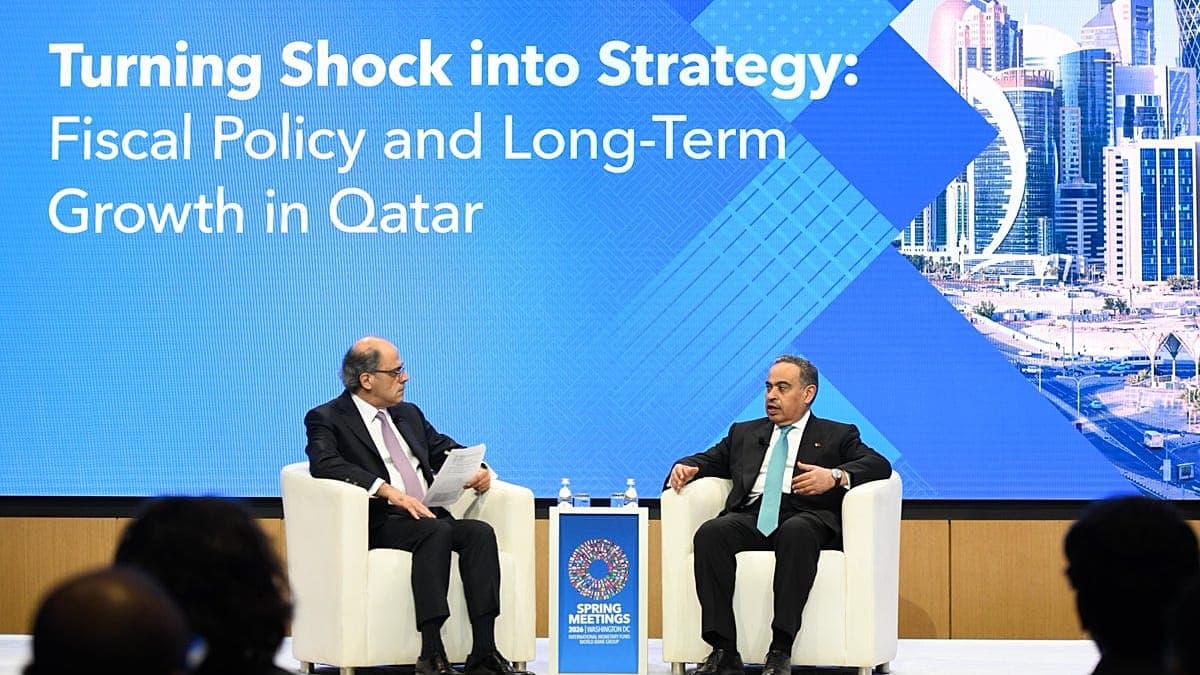
Global Shock Feared as Iran Tightens Grip on Hormuz, Qatar Says Impact “Not Far Away”
Why It Matters
Disruption of Hormuz threatens critical energy, food and high‑tech inputs, raising recession risks worldwide. Qatar’s buffer highlights how resource‑rich states brace for spillover effects while markets scramble for alternatives.
Key Takeaways
- •Iran's tighter control threatens 20% of global energy flow.
- •One‑third of world fertilizer trade passes Hormuz, risking food supply.
- •Qatar's Ras Laffan LNG outage cuts 17% of its export capacity.
- •Helium shortages could impact healthcare and semiconductor production.
- •Qatar's sovereign reserves and shock fund aim to cushion domestic impact.
Pulse Analysis
The Strait of Hormuz has long been a chokepoint for oil, gas and bulk commodities, but recent escalations have turned it into a flashpoint for global supply risk. Roughly 20% of the world’s oil and gas passes through the narrow passage, and any sustained closure forces shippers to reroute around the Cape of Good Hope, adding weeks and millions of dollars to freight costs. Analysts note that the geopolitical tension is now intersecting with already tight commodity markets, amplifying price volatility and prompting central banks to monitor inflationary pressures more closely.
Beyond energy, the Hormuz corridor underpins essential inputs for agriculture and technology. About one‑third of global fertilizer shipments transit the strait, meaning a prolonged disruption could delay planting cycles and exacerbate food‑price spikes in vulnerable regions. Qatar, responsible for roughly 30% of the world’s helium—a gas critical for MRI scanners and semiconductor lithography—faces the prospect of shortages that could ripple through healthcare and high‑tech manufacturing. The recent damage to Qatar’s Ras Laffan LNG complex, which knocked out 17% of its export capacity, further tightens an already constrained global gas market, pushing spot prices toward record highs.
The broader economic implications are stark. International bodies warn that sustained Hormuz instability could tip the global economy toward recession, compounding inflation and tightening financial conditions. Qatar’s response—leveraging deep sovereign wealth and a dedicated shock fund—illustrates how resource‑rich nations are building fiscal buffers to weather external shocks. Yet the warning from Doha underscores a larger lesson: diversified supply chains and strategic reserves are becoming essential tools for governments and corporations navigating an increasingly volatile geopolitical landscape.
Global shock feared as Iran tightens grip on Hormuz, Qatar says impact “not far away”
Comments
Want to join the conversation?
Loading comments...