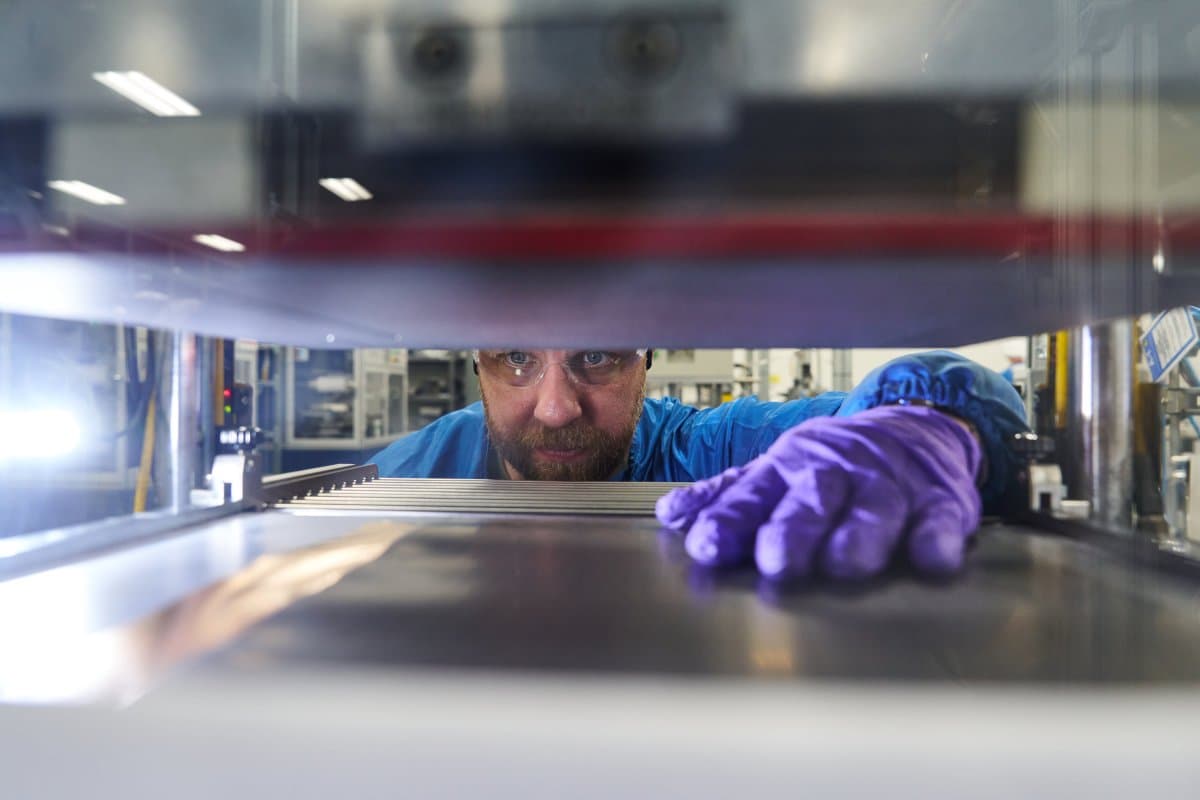
GM’s Electric Future Depends on a New Battery — and This Facility
Companies Mentioned

Why It Matters
The BCDC shortens the path from battery R&D to mass production, helping GM meet its 2028 target for cost‑competitive EVs and regain momentum in a market where rivals are rapidly scaling low‑cost chemistries.
Key Takeaways
- •GM's new Battery Cell Development Center can produce 2,500 cells daily.
- •LMR chemistry aims to cut EV costs by about $6,000 per vehicle.
- •Facility bridges research at Wallace Center and mass production in Tennessee.
- •AI‑driven digital twins have saved GM millions in development time.
- •Target: launch LMR‑powered models by 2028 to regain EV market share.
Pulse Analysis
General Motors’ latest battery initiative reflects a strategic pivot after a turbulent EV rollout that saw a $1.6 billion charge and workforce reductions. By investing $900 million in a dedicated Battery Cell Development Center, GM is creating a controlled environment where new chemistries can be validated before scaling to its massive Ultium plants in Tennessee and Ohio. This approach mirrors the industry’s shift toward modular, pilot‑line facilities that de‑risk the transition from lab‑scale coin cells to automotive‑grade packs, a crucial step given the high capital intensity of battery manufacturing.
The centerpiece of the BCDC effort is the lithium‑manganese‑rich (LMR) chemistry, which promises energy density close to the premium NMC blend but at a cost comparable to low‑end LFP cells. For a Chevrolet Silverado EV, GM projects a $6,000 price reduction while preserving a 400‑plus‑mile range, positioning the model to compete directly with internal‑combustion counterparts. Production capacity of roughly 2,500 cells per day—about half a gigawatt‑hour annually—allows rapid iteration, while AI‑driven physics models and a full‑scale digital twin cut development cycles and save millions in tooling and labor.
If GM can deliver LMR‑powered vehicles by 2028, it could reverse its recent market lag and offer a compelling alternative to Chinese battery giants such as BYD and CATL. The BCDC’s ability to accelerate chemistry validation not only supports GM’s cost‑reduction goals but also signals to investors that the automaker is building the infrastructure needed for a sustainable, high‑volume EV future. Success here will likely set a template for other OEMs seeking to bridge the gap between breakthrough battery research and commercial rollout.
GM’s electric future depends on a new battery — and this facility
Comments
Want to join the conversation?
Loading comments...