Guyana Aims for ‘Norway Model’ as Offshore Oil Boom Transforms Economy
•February 21, 2026
0
Why It Matters
Diversification turns a volatile oil windfall into sustainable growth, positioning Guyana as a regional energy hub and protecting against the classic resource‑curse.
Key Takeaways
- •Oil revenue funds roads, bridges, power projects.
- •Gas‑to‑shore pipeline to supply electricity, industry.
- •Goal: emulate Norway's sovereign wealth and fiscal discipline.
- •Investments target agriculture, mining, manufacturing diversification.
- •Challenges: rising costs, infrastructure bottlenecks, fiscal balance.
Pulse Analysis
Since the first barrel flowed from the Stabroek block in 2019, Guyana has vaulted into the ranks of the world’s fastest‑growing oil producers. With output now exceeding 600,000 barrels per day, the tiny South American nation enjoys one of the highest oil‑per‑capita figures globally. The surge in ExxonMobil‑led offshore production has injected billions of dollars into the treasury, prompting President Irfaan Ali to announce an ambitious “Norway model” agenda. This approach seeks to translate short‑term windfalls into long‑term, inclusive prosperity.
The government’s diversification play hinges on channeling oil royalties into hard‑asset projects that broaden the economic base. New highways, bridges, and a gas‑to‑shore pipeline are slated to lower electricity costs and attract data‑center operators, while targeted subsidies aim to revive agriculture, mining and light manufacturing. By establishing a sovereign‑wealth‑style fund and imposing fiscal rules, Guyana hopes to avoid the classic resource curse that has plagued many oil‑dependent states. The emphasis on natural‑gas utilization also creates a domestic feedstock for power generation, reducing reliance on imported fuels. Despite the optimism, Guyana faces a tightrope of fiscal discipline and infrastructure capacity.
Rapid spending has already strained public finances, and bottlenecks in transport and power networks could hamper private‑sector confidence. Moreover, volatile oil prices pose a risk to revenue projections, making the timing of sovereign‑wealth contributions critical. If the diversification roadmap succeeds, Guyana could emerge as a regional energy hub, offering stable power for export‑oriented industries and setting a template for other emerging producers. Failure to manage these challenges, however, could re‑ignite the very resource‑curse the policy seeks to sidestep.
Guyana aims for ‘Norway model’ as offshore oil boom transforms economy
February 19, 2026 · By Kevin Crowley, Bloomberg
(Bloomberg) — Guyana is accelerating efforts to diversify its economy and expand domestic energy infrastructure as offshore oil production continues to drive rapid economic growth, according to President Irfaan Ali.
Speaking in Georgetown, Ali said the government is using rising revenue from ExxonMobil‑operated offshore developments to fund infrastructure, power generation and industrial projects aimed at reducing long‑term reliance on crude exports. Since first oil production began in 2019, the country has emerged as one of the world’s fastest‑growing producers and now ranks among the highest oil output per capita globally.
The government has significantly increased national spending in recent years to support new roads, bridges, power projects and social programs, while also investing in sectors such as agriculture, mining and manufacturing to broaden the economic base. Officials say the strategy is designed to help Guyana avoid the so‑called “resource curse” that has affected other oil‑dependent economies.
Natural gas development is also central to the plan. A gas‑to‑shore pipeline linked to offshore production is expected to come online later this year, supplying feedstock for power generation and industrial use while helping reduce electricity costs and improve reliability. Additional investments in infrastructure and energy are aimed at supporting manufacturing, data centers and other non‑oil industries.
Despite rapid growth, challenges remain, including rising costs, infrastructure bottlenecks and the need to balance spending with long‑term fiscal stability. Oil production currently accounts for a large share of Guyana’s economy, underscoring the importance of diversification as development accelerates.
Reporting by Kevin Crowley, Bloomberg. Edited for length.
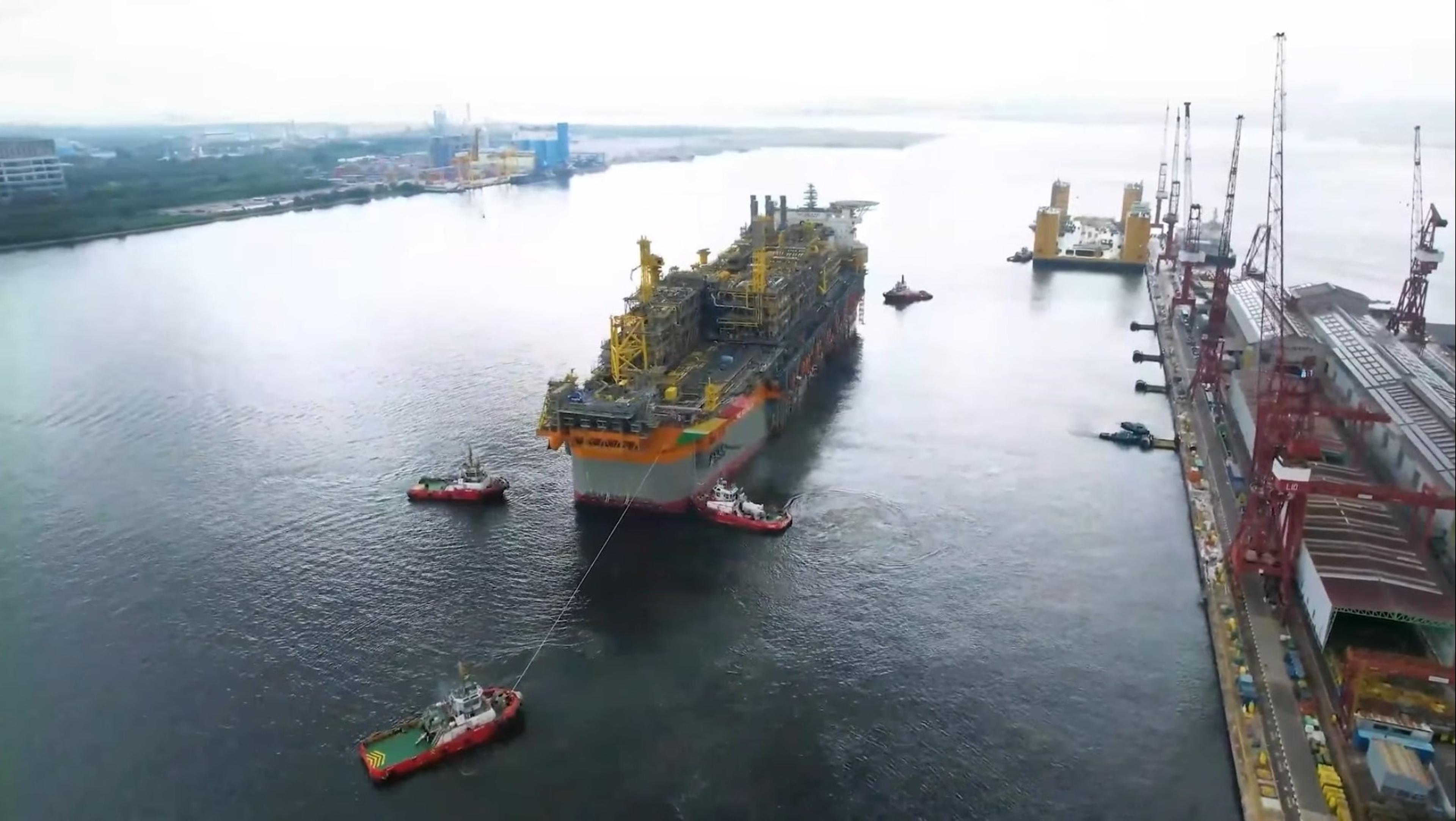
Pictured: The One Guyana FPSO. Image provided by EnerMech.
0
Comments
Want to join the conversation?
Loading comments...