The moment illustrates how cultural platforms can expose systemic energy inequities, pressuring policymakers to address colonial‑rooted infrastructure gaps. Recognising these dynamics is essential for reshaping global energy finance toward justice and resilience.
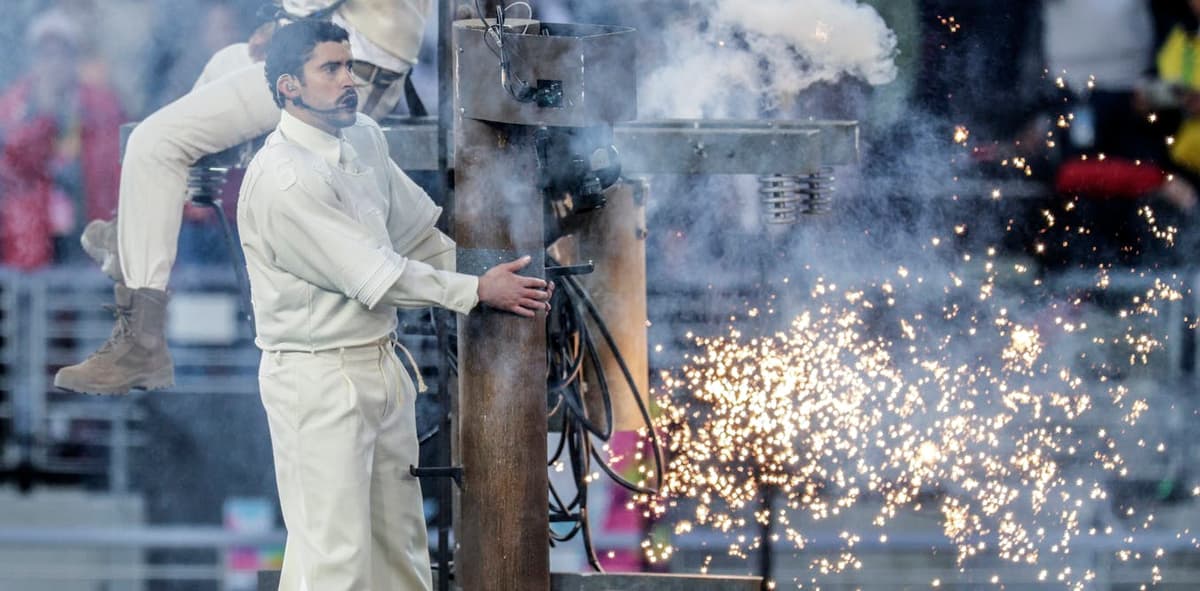
Bad Bunny’s halftime spectacle did more than entertain; it turned the Super Bowl into a visual critique of Puerto Rico’s decades‑long power crisis. The island’s grid, built under U.S. territorial rule, was designed to extract profit rather than serve local needs, leaving residents without reliable electricity after Hurricane Maria and during routine blackouts. Federal aid fell short of what states receive, reinforcing a pattern scholars call "energy colonialism," where external powers dictate energy infrastructure and pricing, marginalising the very communities they claim to protect.
The Puerto Rican case mirrors a broader global trend. In Lebanon, colonial‑era political structures foster corruption and dependence on foreign diesel generators, while Israeli strikes on electricity networks exacerbate shortages. Pacific nations face similar hurdles as climate‑finance mechanisms funnel funds through intermediaries, saddling them with debt rather than delivering direct, resilient power solutions. These examples underscore how historic power imbalances continue to shape energy access, turning climate resilience into a privilege of the well‑connected.
Addressing these entrenched inequities requires a shift from top‑down technical fixes to community‑driven ownership models. Energy justice advocates argue that local micro‑grids, renewable investments, and transparent financing can break the cycle of dependency. By foregrounding who controls the grid and who benefits from its output, policymakers can craft strategies that empower vulnerable populations, reduce outage‑related hardship, and foster genuine resilience. Bad Bunny’s performance thus serves as a reminder: cultural moments can catalyse critical conversations about ownership, equity, and the future of global energy systems.
When Bad Bunny and his dancers scaled power poles during his Super Bowl performance, he wasn’t just entertaining millions. He was spotlighting how Puerto Rico’s chronic power outages are a legacy of its colonisation.
Puerto Rico is far from alone in this struggle – colonialism and geopolitical power imbalances have shaped access to electricity worldwide.
Puerto Rico has long suffered rolling blackouts lasting days and sometimes months. This leaves residents – especially vulnerable populations – without refrigeration, medical equipment, or air conditioning.
This isn’t just poor infrastructure management, though that is certainly an issue. It’s the ongoing legacy of colonial control over energy systems.
Colonial powers built energy systems designed to extract resources and profits for distant corporations and governments, not to serve local communities. As a result, local communities pay high costs for inadequate power. Similar patterns exist globally, from the Caribbean to the Middle East.
Puerto Rico’s chronic blackouts stem from what scholars call “energy colonialism”, where powerful countries and companies control the energy resources of less powerful countries or regions.
Puerto Rico became a US territory in 1898 but does not have voting representation in Congress. While under US responsibility, Puerto Ricans are denied the federal support granted to other US states.
After Hurricane Maria hit Puerto Rico in 2017, it took 11 months to restore the grid – the longest blackout in US history. Yet federal aid was drastically lower than for US states hit by hurricanes around the same period and “tens of billions short of the US$94.4 billion that disaster experts estimated is needed for a full recovery”. As Cecilio Ortiz García, co-founder of the University of Puerto Rico’s National Institute of Energy and Island Sustainability, explains:
the grid has become the poster child of the decay of the colonial system, its institutions and a very vulnerable population. This is colonial abandonment, not poor management.
Energy colonisation may manifest differently in different colonial contexts. Our research in Lebanon shows several ways colonial dynamics affect energy insecurity.
In Lebanon, energy access has been undermined by Israel’s deliberate targeting of electricity infrastructure in its strikes in southern Lebanon following its invasion of Gaza. It is also undermined by political corruption rooted in colonial governance structures, such as politicians maintaining ties to private diesel generator companies that profit when the public electricity grid fails.
When France colonised Lebanon in the early 1900s, it deliberately designed a political system that divided power along religious lines, a structure still in place today. This system was created to keep Lebanon weak and dependent.
It has fostered political gridlock and corruption, with politicians profiting from failing energy systems rather than fixing them. The state’s dependence on international donors – and donors’ hesitation to subsidise energy infrastructure – has also reinforced energy poverty for residents.
Colonial energy development dynamics are exemplified by Pacific struggles to access climate finance. Pacific countries divert significant resources to become accredited to key climate funds, in the hope of directly accessing finance. However, both the practice of mobilising finance through intermediaries, and prioritising debt finance – further indebting poor regions – ultimately channels vital resources away from Pacific nations.
As climate disasters intensify, and reliable energy becomes ever more essential for survival, recognising the colonial roots of global energy systems is key. A critical site for recognition, as argued by Puerto Rican energy advocate Juan Rosario is ownership: “the most important thing in this energy revolution is who owns it and who rules”.
Energy justice – grounded in ownership, self‑determination, and equality — must be more nuanced. We need to ask: Who gets to own the energy systems? Who makes the decisions? Who gets the money? Right now, big corporations and governments control energy. Real energy justice means communities run their own power systems and keep the benefits for themselves. Thus, energy justice cannot focus solely on technical fixes. It must also confront the structures of power that shape who benefits from energy systems and who is left vulnerable.
Our research in Lebanon shows how these experiences of energy colonialism are felt – in the wellbeing of communities, and in individual emotions and bodies. In the humanitarian community in Lebanon, people are unable to escape extreme temperature during energy insecurity and blackouts. Feelings of hopelessness and frustration come from persistent energy poverty.
There are no easy solutions, but we can still take a key lesson from Bad Bunny’s performance. It is vital to call out the structures of power his performance made visible. Bad Bunny’s performance also demonstrated the joy that can be found, even momentarily, from shifting focus from colonial conditions to the strength and resilience of marginalised communities.
Our research showed this strength should be supported and not taken for granted. One participant in Lebanon said:
“Do people have the choice not to be resilient? Like, is there a counterfactual Lebanon where people are not resilient and they suffer more than what they’re suffering now? How do you determine what resilience is versus wanting to live your life? It’s just you waking up and having to find a way.”

Jenna Imad Harb works on a project funded by the Rio Tinto Centre for Future Materials.
Kirsty Anantharajah does not work for, consult, own shares in or receive funding from any company or organisation that would benefit from this article, and has disclosed no relevant affiliations beyond their academic appointment.
Comments
Want to join the conversation?
Loading comments...