How Southeast Asia’s Ambitious Green Transition Strategy Is a Windfall for China
Companies Mentioned

Contemporary Amperex Technology
Why It Matters
The partnership accelerates regional decarbonisation while cementing China’s export of renewable‑energy technology, reshaping Southeast Asia’s energy landscape and creating new revenue streams for Chinese firms.
Key Takeaways
- •Singapore targets 6 GW of imported green power by 2035.
- •Chinese firms win major solar‑battery contracts in Indonesia.
- •Cross‑regional grid could link Singapore to southern China.
- •Chinese tech dominance lowers cost and speeds renewable projects.
Pulse Analysis
Southeast Asia is at a pivotal moment in its energy evolution, with rapid economic growth driving demand for reliable power while climate commitments push governments toward cleaner sources. Singapore, constrained by land and heavily dependent on natural gas, has set an ambitious target to import up to 6 GW of renewable electricity by 2035. Achieving this goal hinges on cross‑border interconnections that can ferry surplus solar and hydro generation from neighboring countries, turning the region into a coordinated low‑carbon grid.
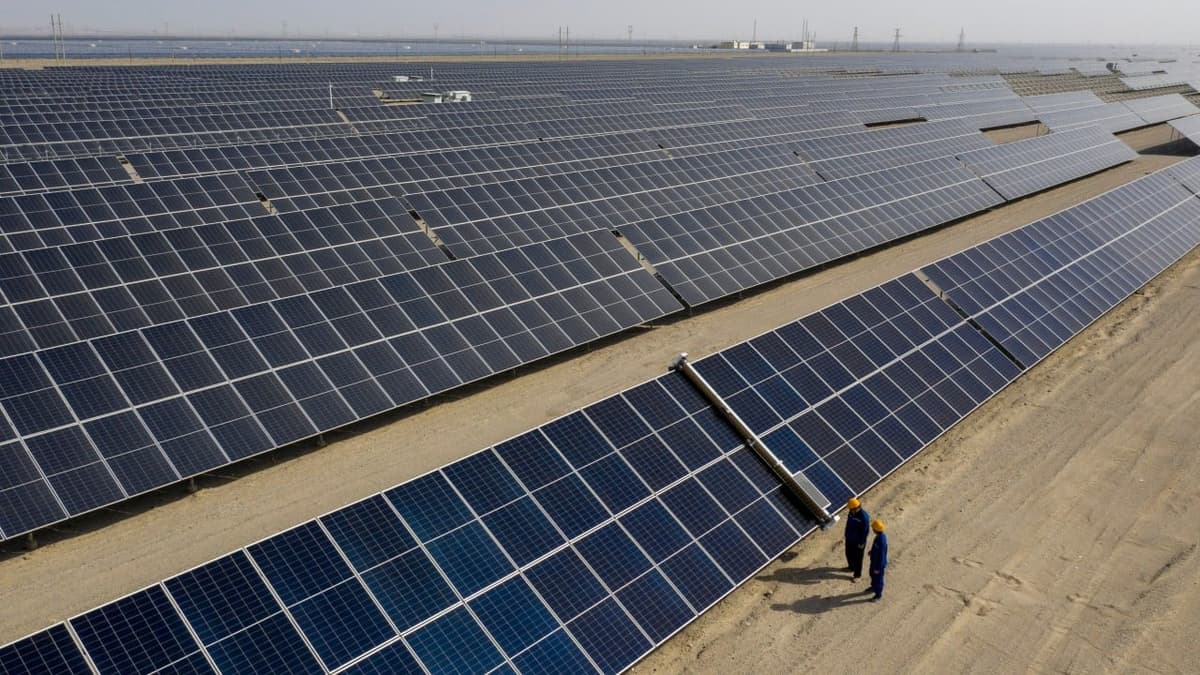
Chinese energy companies are uniquely positioned to capture this market. Their leadership in solar panel manufacturing, smart‑grid solutions, and large‑scale battery storage translates into lower project costs and faster deployment timelines. Recent contracts—such as CRE International’s 900 MW solar‑PV plant with a 1.2 GWh battery in Indonesia and CATL’s supply of half the storage for a 300 MW solar‑battery hub feeding Singapore—illustrate how Chinese firms are converting technological advantage into tangible infrastructure. By offering “fast, affordable, reliable” equipment, they become the default suppliers for developers seeking to meet tight renewable targets.
The broader implications extend beyond energy economics. A seamless grid linking Singapore to southern China could reshape trade flows, create new export revenue for ASEAN nations, and deepen China’s strategic influence in the Indo‑Pacific. Investors are likely to follow the pipeline of projects, spurring capital inflows into regional renewables and ancillary services such as grid‑balancing and carbon credit markets. As the green transition gains momentum, the China‑Southeast Asia energy nexus is poised to become a cornerstone of the region’s sustainable growth narrative.
How Southeast Asia’s ambitious green transition strategy is a windfall for China
Comments
Want to join the conversation?
Loading comments...