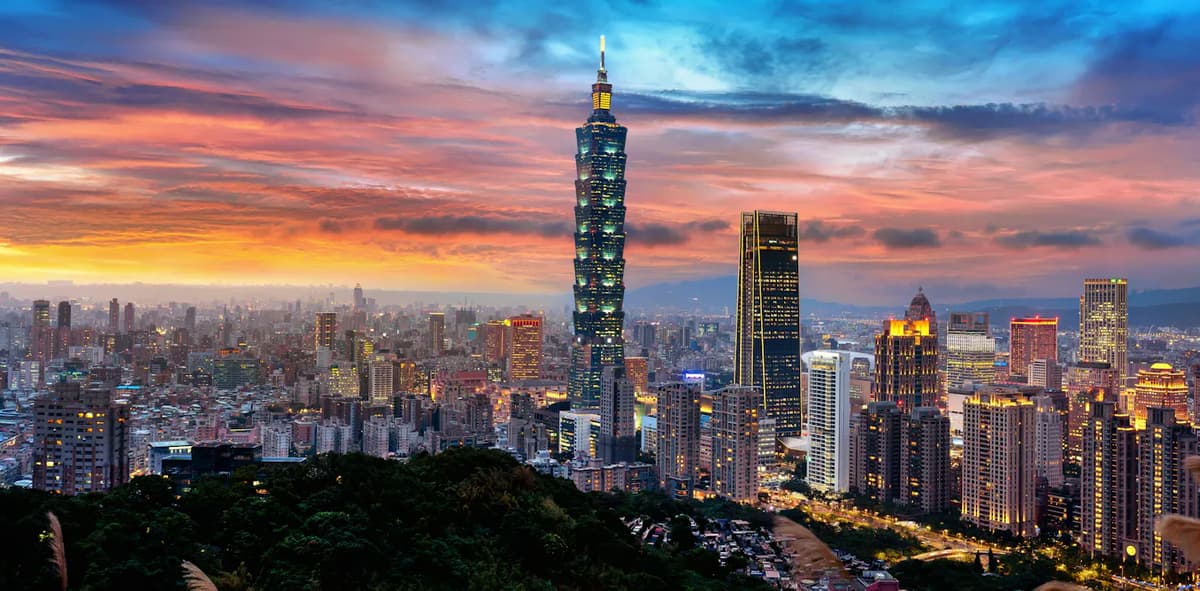
How Taiwan Is Balancing Between American and Chinese Visions of Energy Dominance
Companies Mentioned
Why It Matters
Taiwan’s energy strategy illustrates how middle‑income economies must navigate U.S. fossil‑fuel leverage and China’s clean‑tech supremacy to secure resilient, low‑carbon power for critical industries. The outcome will shape regional stability and the future balance of global energy influence.
Key Takeaways
- •Taiwan imports 94% of energy, mainly LNG and coal.
- •U.S. targets 25% LNG share in Taiwan by 2029.
- •China dominates solar, wind, and EV battery supply chains.
- •Taiwan’s semiconductor sector consumes about 8% of national electricity.
- •Energy security plan calls for renewables, grid hardening, diversified imports.
Pulse Analysis
The United States’ "energy dominance" doctrine, launched in early 2025, leverages record shale‑driven oil output—13.6 million barrels per day—and a one‑third share of global LNG markets. By securing long‑term purchase commitments from Europe and Asia, Washington seeks to bind allies to American fossil fuels, even as price volatility, OPEC+ decisions and the rapid rise of renewables limit true strategic control. For Taiwan, this policy offers a lifeline: diversifying its LNG sources reduces reliance on volatile Middle‑East routes and aligns the island with a powerful security partner.
Conversely, China has reshaped the energy landscape through a sweeping clean‑technology agenda. The country now manufactures roughly 80% of the world’s solar panels, 77% of wind turbines, and dominates EV battery supply chains, while also holding the majority of critical mineral reserves. These capabilities give Beijing leverage over nations dependent on renewable equipment, including Taiwan, whose semiconductor industry—responsible for about 8% of national electricity consumption—relies on Chinese‑made solar inverters, smart‑grid components, and EV‑related hardware. The Chinese model underscores a shift from fossil‑fuel might to electro‑state influence, challenging the U.S. petrostate narrative.
Taiwan’s response is a pragmatic balancing act. The island plans to raise U.S. LNG imports from 10% to 25% by 2029, while accelerating renewable deployment, hardening its grid, and keeping open the possibility of selective nuclear re‑engagement. This diversified approach aims to insulate the semiconductor sector and broader economy from supply shocks, whether from a potential Chinese blockade or global fossil‑fuel price spikes. Taiwan’s strategy highlights a broader lesson for middle‑income states: true energy security now hinges on flexible, low‑carbon systems rather than dependence on any single superpower’s energy doctrine.
How Taiwan is balancing between American and Chinese visions of energy dominance
Comments
Want to join the conversation?
Loading comments...