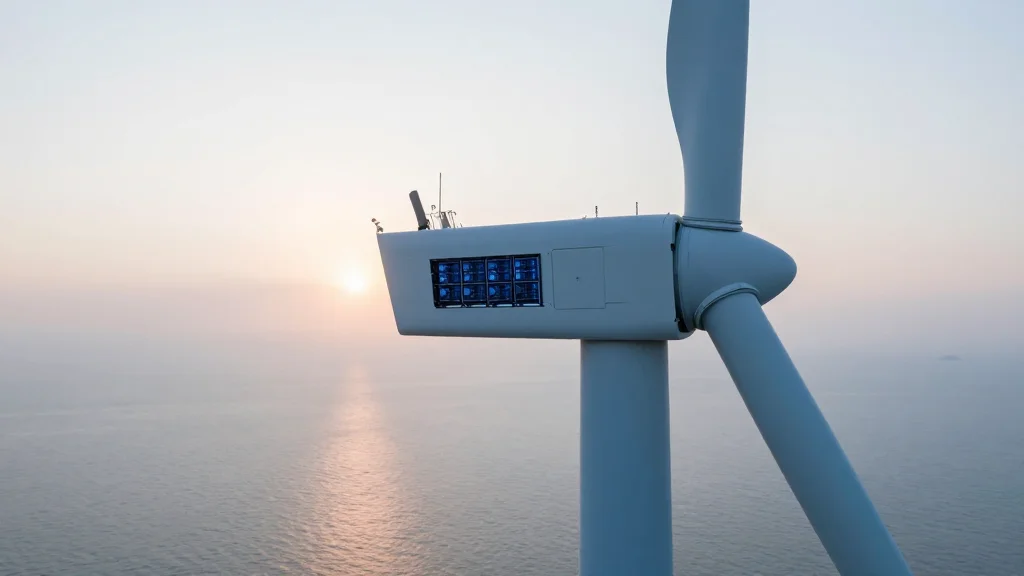
How to Make Money From Offshore Wind? Build a Data Centre... Inside the Turbine
Companies Mentioned

Why It Matters
Embedding data centres in offshore turbines creates a new revenue stream that could unlock private financing for floating wind projects, accelerating renewable deployment and meeting growing data‑centre power demand.
Key Takeaways
- •Aikido proposes data centres inside offshore wind turbines
- •Anthropic willing to pay $6.87 per kW for 300 MW data centre
- •Pilot aims to test a sub‑15 MW turbine with integrated data centre
- •Norway targets 30 GW offshore wind by 2040, boosting data‑centre demand
- •Public funding from Enova remains critical for financing floating wind projects
Pulse Analysis
Offshore wind developers have long faced a financing gap, as investors balk at the perceived risk of floating turbines. At the same time, data‑centre operators are scrambling for reliable, low‑cost power, with the sector accounting for roughly half of new electricity demand in the United States. In Norway, projected data‑centre consumption is set to rise from 3 TWh today to 8 TWh by 2030, creating a lucrative market for innovative power‑supply solutions. By coupling renewable generation with high‑value compute workloads, Aikido’s concept aims to transform offshore wind from a pure electricity asset into a dual‑purpose platform that attracts higher‑margin contracts.
The technical premise is straightforward: each turbine contains unused internal volume and excess electrical capacity that can host compact, modular data‑centre modules. Aikido plans a pilot on a turbine smaller than the commercial units slated for sites like Utsira Nord, then scales to turbines of at least 15 MW capacity. This approach leverages the existing offshore infrastructure, reduces the need for separate land‑based data‑centre sites, and offers operators a bundled service of green power and edge‑computing proximity to maritime networks. Early results could demonstrate cost efficiencies, lower latency for marine‑connected applications, and a compelling case for investors seeking diversified revenue streams.
Realizing the vision will depend on coordinated public support and strong industrial partners, echoing the Enova‑backed financing that enabled Equinor’s Hywind project. If successful, the model could be replicated globally, providing a pathway for countries with ambitious offshore wind targets to meet both climate and digital infrastructure goals. The convergence of renewable energy and data‑centre demand may thus become a catalyst for the next wave of private investment in floating wind, reshaping the economics of the sector.
How to make money from offshore wind? Build a data centre... inside the turbine
Comments
Want to join the conversation?
Loading comments...