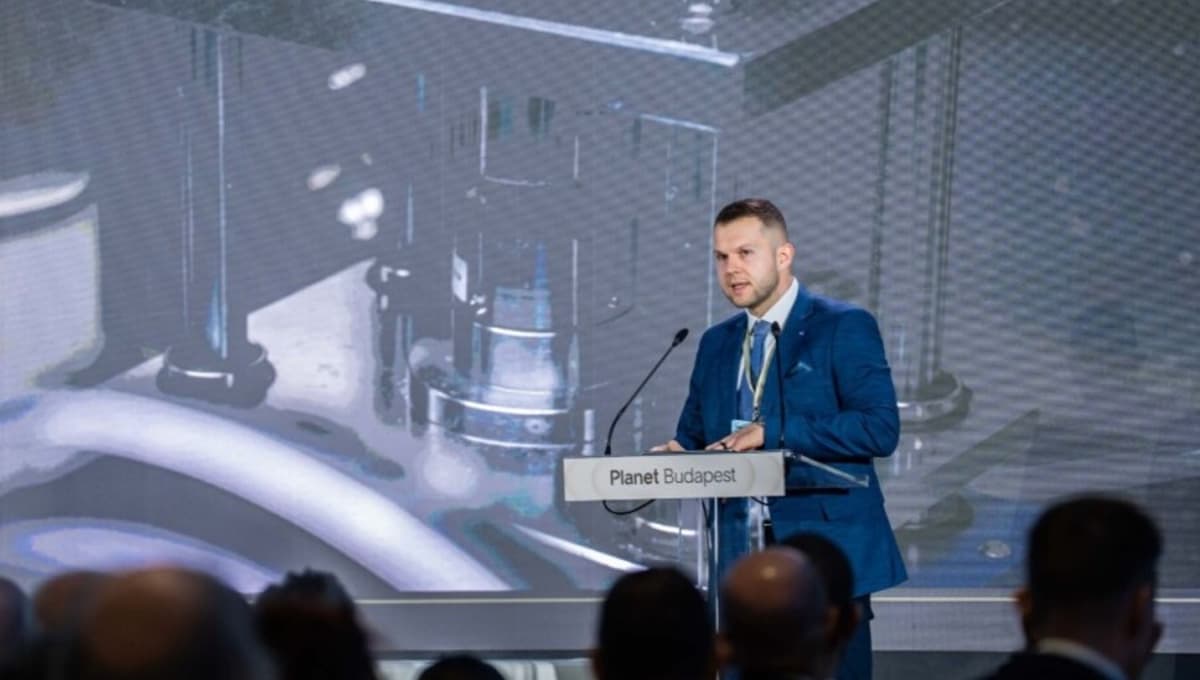
Hungary's Edortech Unveils Patented Tin-Anode Technology that Could Transform Global Battery Production
•March 1, 2026
0
Companies Mentioned

Why It Matters
The breakthrough cuts material and energy costs while boosting performance, giving manufacturers a low‑risk upgrade path and strengthening Europe’s strategic independence in battery technology.
Key Takeaways
- •Tin-anode ONLi offers 70% higher energy density
- •Capacity 1.8× conventional graphite anodes
- •Production compatible with existing lines, no binder needed
- •Edortech targets 1,000‑ton plant within 2‑3 years
- •Major OEMs like Tesla, CATL showing interest
Pulse Analysis
The shift from graphite‑based anodes to tin‑alloy formulations marks a pivotal evolution in electrochemical storage. While silicon‑carbon composites have chased higher capacities, they often demand complex binders and suffer from rapid degradation. ONLi’s solvent‑free, binder‑free architecture sidesteps these hurdles, delivering a near‑doubling of capacity and a 70 % jump in energy density without compromising cycle life. This performance leap aligns with the industry’s push for longer‑range electric vehicles and higher‑density grid‑scale storage, where every watt‑hour counts.
Beyond raw metrics, ONLi’s manufacturing simplicity could redraw the global supply chain map. Traditional anode production consumes significant energy and water, and the need for specialized equipment has entrenched a few dominant players, primarily in China. By eliminating powder‑handling steps and reducing thermal processing, Edortech’s technology lowers both capital expenditure and environmental footprint. European manufacturers, eager to diversify away from Chinese dominance, can integrate ONLi into existing lines, preserving existing investments while achieving greener production—a strategic advantage as regulators tighten carbon‑intensity standards.
Market reception underscores the commercial potential. Early talks with CATL and Tesla signal that leading OEMs view the tin‑anode as a viable shortcut to higher‑performance cells without the lengthy retooling cycles typical of new chemistries. If Edortech’s planned 1,000‑ton plant materializes on schedule, gigawatt‑hour volumes could become available within a few years, accelerating adoption across EVs, consumer electronics, and stationary storage. The convergence of performance gains, cost reductions, and geopolitical relevance positions ONLi to become a cornerstone of the next generation battery ecosystem.
Hungary's Edortech unveils patented tin-anode technology that could transform global battery production
0
Comments
Want to join the conversation?
Loading comments...