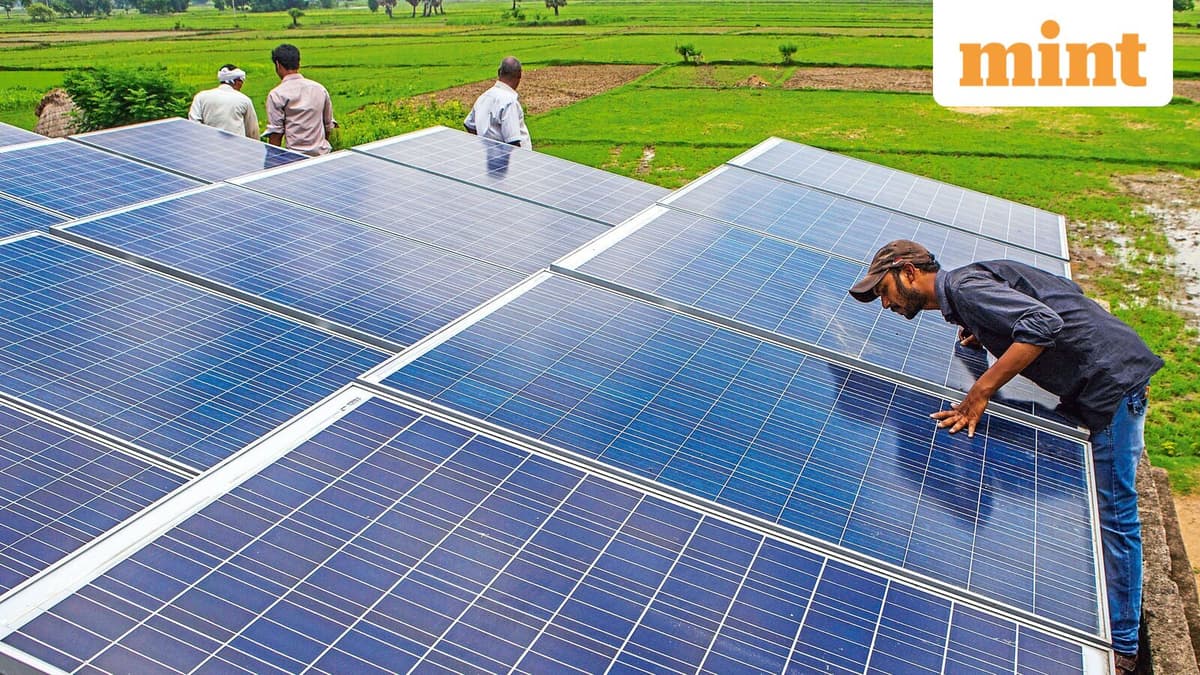
India's Energy Demand to Surpass US by 2040s and China by 2060s, Report Reveals
•February 26, 2026
0
Why It Matters
India’s looming status as the world’s largest energy consumer reshapes global fuel markets, prompting investors and policymakers to prioritize renewable scaling, gas infrastructure, and scenario‑based planning for energy security.
Key Takeaways
- •India demand > US by 2040s, > China by 2060s.
- •Fossil fuel share peaks this decade, then declines.
- •Renewables aim 59% electricity generation by 2050.
- •Natural gas demand rises 50% within ten years.
- •Scenarios Archipelagos, Surge, Horizon guide energy strategy.
Pulse Analysis
India’s energy trajectory is entering a pivotal phase as its demand is set to eclipse that of the United States in the 2040s and China by the 2060s. This surge is anchored in sustained GDP growth, urbanisation, and a burgeoning middle class that together drive higher electricity and transport consumption. For global commodity markets, the shift signals a reallocation of trade flows, with India becoming a larger net importer of fuels while also emerging as a significant demand source for renewable technologies and associated supply chains.
The transition away from imported fossil fuels toward domestically generated renewables is a cornerstone of the Shell scenarios. Solar and wind have leapt from roughly 3% of final electricity use in 2015 to over 20% today, and projections place them at 59% or more of electricity generation by 2050 across all three futures. This rapid scaling is underpinned by falling technology costs, supportive policy frameworks, and a strategic push to enhance energy security. Low‑carbon fuels such as bioenergy and renewable hydrogen are also earmarked for hard‑to‑electrify sectors, ensuring a diversified decarbonisation pathway.
Natural gas and liquefied natural gas (LNG) are slated to play a bridging role, with demand expected to increase by at least 50% in the next decade to buttress grid reliability and industrial growth, especially as AI‑driven applications raise power intensity. The three scenarios—Archipelagos, Surge, and Horizon—offer policymakers and investors a structured lens to assess geopolitical, digital, and climate risks. By aligning investments with these pathways, businesses can mitigate uncertainty, capture emerging market opportunities, and contribute to India’s long‑term energy resilience.
India's energy demand to surpass US by 2040s and China by 2060s, report reveals
0
Comments
Want to join the conversation?
Loading comments...