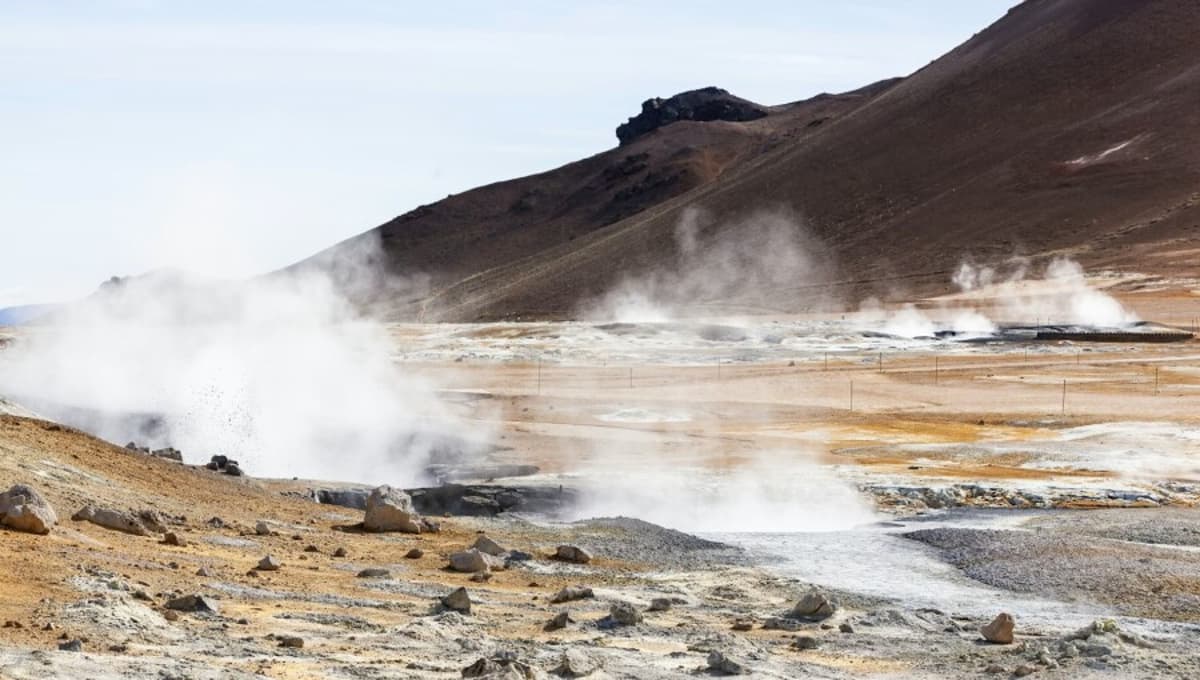
Indonesia’s Geothermal Quest: Where Massive Potential Meets Structural Reality
•March 2, 2026
0
Companies Mentioned

Why It Matters
Geothermal provides baseload, low‑carbon power essential for Indonesia’s grid stability and its Just Energy Transition Partnership, yet financing and policy gaps could stall the country’s climate goals.
Key Takeaways
- •Indonesia holds 24‑29 GW geothermal potential, only 2.71 GW operational
- •Star Energy‑SLB partnership aims to de‑risk Sekincau development
- •Capex $4.5‑5 M per MW, three times solar cost
- •Tariff asymmetry favors coal, slowing geothermal financing
- •Government reforms cut taxes, but risk‑sharing still needed
Pulse Analysis
Indonesia sits atop roughly 40 % of the world’s volcanic heat, translating into an estimated 24‑29 GW of technically recoverable geothermal capacity. Yet the nation currently operates only about 2.71 GW, roughly ten percent of that potential. This disparity is stark in a country that aims to add 5.3 GW of geothermal power by 2034 to meet its Just Energy Transition Partnership goals. Because geothermal plants can run at capacity factors above 90 %, they are uniquely positioned to provide the baseload stability that intermittent renewables cannot, especially for the densely populated Java‑Bali grid.
The high upfront cost—$4.5‑5 million per megawatt, nearly three times that of utility‑scale solar—combined with development cycles that can stretch a decade, creates a financing “valley of death” where banks shy away and equity bears most risk. The newly announced Star Energy Geothermal and SLB partnership seeks to compress exploration timelines through advanced subsurface mapping at the Sekincau field and assets in North Maluku, offering a potential template for risk mitigation. However, tariff structures that privilege subsidised coal and the remote location of many reservoirs continue to erode project economics.
Recognising these barriers, the Indonesian government plans to amend Regulation No. 7 of 2017, removing specific geothermal taxes and proposing broader risk‑sharing mechanisms. While fiscal incentives are a step forward, aligning price signals—particularly addressing PLN’s least‑cost procurement bias—will be critical to unlocking private capital. If the Sekincau pilot demonstrates faster timelines and predictable yields, investors may view geothermal as a viable counterpart to solar and wind within the $21.8 billion transition fund. Successful scaling could cement Indonesia’s role as the world’s largest geothermal producer and a model for emerging markets.
Indonesia’s geothermal quest: where massive potential meets structural reality
0
Comments
Want to join the conversation?
Loading comments...