Marathon Leaning Into Unusual Fuel Voyages During Iran War
Companies Mentioned
Why It Matters
Marathon’s agile export strategy turns a geopolitical disruption into revenue growth, reshaping global fuel trade dynamics and setting a benchmark for U.S. refiners.
Key Takeaways
- •Marathon launched first diesel shipment from LA to Australia.
- •Exported naphtha to Asia amid Middle East supply disruption.
- •Used Jones Act waivers to move fuel on foreign‑flagged vessels domestically.
- •Jet fuel shipped Gulf Coast to Alaska, tapping new market.
- •U.S. crude and product exports hit record as Iran war disrupts supply.
Pulse Analysis
The escalation of hostilities between Iran and its regional adversaries has effectively shut the Strait of Hormuz, a chokepoint that handles roughly a fifth of the world’s petroleum flow. With crude shipments rerouted and Middle‑East product supplies strained, global refiners have scrambled for alternative sources. In this environment, Marathon Petroleum Corp., the United States’ largest refiner, found itself uniquely insulated because it sources virtually all of its crude from North America. CEO Maryann Mannen highlighted that the company’s domestic feedstock base allowed it to pivot quickly toward export opportunities while competitors faced tighter margins.
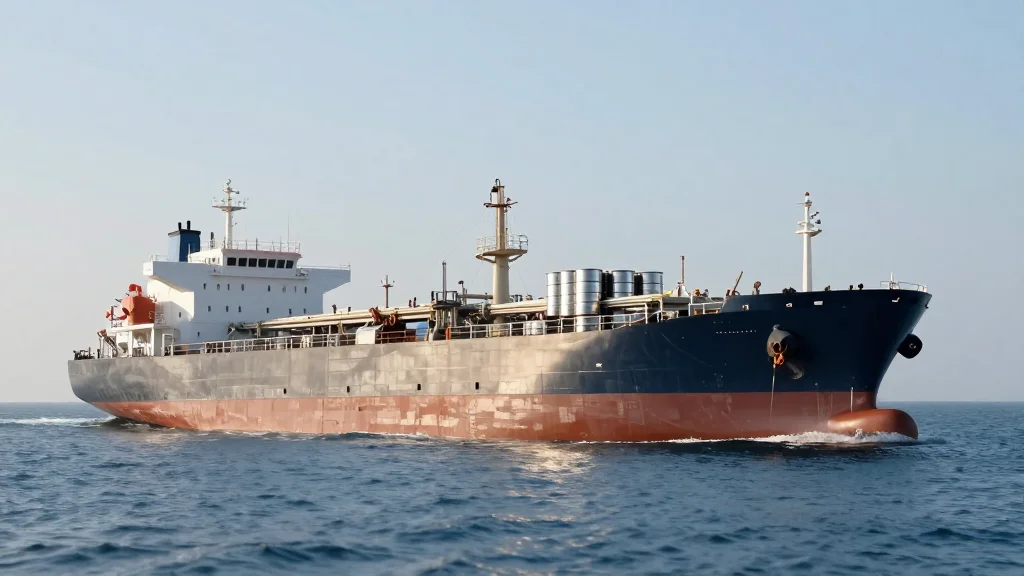
Capitalizing on the supply gap, Marathon launched a series of unprecedented voyages in Q1 2026. The company shipped ultra‑low‑sulfur diesel from Los Angeles to Australia—the first such direct route—while also sending naphtha to Asian markets and jet fuel from the Gulf Coast to Alaska. A notable maneuver involved leveraging an extended Jones Act waiver, permitting foreign‑flagged vessels to transport fuel between U.S. ports such as Los Angeles and the Pacific Northwest, cutting costs and expanding domestic distribution flexibility. These moves opened new revenue streams and diversified Marathon’s export portfolio.
The broader market response underscores a shift toward non‑Middle‑East sourcing as buyers in Europe and Latin America scramble for reliable product supplies. Marathon’s early foray into these unconventional lanes positions it to capture higher freight premiums and lock in long‑term contracts while competitors wrestle with higher transportation costs and regulatory constraints. Analysts expect U.S. crude and refined product exports to remain elevated through 2027, especially if geopolitical tensions persist. Marathon’s strategy demonstrates how a domestic‑focused supply chain can become a competitive advantage in a volatile global energy landscape.
Marathon Leaning Into Unusual Fuel Voyages During Iran War
Comments
Want to join the conversation?
Loading comments...