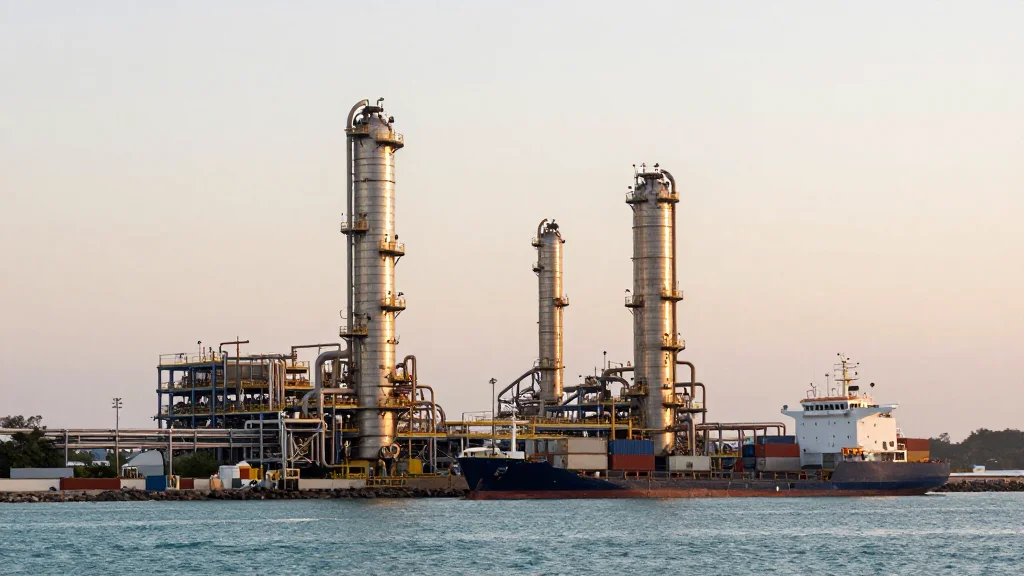
Nigeria’s Aliko Dangote Targets New Refinery in Kenya
Why It Matters
A refinery of this scale would dramatically reduce East Africa’s dependence on imported fuels, enhancing regional energy security and creating a new industrial hub. It also signals confidence in Kenya’s investment climate, potentially attracting further large‑scale infrastructure projects.
Key Takeaways
- •Dangote eyes 650,000‑bpd refinery in Mombasa, Kenya
- •Project cost estimated between $15 bn and $17 bn
- •Kenya’s larger economy and deeper port favor the site over Tanzania
- •New refinery could cut East Africa’s reliance on imported fuels
Pulse Analysis
East Africa currently imports virtually all of its refined petroleum, leaving the region exposed to price volatility and supply shocks from the Middle East. Aliko Dangote’s proposal to replicate his massive Nigerian refinery in Kenya could shift that paradigm, providing a domestic source of gasoline, diesel, and jet fuel for an estimated 30‑million‑person market. By localizing production, the project promises to stabilize prices, create jobs, and generate tax revenue, aligning with broader African goals of industrial self‑sufficiency.
Mombasa’s deep, high‑capacity port gives it a logistical edge over Tanzania’s Tanga, where earlier talks envisioned a joint East African refinery. Kenya’s larger economy and higher fuel consumption make it a more attractive anchor for the venture. Dangote’s public deference to President William Ruto underscores the political dimension; a clear policy signal from Nairobi could unlock financing and expedite permitting. The $15‑$17 billion price tag, while hefty, fits within the scale of Dangote’s existing 650,000‑bpd complex in Lagos, suggesting confidence in replicating operational efficiencies.
If realized, the refinery would be a catalyst for downstream development, spurring petrochemical plants, storage facilities, and logistics networks across the Horn of Africa. It would also position Kenya as a regional energy hub, potentially exporting refined products to neighboring landlocked nations. The investment could encourage other multinational players to consider Africa for large‑scale infrastructure, reinforcing the continent’s shift from raw‑material exporter to value‑added producer. However, success hinges on stable regulatory frameworks, access to crude supply, and sustained government commitment.
Nigeria’s Aliko Dangote targets new refinery in Kenya
Comments
Want to join the conversation?
Loading comments...