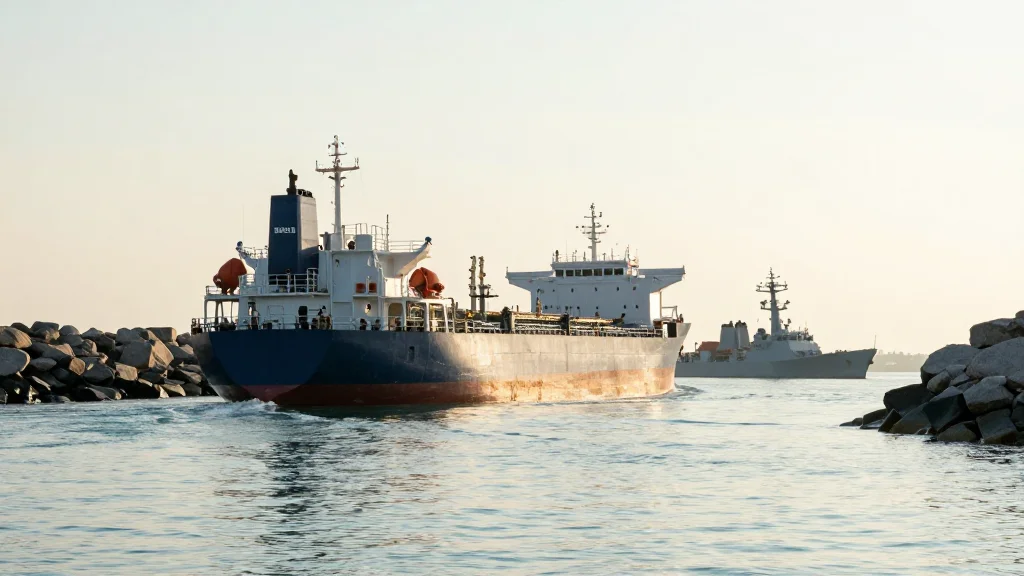
Oil Jumps by 5% After Report of US Warship Being Hit by Missiles
Why It Matters
The price jump highlights how quickly regional security events can destabilize global oil markets, prompting traders to reassess supply‑risk premiums and influencing energy‑related investment decisions.
Key Takeaways
- •Brent rose to $113.69, up 5.1% after missile report.
- •WTI hit $107.04, gaining 5% amid Strait of Hormuz tension.
- •OPEC+ raised output target by 188,000 barrels per day in June.
- •Iran claims missiles struck US ship; US denies incident.
- •Regional shipping risk rises as UAE tanker hit by projectiles.
Pulse Analysis
The sudden 5% rally in Brent and WTI underscores the market’s sensitivity to any hint of conflict in the Strait of Hormuz, a chokepoint that moves roughly a third of global oil supplies. While Reuters could not independently verify the missile strike, the mere report prompted algorithmic trading systems and hedge funds to price in a supply‑disruption premium, pushing prices above $100 a barrel for the first time this year. Analysts note that such spikes are often short‑lived if the incident remains unconfirmed, yet they serve as a reminder that geopolitical headlines can outweigh fundamental demand factors in the near term.
Beyond the immediate price reaction, the episode amplifies existing concerns about maritime security in the Gulf. Iran’s aggressive posture, coupled with a separate projectile attack on a UAE‑flagged tanker near Fujairah, signals a broader escalation that could force vessels to reroute around the Arabian Sea, adding days to transit times and increasing freight costs. OPEC+’s decision to raise output by 188,000 barrels per day in June appears calibrated to offset potential supply shortfalls, but the additional volume is largely theoretical as member nations may withhold production if the Strait remains contested. This tension between production policy and real‑world logistics creates a volatile backdrop for oil‑dependent economies.
For investors and corporate energy buyers, the key takeaway is risk management. Short‑term traders may capitalize on price swings, but longer‑term stakeholders should monitor diplomatic channels, naval deployments, and any confirmation of damage to shipping assets. A sustained closure or heightened military activity could push crude well above $120 per barrel, reshaping budgeting assumptions for airlines, manufacturers, and utilities. Conversely, a rapid de‑escalation would likely see prices retreat, reinforcing the importance of flexible hedging strategies in an environment where a single news flash can move markets dramatically.
Oil jumps by 5% after report of US warship being hit by missiles
Comments
Want to join the conversation?
Loading comments...