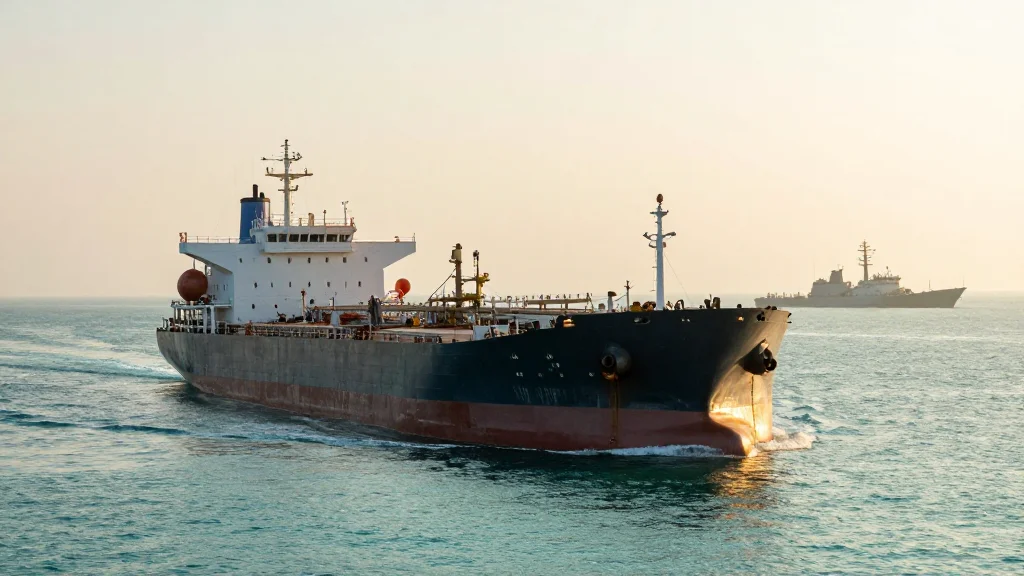
Oil Prices up Amid Stalemate over Next Round of Peace Talks, Continued Blockade of Strait of Hormuz
Companies Mentioned
Why It Matters
The continued blockade tightens global oil supply, pressuring prices and raising inflation risks for oil‑importing economies, especially India, which relies heavily on Hormuz‑bound shipments. Persistent geopolitical tension signals further volatility for energy markets and downstream industries.
Key Takeaways
- •Brent at $102.40, WTI at $93.51 per barrel.
- •Strait of Hormuz blockade disrupts ~20% of global oil supply.
- •India imports 60% crude via Hormuz, faces $1.9 bn bill rise.
- •US and Iran keep naval blockades despite ceasefire claims.
- •Peace talks stalled; no new round expected soon.
Pulse Analysis
The latest uptick in crude prices underscores how geopolitical flashpoints can quickly translate into market movements. With the United States and Iran each enforcing naval blockades, the Strait of Hormuz—a chokepoint that moves roughly 20% of the world’s oil—remains effectively shut. Traders have priced in the risk, pushing Brent above $102 a barrel and West Texas Intermediate near $94. The standoff follows a failed round of peace negotiations, and both sides have signaled no immediate de‑escalation, keeping supply‑side anxieties high.
For India, the ramifications are especially acute. Approximately 60% of its crude oil, along with half of its LNG and the vast majority of its LPG, transit the Hormuz corridor. A sustained $1‑per‑barrel rise could add about ₹16,000 crore—roughly $1.9 billion—to the nation’s annual import bill, straining fiscal balances and potentially feeding through to consumer fuel prices. While domestic retail outlets report normal operations, the macro‑economic outlook must now factor in higher energy costs, which could dampen growth and elevate inflationary pressures.
Looking ahead, the oil market will likely remain jittery until a credible diplomatic breakthrough emerges. Analysts watch for any softening of the blockades or a renewed cease‑fire framework, both of which could restore confidence and ease price pressures. In the meantime, investors may hedge exposure to oil‑linked assets, and import‑dependent economies will need contingency plans to mitigate supply shocks. The interplay of geopolitics and energy economics continues to shape the global risk landscape, making close monitoring of the Hormuz situation essential for policymakers and market participants alike.
Oil prices up amid stalemate over next round of peace talks, continued blockade of Strait of Hormuz
Comments
Want to join the conversation?
Loading comments...