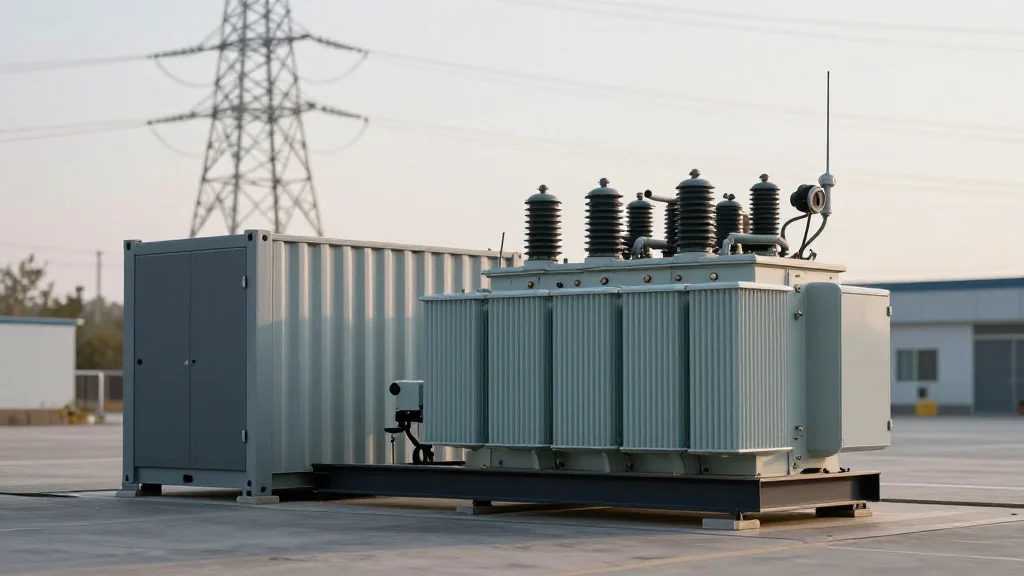
On-Site Natural Gas Generation Gains Favor with Hyperscalers as Bridge to Grid
Companies Mentioned

Why It Matters
The repositioning of BTM gas reshapes power procurement strategies, influencing natural‑gas markets and accelerating grid‑upgrade pressures for the data‑center sector. It signals a short‑term boost for gas generators while underscoring the urgency of faster renewable interconnections.
Key Takeaways
- •Hyperscalers label BTM natural‑gas as short‑term bridge
- •Interconnection queues remain a bottleneck for renewables
- •4,500 MW of data‑center demand expected by 2027
- •Flexible load models enable rapid BTM deployment
- •Gas‑fired BTM projects gain near‑term investor interest
Pulse Analysis
The data‑center boom has outpaced traditional grid expansion, prompting developers to explore behind‑the‑meter natural‑gas solutions as a stop‑gap. Early 2023 saw a flood of proposals to sidestep interconnection delays, but the reality of regulatory approvals, transmission upgrades, and permitting has kept many projects in limbo. As a result, companies turned to on‑site gas turbines to secure reliable power, betting on a quick‑to‑market technology that could be scaled to meet the massive compute loads of hyperscalers.
In the past twelve months, the narrative has shifted. Leading hyperscalers such as Amazon Web Services, Microsoft, and Meta now publicly acknowledge that BTM gas is a bridge, not a long‑term answer. Their statements emphasize flexible load models that can be throttled or shifted as grid capacity becomes available, reducing reliance on fossil‑fuel assets. This strategic pivot is reshaping the natural‑gas market: developers are prioritizing projects near existing pipeline corridors, and investors are eyeing short‑duration contracts that align with the expected timeline for renewable interconnections. Grid operators, meanwhile, must accommodate a surge of intermittent, high‑intensity loads that can be modulated to support overall system stability.
Looking ahead, the industry faces a balancing act. While BTM gas will likely fill the gap for the next few years, the projected 4,500 MW of data‑center demand by 2026‑27 will pressure utilities to accelerate transmission upgrades and renewable integration. Hybrid solutions—combining on‑site gas with battery storage and demand‑response—are emerging as a pragmatic path forward. Policymakers may need to streamline interconnection processes and incentivize low‑carbon alternatives to ensure that the temporary bridge does not become a permanent crutch. The evolution of power strategy in the hyperscale sector will therefore be a key indicator of broader energy transition dynamics.
On-Site Natural Gas Generation Gains Favor with Hyperscalers as Bridge to Grid
Comments
Want to join the conversation?
Loading comments...