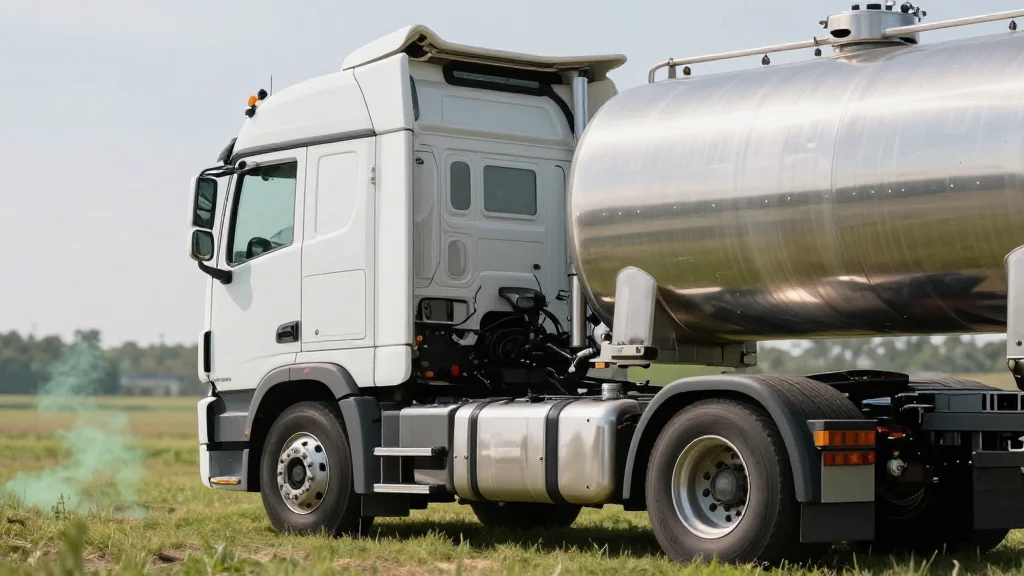
Perspective: RNG Provides Stability for Fleets
Companies Mentioned
Why It Matters
RNG provides price stability and lower emissions, directly protecting thin‑margin trucking operations from volatile diesel markets and upcoming regulatory pressures. Its domestic supply chain also reduces exposure to international supply disruptions.
Key Takeaways
- •RNG costs less than diesel and avoids geopolitical price spikes
- •East Valley Dairy converts manure to 300k diesel‑gallon equivalent monthly
- •Cummins' X15N engine drives RNG adoption among major logistics firms
- •1,400 natural‑gas stations now serve 47 states and D.C.
- •RNG fleet of 90 trucks insulated from recent diesel price spikes
Pulse Analysis
The trucking sector’s exposure to diesel price volatility has become a strategic liability, especially after the recent 40‑50% price jump tied to Middle‑East tensions. Operators with razor‑thin margins see each fill‑up as a gamble, and the ripple effect can erode quarterly profits or even force shutdowns. This environment has heightened interest in alternative fuels that can decouple operating costs from geopolitical risk, positioning renewable natural gas as a compelling solution.
Renewable natural gas is generated from organic waste streams—most notably dairy manure and landfill methane—turning a liability into a low‑cost, carbon‑reduced fuel. A single Idaho dairy processing 5.5 million gallons of manure daily now produces enough RNG to replace roughly 300,000 diesel gallons each month, illustrating the scalability of the model. The introduction of Cummins’ 15‑liter X15N natural‑gas engine has lowered the technical barrier for heavy‑duty trucks, prompting major logistics players such as UPS, FedEx, Amazon, J.B. Hunt, Schneider and Paper Transport to integrate RNG fleets. Supporting this shift, the nation now hosts about 1,400 natural‑gas refueling stations across 47 states and D.C., ensuring that drivers can refuel in minutes and stay on schedule.
Beyond immediate cost savings—estimated at a 10% reduction in overall freight expenses when diesel spikes—RNG aligns with forthcoming 2027 NOx emissions standards, offering a pathway to regulatory compliance without sacrificing performance. Investors are increasingly backing dairy‑based RNG projects, recognizing both the environmental upside and the economic resilience they provide. For fleet managers, the strategic calculus now favors accelerating RNG adoption to lock in fuel price stability, meet emissions targets, and safeguard long‑term profitability in an unpredictable global energy landscape.
Perspective: RNG Provides Stability for Fleets
Comments
Want to join the conversation?
Loading comments...