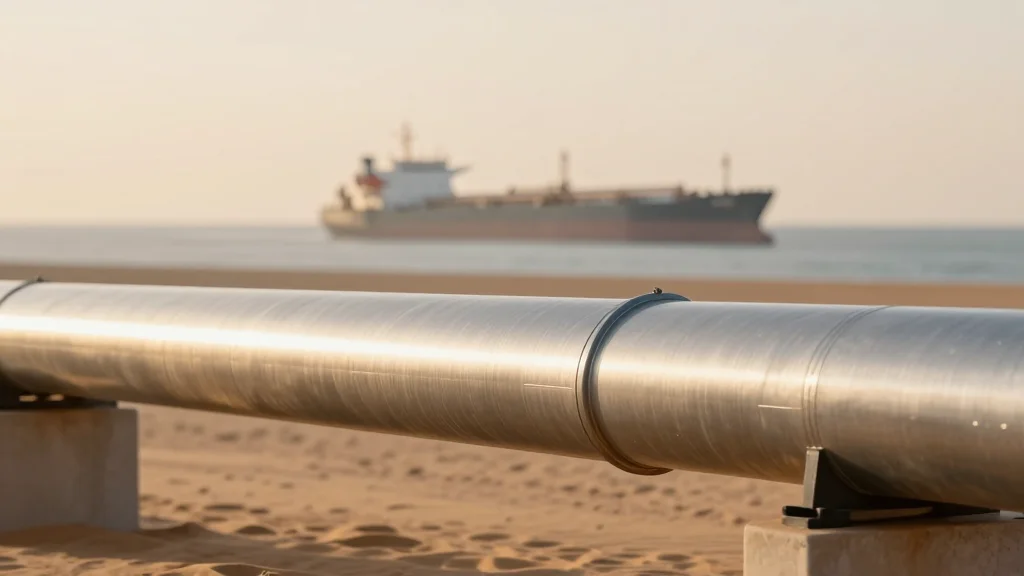
Saudi Aramco Q1 Profit Jumps 25% to $32.5 Bn as East‑West Pipeline Offsets Hormuz Blockade

Companies Mentioned
Why It Matters
Aramco’s profit surge underscores how critical infrastructure can shield a major oil producer from geopolitical turbulence. By leveraging its East‑West pipeline, the company maintained export volumes, supporting global oil supply and tempering price spikes that could have accelerated inflation worldwide. The episode also illustrates the broader risk premium investors assign to Middle‑East energy assets, prompting a re‑evaluation of supply‑chain resilience across the sector. The prolonged closure of the Strait of Hormuz has forced governments and industry players to reconsider routing, insurance, and strategic stockpiling policies. As the world’s top oil exporter demonstrates, domestic pipeline capacity can become a decisive factor in market stability, influencing everything from refinery planning in Asia to fuel pricing in Europe and North America.
Key Takeaways
- •Saudi Aramco Q1 net profit rose 25% to $32.5 bn, beating estimates.
- •Revenue increased 7% to $115.49 bn, driven by higher oil prices and volumes.
- •East‑West crude pipeline operated at full capacity, offsetting Hormuz blockage.
- •Strait of Hormuz remains largely closed, forcing rerouting of ~5 m bpd.
- •CEO Amin Nasser warned market normalization may not occur until 2027 if disruptions persist.
Pulse Analysis
Aramco’s earnings highlight a rare case where a single piece of infrastructure can neutralise a geopolitical shock of this magnitude. The East‑West pipeline, built to diversify export routes, now serves as a strategic lifeline, allowing the company to sustain a near‑pre‑crisis flow of roughly 5 million barrels per day. This operational flexibility not only protects Aramco’s cash flow but also cushions the global oil market from a supply gap that could have pushed Brent well above $120 per barrel.
Historically, closures of the Strait of Hormuz have triggered sharp price spikes and frantic inventory builds. This time, however, the market’s reaction has been muted relative to past crises, reflecting both the pipeline’s capacity and the pre‑emptive release of strategic reserves by the IEA. Yet, the lingering risk premium remains evident in futures contracts and insurance premiums, which have surged amid ongoing drone attacks and naval posturing.
Looking forward, Aramco’s ability to scale the pipeline further will be a key determinant of its competitive edge. If the conflict drags on, the company may invest in additional pump stations or consider new export terminals on the Red Sea. Conversely, a rapid diplomatic resolution could re‑open Hormuz, restoring the most cost‑effective route and potentially compressing margins. Investors should monitor diplomatic talks, U.S. naval deployments, and any policy shifts from the European Union regarding energy security, as these will shape the next wave of earnings and the broader energy landscape.
Saudi Aramco Q1 profit jumps 25% to $32.5 bn as East‑West pipeline offsets Hormuz blockade
Comments
Want to join the conversation?
Loading comments...