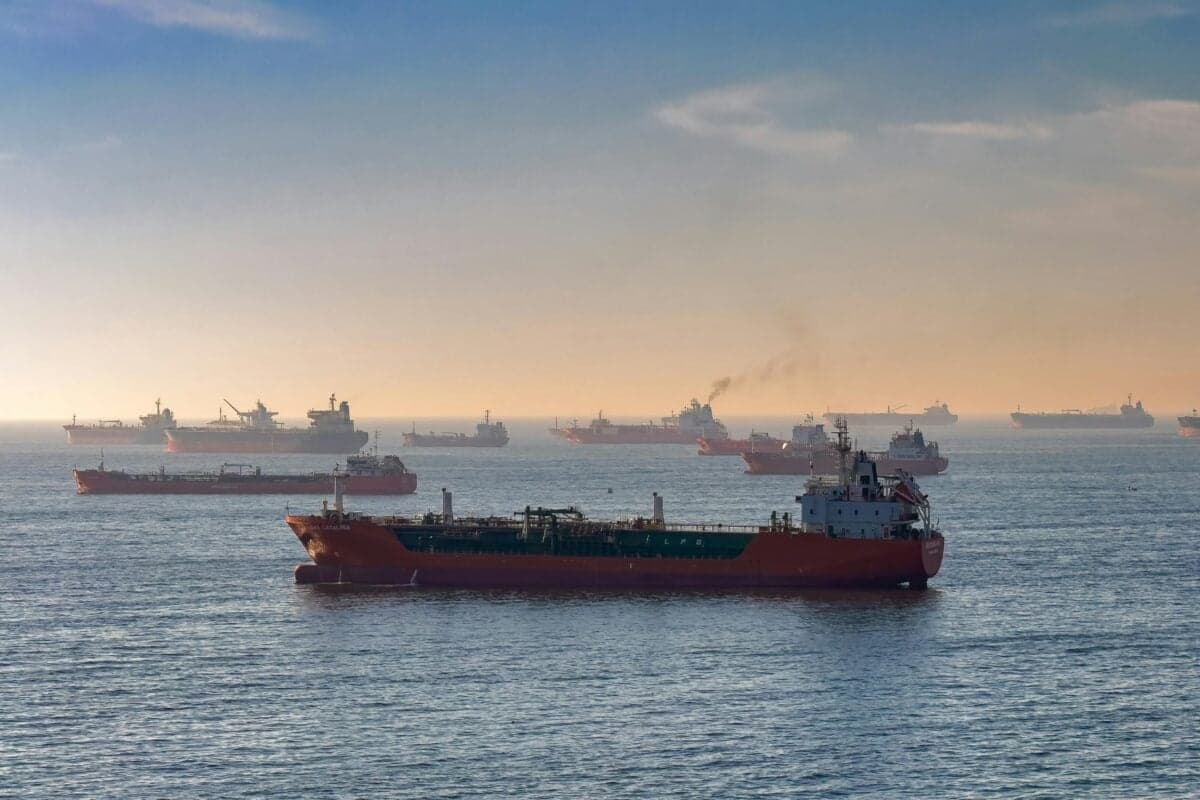
Strait of Hormuz Closure Creates Complexity for Global Energy Storage Markets
Companies Mentioned
Why It Matters
Higher fuel costs improve the economics of battery storage, creating a potential acceleration of renewable‑energy deployment, while supply‑chain strains could compress margins and delay projects if the conflict persists.
Key Takeaways
- •Strait closure pushes oil prices, raising global gasoline to $4.06/gal.
- •Higher power prices improve economics for battery storage in Asia, Europe.
- •Shipping disruptions raise copper, cobalt, nickel costs for battery supply chain.
- •Sulfur supply constraints could tighten cathode material prices.
- •Chinese battery makers gain $70 billion market cap amid demand surge.
Pulse Analysis
The abrupt shutdown of the Strait of Hormuz has reverberated far beyond crude oil markets. By cutting the sole maritime link between the Persian Gulf and the open ocean, Iran forced a sharp spike in global oil prices, sending U.S. gasoline to $4.06 per gallon and prompting price‑cap measures across Asia and Europe. The shock has also highlighted the strategic vulnerability of energy‑import‑dependent economies, prompting governments to accelerate policies that reduce reliance on volatile Middle‑Eastern supplies.
For battery‑storage players, the immediate impact is nuanced. Elevated oil and gas prices raise wholesale electricity rates in markets where gas‑fired plants set the marginal price, widening the arbitrage window for battery‑energy‑storage systems (BESS). This makes storage projects—especially those paired with solar—more financially attractive. At the same time, logistical bottlenecks in the Hormuz corridor are inflating freight costs for critical minerals such as copper, cobalt and nickel, and exposing a less‑discussed sulfur shortage that could pressure cathode material prices. These supply‑chain pressures add to existing cost drivers like lithium price volatility and tariff exposure.
Looking ahead, the crisis could reshape investment patterns. While short‑term project timelines may slip due to higher logistics and financing costs, the broader geopolitical risk is reinforcing the case for domestic renewable and storage capacity. Chinese battery manufacturers, already benefiting from overcapacity, have seen their market capitalisation swell by roughly $70 billion, positioning them to meet any surge in demand. Ultimately, the speed at which governments and corporates view the Hormuz closure as a structural shift—not a temporary shock—will dictate whether the episode accelerates the global energy transition or merely adds a layer of uncertainty to capital‑intensive clean‑energy projects.
Strait of Hormuz closure creates complexity for global energy storage markets
Comments
Want to join the conversation?
Loading comments...