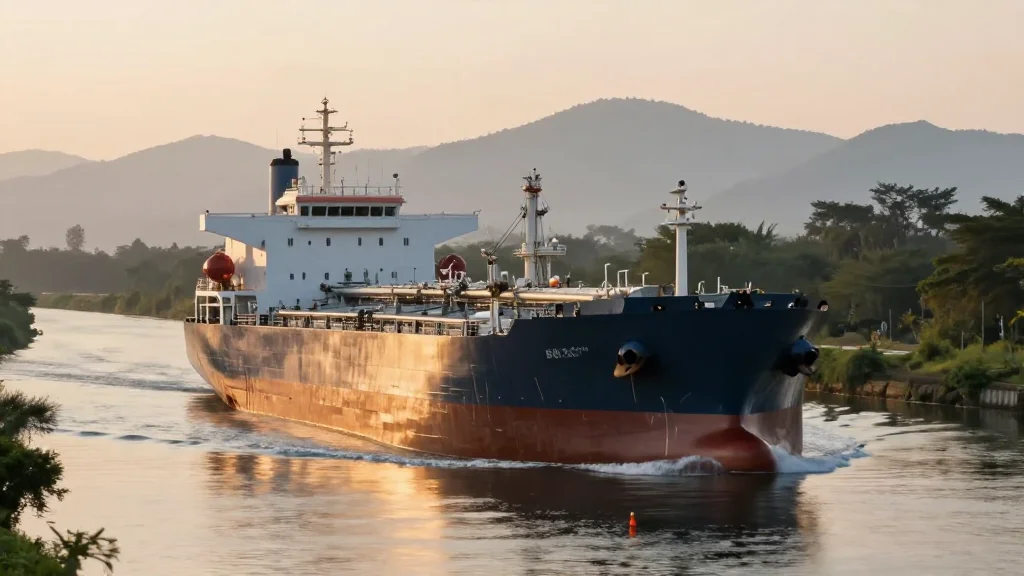
Strait of Hormuz Reopening for Commercial Traffic, Trump and Iran Say
Why It Matters
Reopening the Hormuz chokepoint eases immediate oil‑price pressure but the lingering risk environment means insurers and shippers will remain vigilant, influencing global energy costs.
Key Takeaways
- •Iran reopened Strait of Hormuz for commercial vessels after ceasefire
- •U.S. crude futures fell $10 per barrel to $81.50
- •Strait carries ~20% of global oil, affecting China and Indo‑Pacific
- •Shipowners remain cautious due to missile and drone threats
- •Insurance costs likely rise until safe passages are demonstrated
Pulse Analysis
The decision by Tehran to reopen the Strait of Hormuz for all commercial traffic came on the heels of a 10‑day cease‑fire between Israel and Lebanon, a diplomatic win that President Trump leveraged to calm volatile markets. The strait, through which roughly one‑fifth of the world’s oil flows, had been throttled by Iranian missile and drone threats, causing tanker traffic to grind to a halt. By coordinating vessel routes through its Ports and Maritime Organization, Iran signaled a willingness to de‑escalate, offering a tentative pathway for oil shipments to resume.
U.S. crude oil futures reacted instantly, slipping nearly $10 a barrel to $81.50, the lowest level since early March. The price drop reflects market relief that a critical chokepoint is no longer fully blocked, but it also underscores lingering uncertainty as insurers reassess risk premiums. With about 20 percent of global oil—including roughly 40 percent of China’s imports—transiting Hormuz, any renewed disruption could quickly reverberate through Asian refineries and European benchmarks. Analysts therefore watch shipping data closely, knowing that even modest delays can tighten supply and nudge prices upward.
Despite the reopening, shipowners remain wary. Iranian missile drills and drone deployments keep insurance underwriters on high alert, inflating premiums until a series of safe passages can be documented. Industry observers expect a gradual ramp‑up, with early adopters testing the corridor before larger fleets follow. If the risk perception eases, the strait could regain its pre‑conflict throughput, stabilizing supply chains that feed the Indo‑Pacific and European markets. Conversely, any misstep could reignite price spikes, reinforcing the strategic importance of diplomatic channels in managing energy security.
Strait of Hormuz reopening for commercial traffic, Trump and Iran say
Comments
Want to join the conversation?
Loading comments...