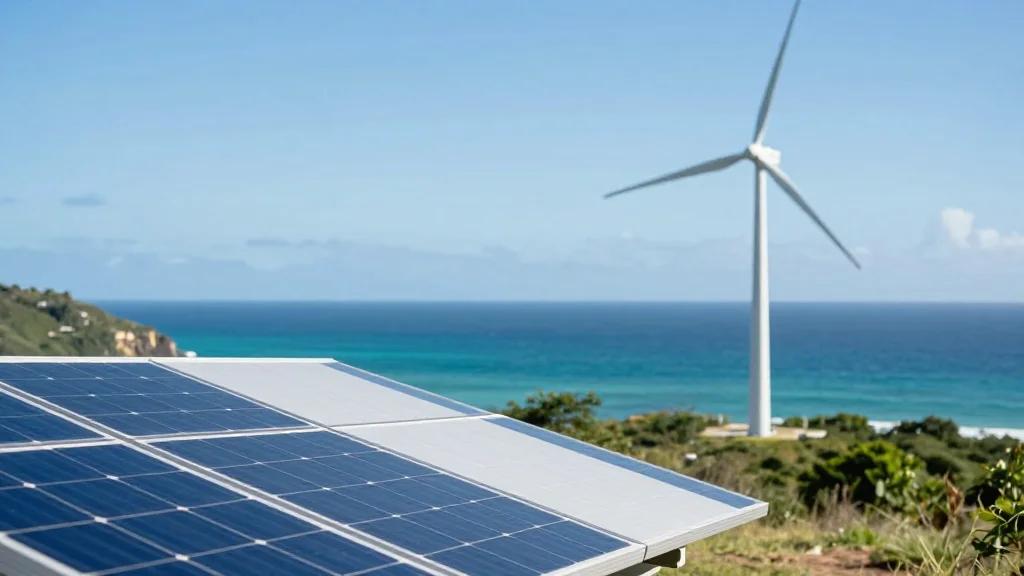
Think‑tank Proposes $8 Billion Renewable Plan to Break Cuba’s U.S. Energy Blockade

Why It Matters
The plan spotlights how targeted climate finance can serve dual goals: accelerating decarbonisation and undermining geopolitical coercion. By offering a financially viable route to energy independence, the proposal could inspire other sanctioned or embargoed states to seek renewable solutions, reshaping the strategic calculus of energy‑dependent powers. Moreover, a successful Cuban transition would demonstrate the scalability of solar‑dominant grids in small island developing states, informing regional policy and attracting further investment in Caribbean renewables. If realized, the $8 bn investment would also generate measurable economic benefits—lower electricity tariffs, reduced import bills, and new jobs in renewable construction and maintenance—potentially stabilising Cuba’s fragile economy and easing humanitarian pressures caused by prolonged blackouts. The broader message is that climate finance, when framed as reparative, can address both environmental and security challenges simultaneously.
Key Takeaways
- •$8 bn investment could meet 93.4% of Cuba’s electricity demand with renewables.
- •A $19.2 bn outlay would enable a fully renewable Cuban grid.
- •Electricity costs would drop from 14.3 ¢/kWh to 6.5 ¢/kWh under the $8 bn scenario.
- •Cuba has already added >1,000 MW of solar capacity with Chinese financing.
- •The proposal calls for reparative climate finance from multilateral and private sources.
Pulse Analysis
The Commonwealth think‑tank’s $8 bn blueprint arrives at a crossroads where climate ambition meets geopolitical reality. Historically, embargoes have forced nations like Cuba to innovate under scarcity; the 1990s ‘Special Period’ saw a rapid shift to agro‑ecology, and today a similar pivot could occur in the energy sector. The cost trajectory outlined—dropping unit electricity prices by more than half—mirrors global trends where solar PV and storage have become cheaper than fossil fuels in many markets. If investors view the proposal as a low‑risk, high‑impact climate asset, capital could flow despite the island’s political isolation.
However, the plan’s success hinges on overcoming entrenched U.S. policy. The embargo’s legal framework gives Washington leverage that can deter private financiers wary of secondary sanctions. A coordinated response from climate funds and development banks could mitigate this risk, but it would require explicit political backing from the U.S. or a multilateral waiver. The TSP’s framing of the financing as reparative may appeal to European and Latin American donors seeking to counterbalance U.S. influence, yet the lack of a clear financing roadmap leaves a gap between theory and execution.
In the broader Caribbean context, Cuba’s potential transition could set a precedent for other island states grappling with energy insecurity and climate vulnerability. A successful renewable rollout would showcase a scalable model—solar‑heavy generation supplemented by wind, hydro and bioenergy—that can be replicated with modest capital. This could accelerate regional decarbonisation, reduce dependence on imported oil, and shift the balance of power away from fossil‑fuel exporters toward a more resilient, climate‑aligned energy future.
Think‑tank proposes $8 billion renewable plan to break Cuba’s U.S. energy blockade
Comments
Want to join the conversation?
Loading comments...