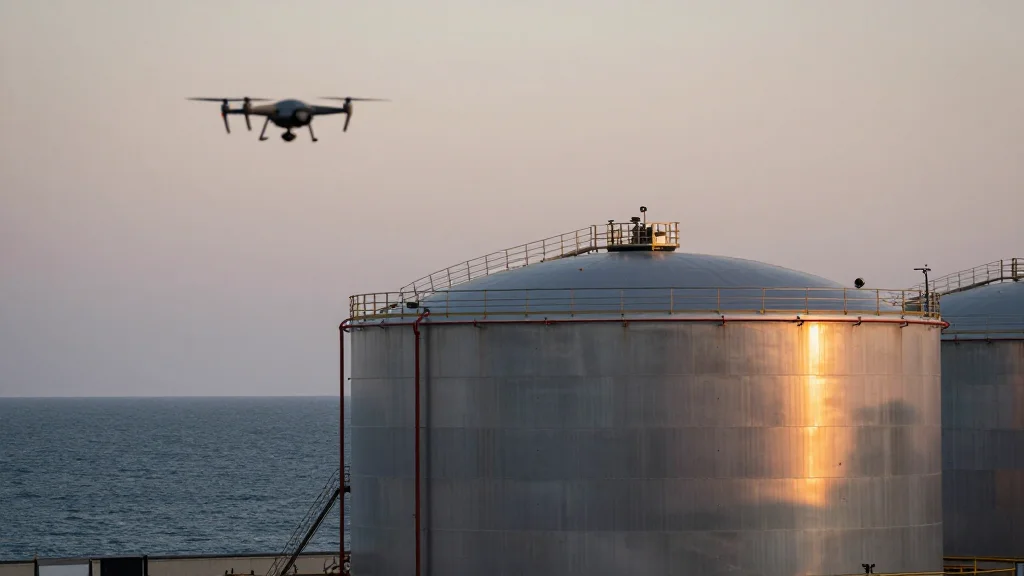
Ukraine Claims Drone Strike on Russia's Black Sea Oil Terminal, Targeting Kremlin Revenue

Why It Matters
The hit on Novorossiysk illustrates how the Russia‑Ukraine war is reshaping global energy markets. By targeting a node that handles a sizable share of Russian oil exports, Ukraine is directly attacking a revenue stream that funds the Kremlin’s war machine. The disruption forces Russia to seek alternative, costlier routes, potentially tightening global oil supplies and nudging prices upward. Moreover, the attack signals a new phase where battlefield tactics intersect with economic warfare, prompting policymakers to reassess sanctions and energy security strategies. For Europe, which remains heavily dependent on Russian energy, the incident raises questions about the reliability of alternative supply chains and the urgency of diversifying imports. It also underscores the vulnerability of critical infrastructure to low‑cost, high‑impact drone technology, a factor that could influence future defense planning for both sides of the conflict.
Key Takeaways
- •Ukraine claims its drones hit the Novorossiysk Black Sea oil terminal, a hub for ~20% of Russia's oil exports.
- •Recent Ukrainian drone strikes have forced shutdowns at Moscow, Ryazan and Yaroslavl refineries.
- •The attack could reduce Kremlin oil revenues by tens of millions of dollars per month.
- •U.S. Embassy in Kyiv warned of a “potentially significant air attack” on Ukraine in response.
- •Disruption may force Russia to reroute oil shipments, increasing transit costs and affecting global markets.
Pulse Analysis
Ukraine’s decision to target Novorossiysk reflects a strategic shift from battlefield engagements to economic attrition. By focusing on export nodes, Kyiv aims to erode the financial lifeline that sustains Russia’s military operations. Historically, wars have leveraged blockades and sanctions; today, low‑cost drones provide a scalable tool to achieve similar effects with minimal risk to personnel.
The effectiveness of this approach hinges on two variables: the resilience of Russian repair capabilities and the willingness of international markets to absorb supply shocks. Russia has demonstrated rapid reconstruction capacity in the past, but the cumulative strain of repeated strikes could stretch resources thin, especially as Western sanctions limit access to spare parts and technical expertise. Simultaneously, oil traders are already pricing in a modest risk premium, suggesting that market participants view the threat as credible.
Looking ahead, the escalation risk cannot be ignored. The U.S. warning of a possible retaliatory air campaign indicates that energy strikes may trigger broader kinetic responses, potentially widening the conflict’s geographic scope. For policymakers, the lesson is clear: energy infrastructure has become a frontline, and any effort to stabilize markets must account for the growing role of unmanned systems in shaping geopolitical outcomes.
Ukraine Claims Drone Strike on Russia's Black Sea Oil Terminal, Targeting Kremlin Revenue
Comments
Want to join the conversation?
Loading comments...