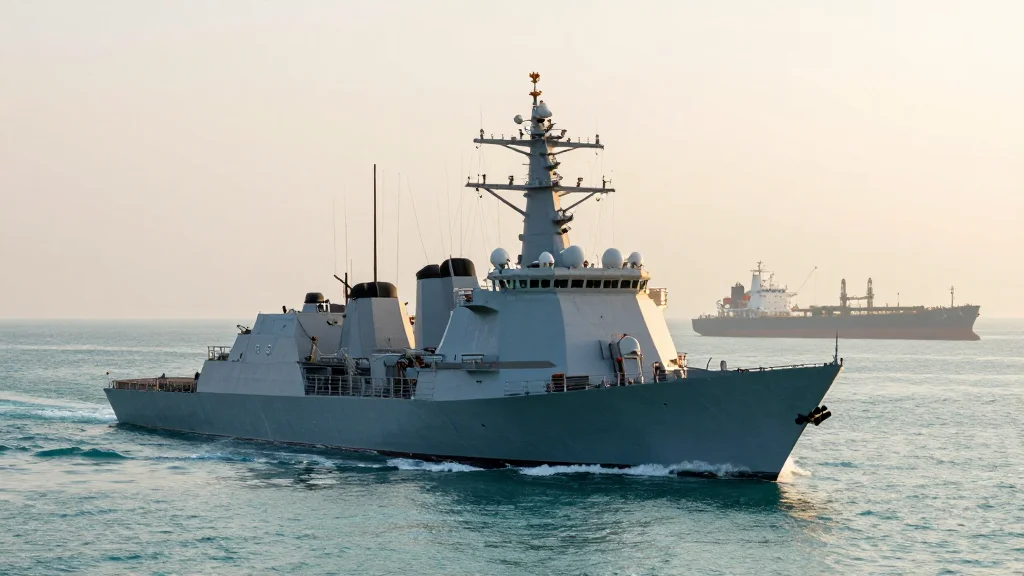
US Naval Ops in Hormuz Heighten Oil Market Volatility as Prices Breach $100 a Barrel

Why It Matters
The Strait of Hormuz is a chokepoint for roughly one‑fifth of the world’s oil trade; any disruption instantly translates into higher energy costs, inflationary pressure, and tighter balance sheets for oil‑importing nations. The U.S. decision to project naval power into the waterway signals a willingness to keep the route open, but it also raises the risk of a direct confrontation that could push prices even higher and destabilize global markets. For emerging economies already grappling with currency weakness and high import bills, sustained price spikes threaten to erode growth prospects and exacerbate social tensions. Beyond immediate price effects, the episode highlights a broader shift in maritime security: low‑cost autonomous drones and mines are reshaping naval threat calculations, forcing navies to allocate expensive interceptor missiles and surveillance assets to protect commercial traffic. This new risk calculus could lead to higher shipping costs and longer transit times, reshaping global supply‑chain strategies and accelerating the search for alternative energy sources.
Key Takeaways
- •U.S. warships escorted commercial vessels through the Strait of Hormuz for the first time since the Iran‑U.S. war escalated
- •Brent crude rose above $100 per barrel, reaching $107‑$111 amid heightened tensions
- •Risk analysts cite Iran’s cheap Shahed drones and naval mines as a "persistent, dispersed threat"
- •UN DESA warns the Hormuz shock could cut global GDP growth to 2.5% in 2026
- •Jamaica’s Planning Institute cautions that prolonged high oil prices could deepen the island’s economic challenges
Pulse Analysis
The Hormuz episode underscores how quickly geopolitical flashpoints can translate into market turbulence in an era of tightly coupled energy supply chains. Historically, the strait’s closure in 2012 and 2019 produced short‑lived price spikes that were quickly absorbed by strategic petroleum reserves and alternative routing. This time, however, the confluence of Iran’s low‑cost drone warfare, the absence of robust regional naval coalitions, and the already constrained global oil market—exacerbated by pandemic‑era demand rebounds—means the shock is more likely to linger.
From a strategic perspective, the United States faces a dilemma: a visible naval presence deters Iranian aggression but also raises the stakes for accidental escalation. The cost of maintaining continuous escort missions—both in terms of munitions expended on intercepting cheap drones and the opportunity cost of tying up high‑end warships—could become unsustainable if the conflict drags on. This may push Washington to lean more heavily on diplomatic pressure, leveraging its influence over allies in the Gulf and its leverage over Iran’s economic lifelines.
For the energy sector, the immediate implication is a renewed premium on security‑enhanced logistics and a possible acceleration of diversification away from Middle‑East oil. Companies with flexible supply chains, access to strategic reserves, or exposure to alternative basins (e.g., the U.S. Gulf of Mexico, West Africa) will likely outperform. In the longer term, the heightened risk profile may catalyze investment in renewable energy and storage solutions, as governments and corporations seek to hedge against geopolitical supply shocks. Investors should monitor policy responses—particularly any U.S. legislative moves to fund additional naval assets or to expand strategic petroleum reserves—as these will shape the risk‑reward landscape for oil and energy equities over the coming months.
US naval ops in Hormuz heighten oil market volatility as prices breach $100 a barrel
Comments
Want to join the conversation?
Loading comments...