What Does Corning’s $3 Billion 2030 Solar Target Mean for the PV Industry?
Companies Mentioned
Why It Matters
If Corning can scale its U.S. module production, it could become a major domestic supplier, reshaping the PV supply chain and reducing reliance on imports. The strategy also signals how legacy materials firms are positioning themselves in the fast‑growing renewable‑energy market.
Key Takeaways
- •Corning aims for $3 B solar revenue by 2030, 7.5% of total
- •Solar PV segment expected to grow 7.6% CAGR, reaching $2.4 B by 2030
- •New module capacity of ~4 GW needed, likely added 2028
- •Capex peaks in 2025 and 2027‑28 to fund ingot, wafer, module expansion
- •Absence of cell manufacturing leaves Corning dependent on third‑party U.S. cell makers
Pulse Analysis
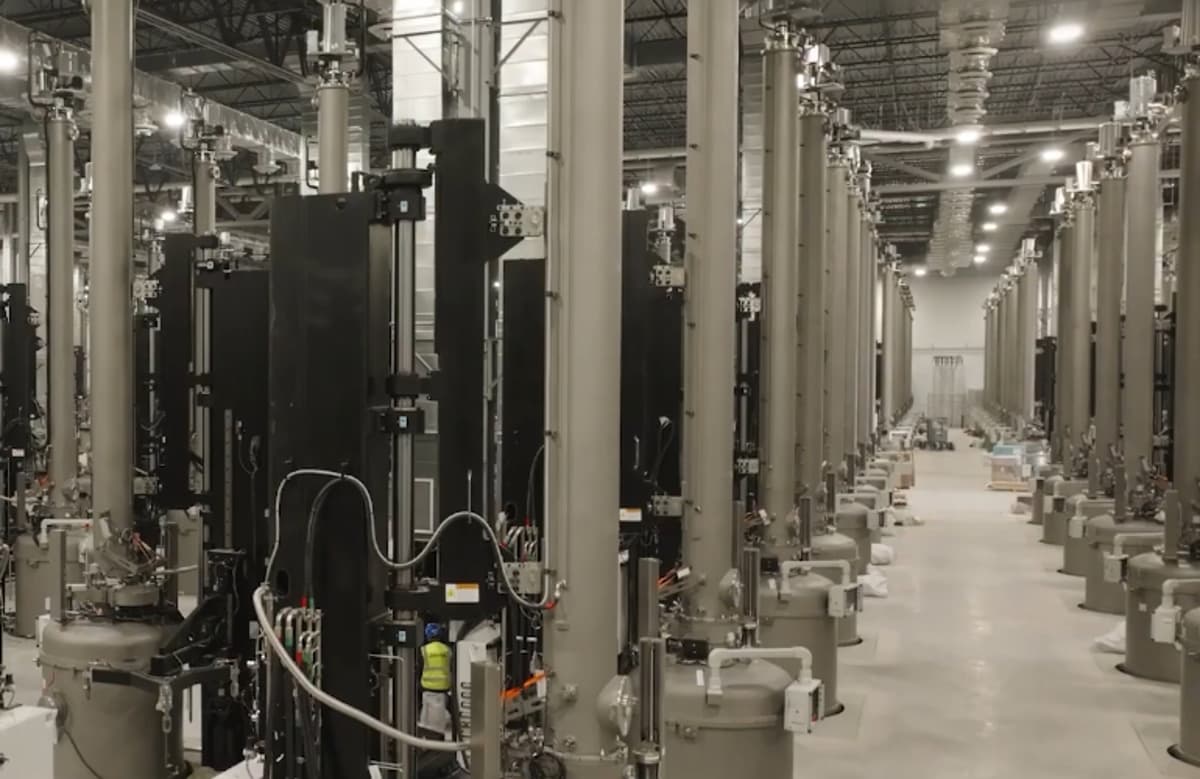
Corning’s $3 billion solar revenue ambition is a centerpiece of its "Springboard" growth plan, which envisions the company expanding from $20 billion in 2026 to $40 billion by 2030. By earmarking roughly 7.5% of that future topline for solar, Corning signals a serious pivot from its traditional specialty glass business into the renewable‑energy arena. The target translates to about $2.4 billion of pure photovoltaic sales, a modest 7.6% CAGR that suggests the firm is betting on steady, rather than explosive, market expansion. This outlook comes after Corning’s rapid integration of polysilicon, ingot and wafer production in the United States and the acquisition of JA Solar’s Arizona module plant, positioning it as the most vertically integrated silicon‑based PV producer in the country.
Achieving the 2030 goal will require significant capacity upgrades. Current ingot and wafer lines total roughly 2 GW, and the module facility adds another 2 GW. To bridge the revenue gap, analysts project Corning must double both upstream and downstream capacity to around 4 GW each, with new facilities slated for commissioning in 2028. Capital expenditures are expected to spike in 2025 for initial ingot/wafer build‑out, then again in 2027‑28 to fund the module expansion, before settling into a maintenance phase. The financial outlay underscores the company’s commitment but also highlights the risk of over‑building if market demand stalls.
The broader industry impact hinges on Corning’s decision to stay out of cell manufacturing. By focusing on polysilicon, wafers and modules, the company leans on third‑party U.S. cell makers, making its success partially dependent on their ability to scale. A move into cell production would give Corning greater control over the value chain and could accelerate domestic PV capacity, but it would also demand substantial R&D and new manufacturing expertise. Investors and policymakers will watch closely: Corning’s trajectory could either reinforce the emerging U.S. solar ecosystem or expose the sector to supply‑chain vulnerabilities if cell‑maker growth falters.
What does Corning’s $3 billion 2030 solar target mean for the PV industry?
Comments
Want to join the conversation?
Loading comments...