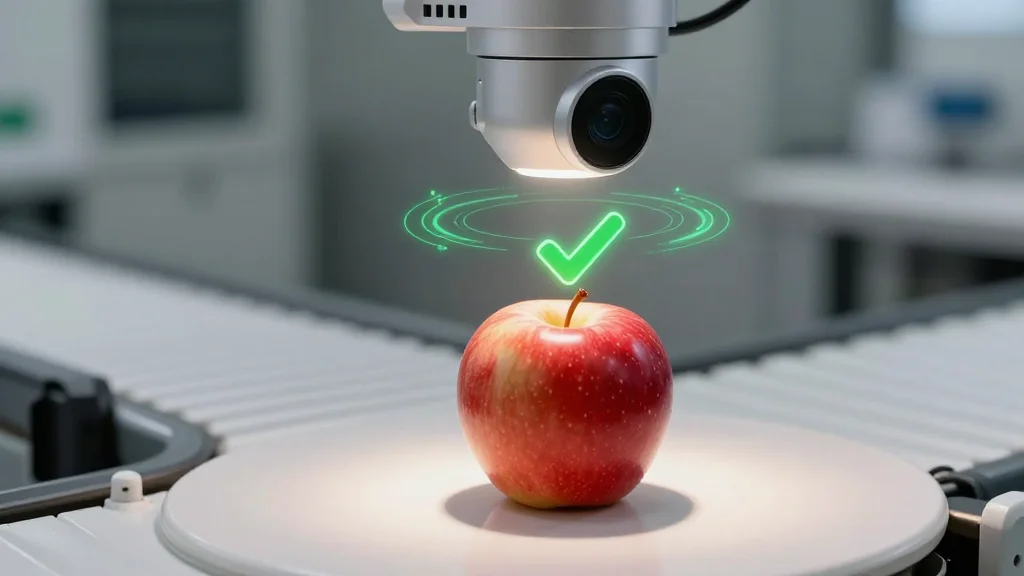
Albertsons Deploys Google Cloud Gemini AI to Standardize Produce Images and Cut Waste

Companies Mentioned
Why It Matters
The deployment of AI for produce imaging illustrates how enterprise technology can directly address a $161 billion waste problem while enhancing the shopper experience. By automating visual inspection, Albertsons not only reduces labor costs and subjectivity but also creates a data pipeline that can feed downstream analytics, from inventory forecasting to personalized marketing. The initiative signals a shift where large retailers treat AI as a core supply‑chain asset rather than a peripheral experiment, potentially reshaping procurement, logistics and sustainability strategies across the sector. Moreover, the partnership with Google Cloud showcases the growing importance of cloud‑native AI platforms in enterprise adoption. Success here could accelerate similar collaborations, prompting competitors to invest in comparable solutions and driving a wave of AI‑driven efficiency gains throughout the grocery ecosystem.
Key Takeaways
- •Albertsons launches AI tool built on Google Cloud's Gemini Enterprise for produce quality inspection.
- •System initially targets strawberries and grapes, with plans to expand to all berries and nationwide produce items by end‑2026.
- •AI model provides instant image‑based ratings, improving consistency and speeding decision‑making at distribution centers.
- •U.S. food waste valued at $161 billion annually; tighter quality control aims to capture a share of that loss.
- •Only 15% of shoppers currently use AI tools, but improved product imagery could boost e‑commerce conversion.
Pulse Analysis
Albertsons' move marks a pragmatic application of generative AI in a high‑volume, low‑margin industry. Unlike consumer‑facing chatbots or recommendation engines, the Gemini‑powered visual inspector tackles a tangible cost center—food waste—by standardizing a process that has traditionally relied on human perception. The real value lies in the data generated: each image, rating and decision becomes a record that can be fed into predictive models for demand forecasting, dynamic pricing and shelf‑life optimization. In effect, Albertsons is building a feedback loop that could transform its entire supply chain from a reactive to a proactive operation.
From a competitive standpoint, the rollout puts pressure on other grocery chains to accelerate their AI roadmaps. Hy‑Vee and Afresh have already announced AI‑enabled forecasting tools, but none have yet publicized a vision‑based quality system at scale. If Albertsons can demonstrate measurable waste reduction—say, a 5‑10% cut in produce loss—it will set a performance benchmark that investors and analysts will quickly benchmark against peers.
Finally, the partnership underscores the strategic importance of cloud providers in the enterprise AI arena. Google Cloud's Gemini Enterprise is positioned as a turnkey solution for computer‑vision workloads, and a high‑visibility case study with Albertsons could tip the scales in its favor against rivals like AWS and Azure. As retailers grapple with the dual imperatives of sustainability and digital transformation, AI platforms that can be rapidly integrated into existing logistics workflows will likely become the new standard, reshaping the economics of grocery retail for years to come.
Albertsons Deploys Google Cloud Gemini AI to Standardize Produce Images and Cut Waste
Comments
Want to join the conversation?
Loading comments...