🎯 Today's Enterprise Pulse
Coupa expands AI spend‑management suite with Tonkean acquisition
Coupa announced it has acquired AI‑native platform Tonkean, adding a natural‑language interface, a no‑code process builder and more than 250 native connectors to its spend‑management suite. The integration is designed to automate procurement, legal and internal service workflows, with Coupa reporting doubled user adoption, halved cycle times and over 30 hours saved per week.
Also developing:

🚀 Top Enterprise Headlines

SAI360 Launches GRC Elevate 6.0 with Embedded AI to Modernize Compliance and Risk Management
SAI360, a global leader in governance, risk, and compliance (GRC) software, announced the public launch of GRC Elevate 6.0, expanding the platform with embedded AI capabilities and new Professional and Essentials editions that make modern GRC more accessible, faster to deploy, and easier to manage. As regulatory demands increase and organizations face growing pressure to […] The post SAI360 Launches GRC Elevate 6.0 with Embedded AI to Modernize Compliance and Risk Management appeared first on AiThority.
AiThority » Sales Enablement

Announcing Claude Compliance API Support with Cloudflare CASB
Cloudflare now integrates with the Claude Compliance API, so that security teams can monitor Claude Enterprise activity directly in the Cloudflare Dashboard.
Cloudflare Blog
Coupa Acquires Tonkean to Expand AI Spend Management
Coupa is expanding its agentic artificial intelligence ambitions with the acquisition of Tonkean, a deal aimed at making procurement and global trade workflows more autonomous from request to payment. The cloud-native spend management company said Wednesday (May 21) that it acquired Tonkean, an AI-native intake and orchestration platform used by enterprise procurement, legal and […] The post Coupa Acquires Tonkean to Expand AI Spend Management appeared first on PYMNTS.com.
PYMNTS

How NetSuite and Salesforce Integration Can Benefit Your Business?
Have you ever watched your sales team close a deal, only to have finance scramble for a week to record it properly? Or worse, seen your support team unable to offer discounts because they don’t have access to customer financials in Salesforce? This happens when NetSuite (your ERP) and Salesforce (your CRM) don’t talk to […] The post How NetSuite and Salesforce Integration Can Benefit Your Business? appeared first on TechBullion.
TechBullion

Private Markets Are Entering Their AI-Native Era, and FinBursa Is Here to Lead It
For decades, private markets have operated through relationships, networks, and institutional trust. Yet behind the sophistication of modern investment firms lies an operational reality that often feels surprisingly outdated: fragmented spreadsheets, disconnected CRMs, standalone virtual data rooms, scattered email threads, and workflows spread across multiple systems. As private capital becomes increasingly global, collaborative, and data-intensive, the limitations of that fragmented infrastructure are becoming harder to ignore. And a growing number of firms across the Gulf appear to be searching for a more integrated way to manage how opportunities are discovered, evaluated, and executed. That is the space Dubai-based FinBursa is attempting to enter. Built in the UAE and steadily expanding across the GCC, Singapore, and parts of Europe, FinBursa is positioning itself as an AI-native infrastructure company for modern private markets. Rather than offering a single-purpose tool, the company is building what it describes as an interconnected operating layer for investment firms through two complementary platforms: FinBursa Access and FinBursa 360. At the centre of the company’s vision is a relatively simple idea: the firms that succeed in private markets over the coming decade may not necessarily be the ones with the largest networks alone but the ones capable of transforming those networks into structured intelligence, faster collaboration, and scalable decision-making. That thesis is increasingly resonating across the industry. Rebuilding private market workflows around connectivity Despite managing billions of dollars in assets and increasingly sophisticated investment strategies, many private market firms still operate through disconnected workflows that evolved organically over time. A deal may originate through email, diligence materials may sit inside external data rooms, investor updates may happen across messaging platforms, while pipeline tracking often remains trapped inside spreadsheets. The challenge, according to FinBursa, is no longer simply inefficiency. It is visibility. As deal flow expands and institutions manage larger ecosystems of investors, advisors, founders, and co-investors, maintaining a centralised view across relationships, opportunities, diligence, and fundraising becomes increasingly difficult. FinBursa’s response has been to build two interconnected products targeting different sides of the private market ecosystem. FinBursa Access focuses on investor discovery and opportunity connectivity, while FinBursa 360 serves as the operational infrastructure layer behind institutional investment workflows. Together, the company describes them as a unified ecosystem designed for modern private markets. Modernising opportunity discovery Deal discovery remains one of the most relationship-driven and opaque areas of private markets. For founders and capital seekers, visibility often depends on personal introductions and tightly held networks. For investors, sourcing relevant opportunities can be equally fragmented across advisors, conferences, intermediaries, and informal channels. FinBursa Access was built to make that process more structured. Last month, the company officially launched the FinBursa Access investor application, allowing professional and qualified investors to discover and assess private market opportunities directly through mobile devices. Through the platform, capital seekers can present fundraising opportunities in an investor-ready format while controlling access to materials through NDA-protected virtual data rooms. Investors, meanwhile, can browse opportunities, review materials, and engage directly through the platform itself. According to the company, investor participation has accelerated particularly across the UAE and Saudi Arabia, while the platform is also beginning to gain traction in Singapore and parts of Europe. What makes the broader model more notable, however, is how closely FinBursa Access integrates with the company’s institutional platform, FinBursa 360. Many of the investors active on FinBursa Access are also users of FinBursa 360, including family offices, fund managers, accelerators, and incubators. That overlap creates a feedback loop between sourcing and execution, allowing institutions not only to discover opportunities, but also to manage the workflows that follow from within the same ecosystem. Building an AI-native operating system for investment firms While FinBursa Access focuses on discovery, FinBursa 360 focuses on what happens after opportunities enter a firm’s pipeline. The platform is designed as a front-office operating system for investment teams, combining deal management, CRM, fundraising workflows, investor onboarding, reporting, virtual data rooms, and AI-powered diligence within a single environment. More importantly, the company says these systems are designed to operate as interconnected workflows rather than isolated modules. Fundraising campaigns link directly to investor groups inside the CRM. Investor engagement feeds into pipeline visibility. Virtual data rooms integrate into diligence workflows. And AI operates across the platform. That interconnected structure is becoming increasingly important as private markets evolve into more collaborative ecosystems involving multiple stakeholders simultaneously: investment teams, founders, advisors, co-investors, investment committees, and capital seekers. According to FinBursa, many firms still manage those relationships through disconnected systems and fragmented communication channels. FinBursa 360 attempts to centralise those interactions through dedicated stakeholder portals that allow participants to collaborate around live opportunities inside the same environment. In practice, the platform aims to move beyond functioning as a storage layer and instead position itself as a collaborative operating infrastructure for private markets. Betting aggressively on AI Perhaps the company’s strongest positioning revolves around AI itself. FinBursa is making a deliberate bet that AI will become a non-negotiable layer within private market infrastructure over the coming years, particularly as investment firms face growing pressure to process larger volumes of information with leaner teams. Due diligence alone can involve financial models, legal agreements, forecasts, cap tables, operational data, market reports, and customer information spread across dozens of documents. Reviewing that information manually is often time-intensive and operationally expensive. FinBursa says its AI layer is designed to function almost like an embedded analyst across the platform. Users can ask questions about uploaded deal materials, retrieve relevant documents, summarise VDR contents, generate investment overviews, assist with financial analysis, and conduct contextual market research linked directly to the investment opportunity itself. The company emphasises that its objective is not to replace investment professionals but to reduce operational friction and allow teams to focus more heavily on judgment, strategy, and relationship management. Turning CRM into relationship intelligence One of the more ambitious parts of the platform is its approach to CRM. In private markets, relationships often represent one of the most valuable institutional assets firms possess. Yet those relationships frequently remain fragmented across inboxes, calendars, spreadsheets, and individual employees. FinBursa 360 attempts to centralise those interactions into a unified environment through Outlook integration, synchronising emails, contacts, calendars, and activities into a single system. The platform can identify previous interactions with contacts, surface communication history, recommend follow-ups, and generate AI-assisted outreach drafts based on prior engagement. For fundraising teams, the company says the platform can also recommend investors based on geography, sector focus, strategy, and historical investment behaviour, while helping institutions identify new LPs, co-investors, and strategic relationships beyond their existing networks. The broader ambition, according to the company, is to transform CRM systems from passive databases into active intelligence layers capable of supporting growth, fundraising, and relationship development at scale. A Gulf-built company with global ambitions FinBursa’s emergence also reflects a wider shift taking place across the Gulf startup ecosystem. Increasingly, regional startups are no longer building purely localised solutions for regional problems. Instead, a growing number are attempting to develop globally relevant infrastructure products from the UAE outward. While FinBursa remains heavily focused on GCC markets today, particularly the UAE and Saudi Arabia, the company says it is already seeing growing international traction across Singapore and Europe. And as private markets continue evolving into more connected, collaborative, and AI-driven ecosystems, FinBursa is betting that the next generation of investment infrastructure will be defined less by disconnected legacy systems and more by integrated intelligence, operational visibility, and AI-native workflows built from the ground up.
Wamda
💰 Enterprise Fundraising

Notion Capital Co-Leads $40M Series B Round in AI Procurement Startup Pivot
Notion Capital announced it is co‑leading Pivot’s $40 million Series B round alongside Forestay Capital and Greyhound, with participation from existing investors. The funding will accelerate Pivot’s AI‑driven procurement operating system across enterprises. Pivot processes over $3 billion in invoices annually and serves Fortune 500 customers.

Armada Raises $230M Series B to Expand Mobile Data Center Production
Armada, a maker of mobile data centers housed in shipping containers, secured $230 million in a Series B funding round to expand manufacturing at its Arizona facility and increase production of its Leviathan data center modules. The new capital will enable the company to scale output from two to six units per month, aiming for hundreds of units by year‑end.
Synthflow AI Raises $20M Series A Led by Accel
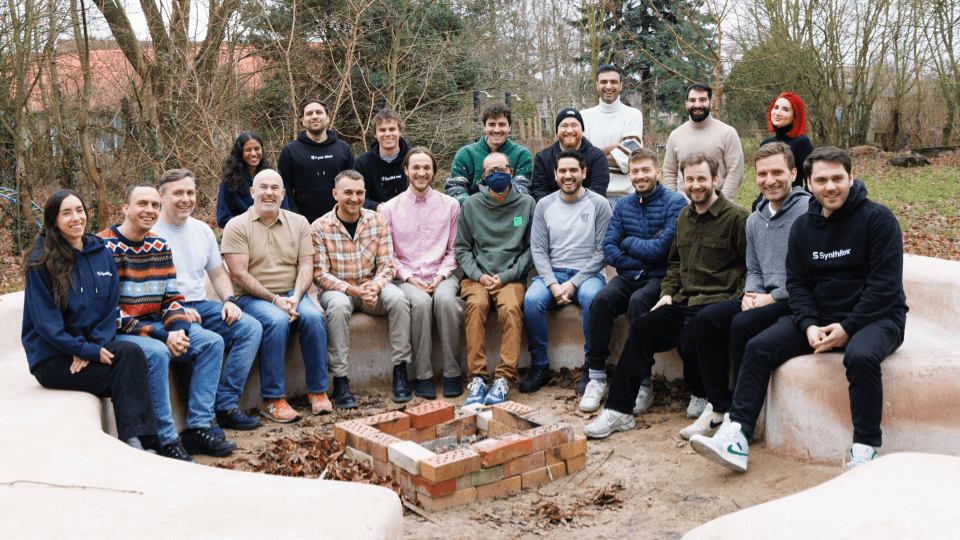
Berlin-based startup Synthflow AI, which provides AI voice agents for enterprise communication, announced a $20 million Series A funding round led by Accel, bringing its total funding to $30 million. The round will support scaling its platform that handles over 5 million calls per month for more than 100 enterprise customers.
💬 Top Enterprise Social Posts

Tweet by @Erickimberling
Is criticism of SAP biased? While SAP makes it easy to target due to industry-wide issues, the focus is on validated problems, not blind attacks. True leaders face scrutiny. #SAP #TechAnalysis #ERP https://t.co/Ll3zXT9Ryz