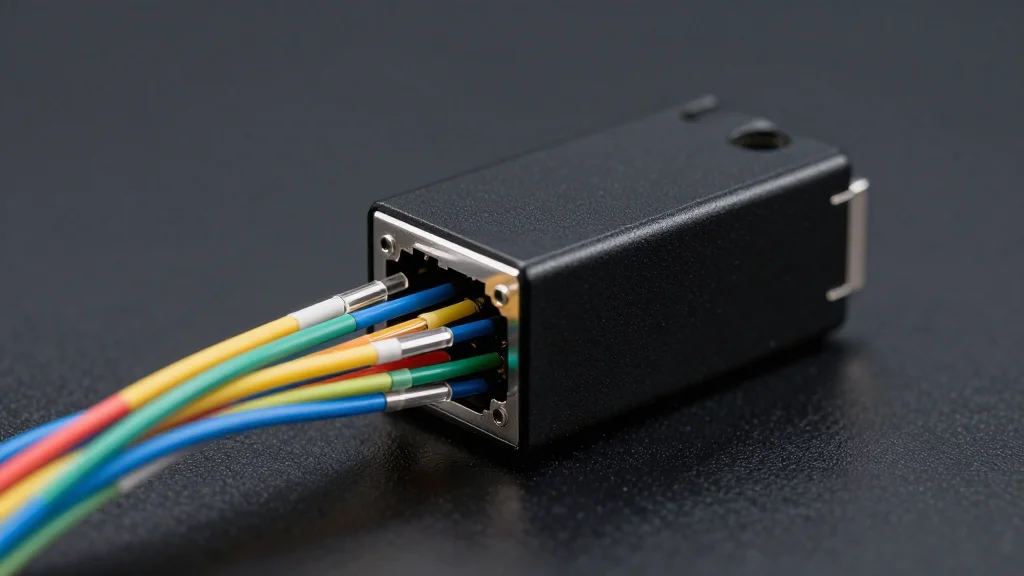
FICER Unveils 800G/400G DWDM and DCO Gear at COMPUTEX 2026 to Power Enterprise Data‑Center Backbones


Why It Matters
The rollout of 800G/400G DWDM and DCO solutions marks a pivotal upgrade path for enterprises that are hitting the limits of existing 100G‑class infrastructure. By enabling a tenfold increase in per‑fiber capacity, organizations can support the exponential data growth driven by generative AI, real‑time analytics, and immersive applications without the expense of laying new fiber. Moreover, the modular, single‑fiber BiDi approach reduces physical space requirements in dense metro ducts, a critical factor for cities where right‑of‑way constraints have stalled new deployments. For the broader telecom ecosystem, FICER’s emphasis on multi‑vendor compatibility could accelerate the adoption of open‑optics standards, fostering a more competitive market that drives down costs for enterprise buyers. As 6G research gains momentum, the convergence of XGS‑PON and 25G‑PON in the same product family positions operators to repurpose existing plant for next‑generation services, shortening the transition timeline and preserving capital.
Key Takeaways
- •FICER displayed 800G and 400G DWDM modules at COMPUTEX 2026 (June 2‑5)
- •F520 OTN DWDM system pairs with DCO series for low‑latency AI workloads
- •BiDi transceivers double fiber capacity by using a single strand
- •Pluggable EDFA/OTDR modules add intelligent, zero‑footprint network management
- •Early‑adopter trials of the 800G line planned for Q4 2026 with AI research centers
Pulse Analysis
FICER’s entry into the 800G DWDM arena reflects a broader industry shift from incremental upgrades to quantum leaps in optical capacity. Historically, the transition from 100G to 400G took several years, but the convergence of coherent detection, advanced modulation formats, and silicon‑photonic integration has compressed the timeline, allowing vendors like FICER to bring 800G products to market within a single product cycle. This acceleration is driven by the relentless demand from hyperscale cloud operators that need to move petabytes of AI training data across continents with sub‑millisecond latency.
From a competitive standpoint, FICER’s strategy hinges on three differentiators: ultra‑dense packaging, plug‑and‑play management modules, and a strong focus on multi‑vendor interoperability. While incumbents such as Ciena and Nokia command larger installed bases, they often bundle proprietary control planes that can lock customers into specific ecosystems. FICER’s claim of “high compatibility” could attract system integrators seeking to stitch together heterogeneous equipment, especially in regions where procurement policies favor open standards. If the company can deliver on its performance promises, it may carve out a niche in the fast‑growing Asian market, where metro fiber saturation is most acute.
Looking ahead, the real test will be the operational reliability of the 800G modules under real‑world traffic loads. Early field trials slated for late 2026 will provide the data points needed to assess signal integrity, power consumption, and maintenance overhead. Success could trigger a cascade of upgrades across enterprise backbones, prompting a wave of capital expenditures that will reshape the optical supply chain. Conversely, any performance shortfalls could reinforce the market’s reliance on established players, slowing the broader transition to 800G and beyond.
FICER Unveils 800G/400G DWDM and DCO Gear at COMPUTEX 2026 to Power Enterprise Data‑Center Backbones
Comments
Want to join the conversation?
Loading comments...