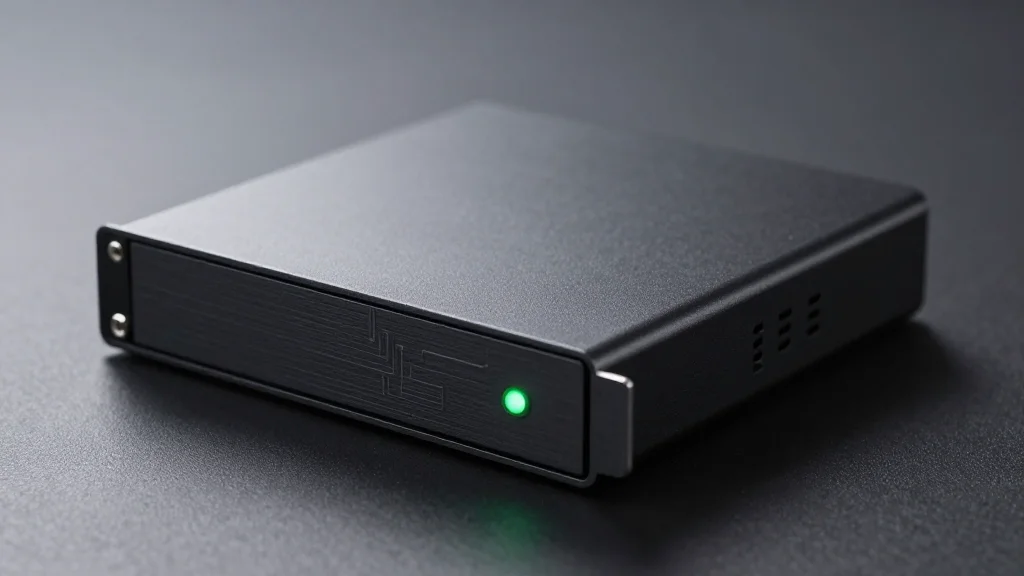
Hardware Security Modules Market Set for $3.5B by 2031 as Enterprises Boost Cybersecurity Spending

Why It Matters
The projected 10% CAGR underscores a fundamental shift: encryption is moving from an optional add‑on to a core infrastructure layer for virtually every enterprise. As data breaches become more costly and regulators tighten key‑management requirements, HSMs will be a decisive factor in an organization’s security posture. Beyond compliance, the rise of cloud‑native HSMs enables new business models—such as secure multi‑party computation and decentralized finance—that rely on provably tamper‑proof cryptographic operations. Enterprises that adopt flexible, scalable HSM solutions now will be better positioned to leverage these emerging technologies while maintaining control over their most sensitive assets.
Key Takeaways
- •Market valued at $1.98 B in 2025, projected $3.51 B by 2031
- •CAGR of 10.02% forecast for 2026‑2031
- •Enterprise cybersecurity spend identified as primary growth driver
- •Cloud‑native HSM‑as‑a‑Service expected to capture >30% of revenue by 2028
- •Payment HSM demand fueled by real‑time settlement systems in US and Europe
Pulse Analysis
The HSM market’s upward trajectory is a direct response to the convergence of three macro trends: escalating cyber threats, rapid cloud adoption, and tightening data‑sovereignty regulations. Historically, HSMs were confined to on‑premise data centers of large banks and government agencies. Today, the same hardware is being re‑engineered for multi‑tenant cloud environments, lowering the barrier to entry for mid‑size firms that previously could not justify the capital outlay.
From a competitive standpoint, the market is fragmenting. Traditional players such as Thales and Entrust are defending their legacy certifications, while cloud giants like Amazon Web Services and Microsoft Azure are bundling HSM capabilities into broader security suites. This creates a pricing pressure that could compress margins for pure‑play HSM vendors unless they differentiate through specialized workloads—e.g., post‑quantum cryptography acceleration or blockchain custody.
Looking ahead, the real test for enterprises will be integrating HSMs into zero‑trust architectures. As organizations adopt micro‑segmentation and identity‑centric security models, the ability to programmatically retrieve and rotate keys without human intervention will become a competitive advantage. Companies that invest early in API‑driven HSM platforms will likely reap operational efficiencies and stronger compliance postures, while laggards may face costly retrofits as regulatory audits tighten.
Hardware Security Modules Market Set for $3.5B by 2031 as Enterprises Boost Cybersecurity Spending
Comments
Want to join the conversation?
Loading comments...