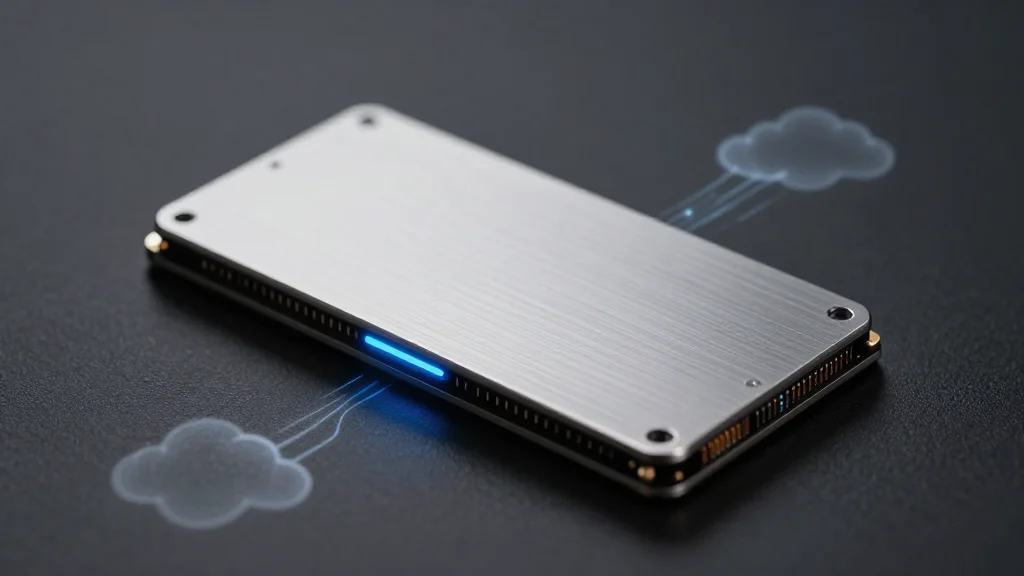
Micron Launches 245TB SSD, the Largest Enterprise Storage Drive Yet

Companies Mentioned
Why It Matters
The 245TB SSD raises the ceiling for on‑premise storage density, allowing hyperscale data centers to consolidate workloads and reduce both power and floor‑space costs. For enterprises running large AI models, the ability to store more data locally can lower latency and improve training throughput. At the same time, the drive underscores the widening gap between the needs of AI‑heavy organizations and the supply constraints of NAND manufacturers. If Micron can deliver the promised efficiency gains, it may set a new standard for enterprise flash, prompting competitors to accelerate their own high‑capacity offerings and potentially reshaping the economics of data‑center storage.
Key Takeaways
- •Micron's 6600 ION SSD offers 245TB of storage, the largest commercial SSD to date
- •Maximum power draw of 30 W, roughly half that of comparable high‑capacity HDDs
- •Sequential read/write speeds of 13,700 MB/s and 3,000 MB/s respectively
- •Design reduces rack footprint by 82% versus traditional HDD deployments
- •Launch comes amid a broader NAND shortage driven by AI‑intensive workloads
Pulse Analysis
Micron’s 245TB SSD is less a product launch than a strategic statement: the company is betting that the premium segment of AI‑driven enterprises will pay for density and efficiency over raw cost. Historically, flash adoption in hyperscale data centers has been driven by performance and power savings, but capacity has lagged behind HDDs. By breaking the 200TB barrier, Micron forces a re‑evaluation of tiered storage hierarchies, potentially pushing even archival workloads onto flash if the economics hold.
The timing is critical. AI model sizes have exploded, with GPT‑4‑class models requiring hundreds of terabytes of training data. Data‑center operators are scrambling to avoid the latency penalties of remote storage, and a single 245TB drive can dramatically reduce the number of I/O paths. However, the drive’s QLC NAND, while offering higher density, traditionally suffers from lower endurance. Micron’s claim of a “generation ahead” QLC will need validation under the relentless write cycles of AI training. If endurance holds, the drive could become a cornerstone of next‑gen AI infrastructure.
Competitors are unlikely to sit idle. Samsung and SK hynix have already signaled aggressive roadmaps for high‑density flash, and the current memory crunch may accelerate those plans. The market will watch Micron’s pricing and real‑world reliability data closely; a successful rollout could cement its position in the high‑end flash niche, while a misstep could reinforce the perception that ultra‑high‑capacity flash remains a niche, cost‑prohibitive solution.
Micron launches 245TB SSD, the largest enterprise storage drive yet
Comments
Want to join the conversation?
Loading comments...