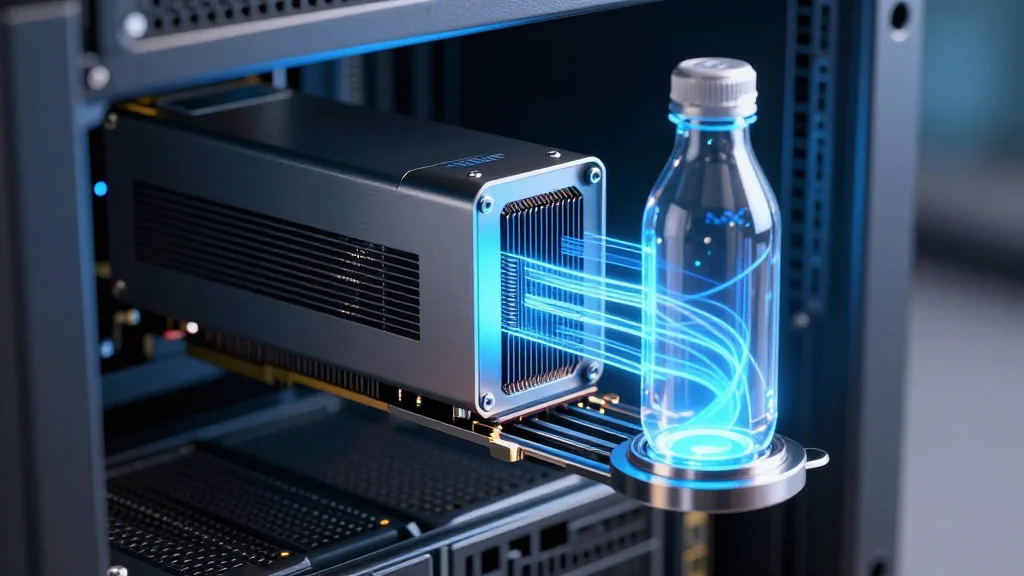
MinIO Launches MemKV, Promising 95% Higher GPU Utilization for Enterprise AI

Companies Mentioned
Why It Matters
MemKV tackles a hidden cost driver in AI inference—recompute tax—that has been largely invisible to enterprise decision‑makers focused on model accuracy. By turning context into a durable, shareable asset, MinIO offers a path to dramatically lower operational spend while boosting performance, a combination that could accelerate the adoption of large‑scale LLM services in regulated industries such as finance and healthcare. If the promised utilization gains materialize at scale, enterprises could defer or reduce new GPU purchases, freeing capital for other AI initiatives. Moreover, the shift toward “context‑as‑a‑service” may reshape software architecture patterns, prompting developers to redesign inference pipelines around persistent state rather than transient memory, a change that could ripple through the broader AI infrastructure ecosystem.
Key Takeaways
- •MinIO introduced MemKV, a petabyte‑scale flash memory store for AI context data.
- •Company claims >95% improvement in GPU utilization and ~50% lower cost per token.
- •MemKV uses 800 GbE RDMA to deliver microsecond‑level retrieval across GPU clusters.
- •CEO AB Periasamy calls recompute tax "structural drag" that hampers hyperscale AI.
- •Analyst Don Gentile highlights the shift toward token economics and cost efficiency.
Pulse Analysis
MinIO’s MemKV arrives at a moment when enterprises are wrestling with the economics of running ever‑larger language models. The traditional approach—keeping context in GPU memory—does not scale when models require gigabytes of state per request. By offloading that state to a high‑performance flash layer, MinIO essentially decouples memory capacity from GPU density, allowing operators to pack more GPUs per rack without hitting the recompute ceiling. This architectural shift mirrors the earlier move from local SSD caches to distributed object storage for training data, suggesting a maturation of the AI stack where storage becomes a first‑class citizen in inference.
From a competitive standpoint, MemKV pits MinIO against niche players like NVIDIA’s DGX‑OS and emerging memory‑fabric solutions from startups such as Fabric and ScaleFlux. However, MinIO’s advantage lies in its open‑source heritage and seamless integration with AIStor, giving customers a unified data‑fabric that spans object storage, bucket‑level policies, and now persistent context. If the performance claims hold up in third‑party testing, the product could force larger cloud providers to re‑evaluate their own inference‑optimisation layers, potentially leading to a wave of price competition that benefits end‑users.
Looking forward, the real test will be adoption at scale. Enterprises will need clear ROI models that translate the quoted 50% token‑cost reduction into dollar terms for their specific workloads. Moreover, as models evolve toward multimodal and retrieval‑augmented designs, the ability of MemKV to handle heterogeneous data types will be critical. Should MinIO deliver on its promise, we may see a new baseline for AI inference efficiency, prompting a re‑calibration of hardware procurement strategies and a deeper focus on software‑defined memory solutions across the enterprise AI market.
MinIO launches MemKV, promising 95% higher GPU utilization for enterprise AI
Comments
Want to join the conversation?
Loading comments...