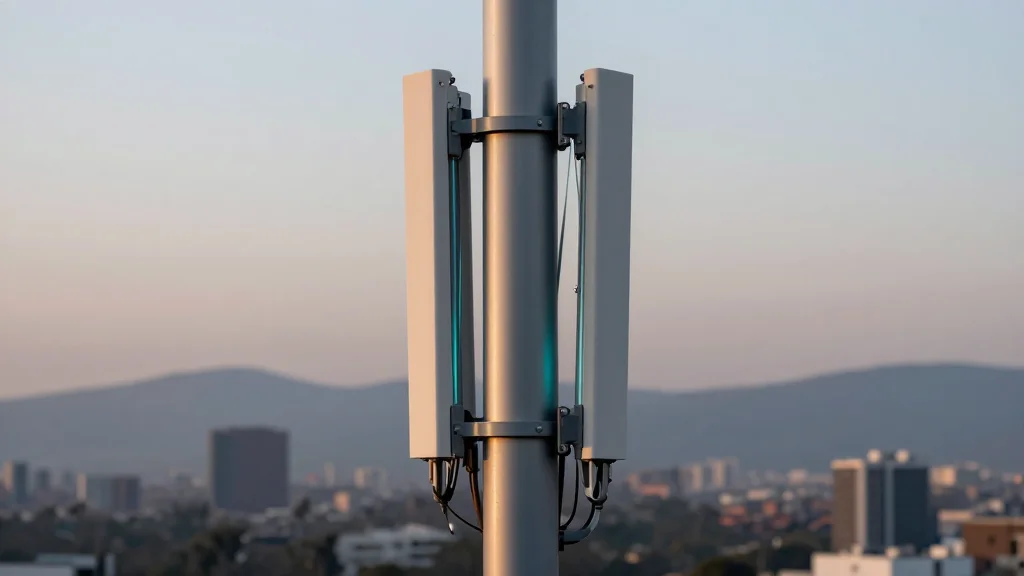
ZTE Showcases AI‑Network Two‑Way Integration at GSMA M360 LATAM, Highlights 20% Throughput Boost

Companies Mentioned
Why It Matters
ZTE’s AI‑network integration marks a shift from traditional telecom infrastructure to a platform that can directly support enterprise digital transformation. By delivering higher throughput, lower power consumption and automated network management, the solution reduces total cost of ownership for operators and opens new revenue streams from AI‑enabled services. For Latin American enterprises, the technology promises more reliable, low‑latency connectivity essential for Industry 4.0, smart logistics and real‑time analytics, accelerating the region’s transition to a digital economy. The deployment also underscores the growing convergence of AI and telecommunications, a trend that could reshape competitive dynamics. Vendors that can embed intelligence into the fabric of the network may capture a larger share of enterprise contracts, while operators that fail to adopt such capabilities risk losing high‑value customers to more agile, AI‑centric rivals.
Key Takeaways
- •ZTE showcased AI‑network two‑way integration at GSMA M360 LATAM 2026 in Mexico City.
- •New AI‑native 5G BBU delivers 20% higher cell throughput and cuts equipment power use by 38%.
- •Over 37,000 AI‑enabled units deployed across Chile, Ecuador, Bolivia, Brazil and Peru.
- •Partnerships with Millicom (Qcell indoor) and Claro (RuralPilot) address diverse coverage scenarios.
- •Solution earned TM Forum L4 certification, signaling enterprise‑grade automation and intelligence.
Pulse Analysis
ZTE’s announcement reflects a broader industry pivot toward AI‑infused network infrastructure, a move that could redefine the value proposition of telecom operators. Historically, carriers have sold bandwidth as a commodity; embedding AI transforms the network into a service platform capable of delivering differentiated, high‑value applications. This mirrors the evolution seen in cloud computing, where providers shifted from raw compute to managed services powered by AI. For Latin America, where many operators still operate legacy equipment, ZTE’s AI‑Native approach offers a shortcut to leapfrog into next‑generation services without massive capex.
Competitive pressure will intensify as rivals like Huawei, Nokia and Ericsson also roll out AI‑enabled hardware. ZTE’s advantage lies in its early focus on the Latin American market and its strategic partnerships that tailor solutions to local challenges—indoor gigabit coverage and rural connectivity. However, the success of the model depends on operators’ ability to monetize AI capabilities, whether through premium enterprise SLAs, edge‑compute offerings or new digital‑economy services. If ZTE can demonstrate clear ROI for operators and their enterprise customers, it could set a new benchmark for network‑as‑a‑service in emerging markets.
Looking forward, the next wave will likely involve tighter integration of AI at the edge, enabling ultra‑low‑latency use cases such as autonomous vehicles and real‑time industrial control. ZTE’s roadmap to deploy AI‑driven edge compute nodes suggests it aims to stay ahead of that curve. The key question for the market will be whether the promised efficiency gains translate into tangible cost savings and new revenue streams, or whether the technology remains a high‑cost differentiator that only a few operators can afford. The coming months will reveal if ZTE’s AI‑network vision can catalyze a broader shift toward AI‑centric telecom services across the enterprise sector.
ZTE Showcases AI‑Network Two‑Way Integration at GSMA M360 LATAM, Highlights 20% Throughput Boost
Comments
Want to join the conversation?
Loading comments...