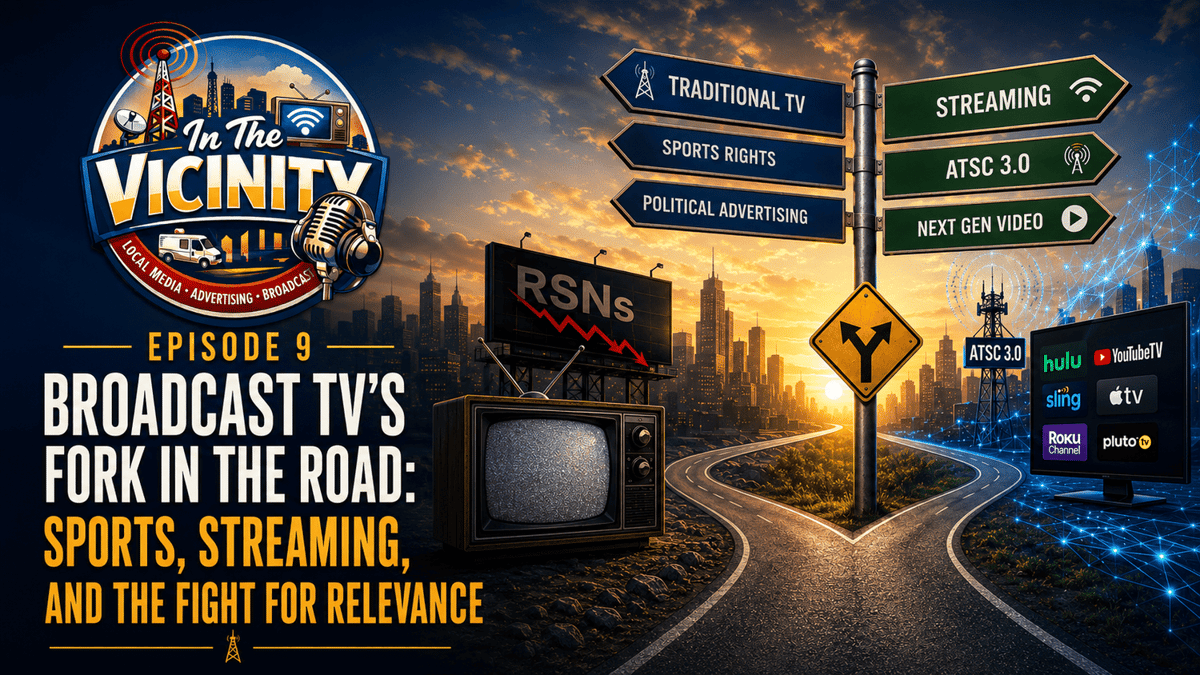
Broadcast TV’s Fork In The Road: Sports, Streaming And The Fight For Relevance
Key Takeaways
- •Scripps bets on local sports and streaming to replace RSN revenue.
- •Nexstar doubles down on retransmission fees and cash‑flow optimization.
- •Sinclair invests heavily in ATSC 3.0 to modernize broadcast signal.
- •Gray builds regional OTA networks, focusing on hyper‑local market dominance.
- •Political ad spikes create volatile revenue cycles for broadcasters.
Pulse Analysis
Broadcast television is at a crossroads as the industry grapples with declining linear viewership and the rise of streaming‑first consumption. Station groups are rebalancing their portfolios: Scripps has turned sports into a growth engine, securing NBA, NHL and women’s league rights and launching a free‑to‑air streaming feed to capture cord‑cutters. This pivot mirrors a broader trend where local broadcasters seek to monetize live sports—once the domain of regional sports networks—through over‑the‑air and digital channels, aiming to offset shrinking retransmission fees.
Meanwhile, legacy revenue from retransmission consent remains a lifeline for many groups, but its upside is waning as cable subscriptions plunge and streaming platforms negotiate lower carriage fees. Nexstar and Sinclair are maximizing this cash flow while pursuing scale through acquisitions and cost‑cutting. Gray, by contrast, doubles down on hyper‑local market dominance, stitching together regional OTA clusters that can sell targeted advertising to local businesses. The volatility of political advertising, which spikes every election cycle, adds another layer of uncertainty, prompting stations to diversify income streams beyond the biennial windfall.
The most forward‑looking bets involve technology upgrades. Sinclair’s heavy investment in ATSC 3.0 promises addressable, IP‑enhanced video that could bridge the gap between broadcast reach and streaming personalization, potentially unlocking new program‑matic ad models. If successful, this could redefine the broadcast value proposition, turning the traditional over‑the‑air signal into a hybrid platform capable of competing with pure‑play streamers. Investors and advertisers alike are watching to see which strategy—sports‑centric streaming, retransmission maximization, or tech‑driven innovation—will secure the next decade of profitability for local TV.
Broadcast TV’s Fork In The Road: Sports, Streaming And The Fight For Relevance
Comments
Want to join the conversation?