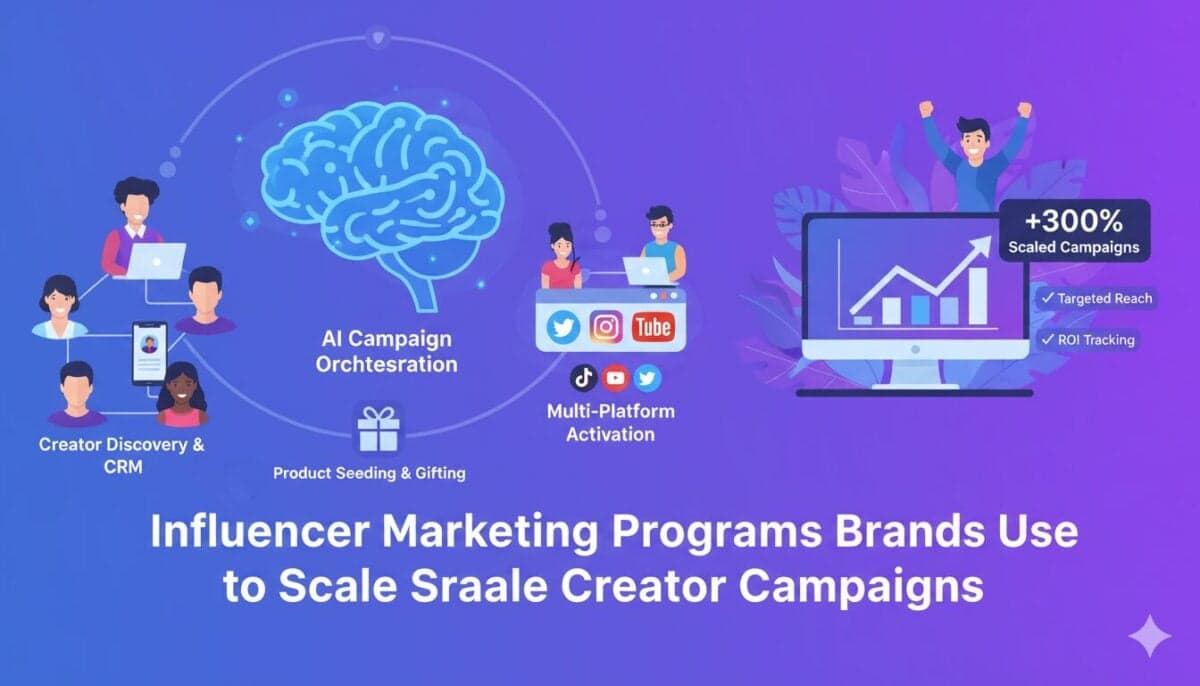
5 Influencer Marketing Programs Brands Use to Scale Creator Campaigns
Why It Matters
Scalable influencer programs turn ad‑hoc collaborations into predictable revenue and content engines, giving brands a sustainable competitive edge in a crowded digital landscape.
Key Takeaways
- •72% of marketers plan 50% budget increase
- •85% view influencer marketing as goal‑achieving channel
- •Programs replace one‑off deals with repeatable ecosystems
- •Top platforms: Linqia, Creator.co, Upfluence, Aspire, Impact.com
- •Program choice depends on objective, resources, scale, measurement
Pulse Analysis
The influencer marketing landscape has matured into a strategic pillar, driven by a surge in budget allocations and a clear consensus that the channel delivers measurable outcomes. Marketers are no longer satisfied with one‑off posts; they demand repeatable processes that generate a steady stream of creative assets, audience insights, and sales lift. Platforms now act as the backbone of these programs, automating creator discovery, contract management, content approvals, and performance analytics, which reduces manual overhead and accelerates time‑to‑value.
Program models vary widely. Affiliate‑driven solutions tie influencer activity directly to revenue through unique links and commission structures, making them ideal for e‑commerce and DTC brands. Ambassador and community programs focus on long‑term brand advocacy, fostering authentic storytelling and sustained audience trust. UGC‑centric programs prioritize high‑volume asset creation for paid media and product pages, while marketplace and on‑demand platforms enable rapid testing of new creators and formats. Managed programs combine technology with agency expertise, allowing brands with limited internal teams to execute at scale without building infrastructure from scratch.
Choosing the right influencer marketing program requires aligning the platform’s strengths with business objectives. Brands must assess whether their priority is direct sales, content generation, or brand building, then match that to a solution that offers the appropriate measurement granularity and workflow automation. As the industry continues to integrate influencer data with broader performance dashboards, programs that deliver real‑time attribution and ROI insights will become the standard. Companies that institutionalize influencer marketing as an always‑on channel are poised to capture higher conversion rates, richer creative libraries, and deeper consumer relationships, reinforcing their market position in an increasingly creator‑driven economy.
5 Influencer Marketing Programs Brands Use to Scale Creator Campaigns
Comments
Want to join the conversation?
Loading comments...