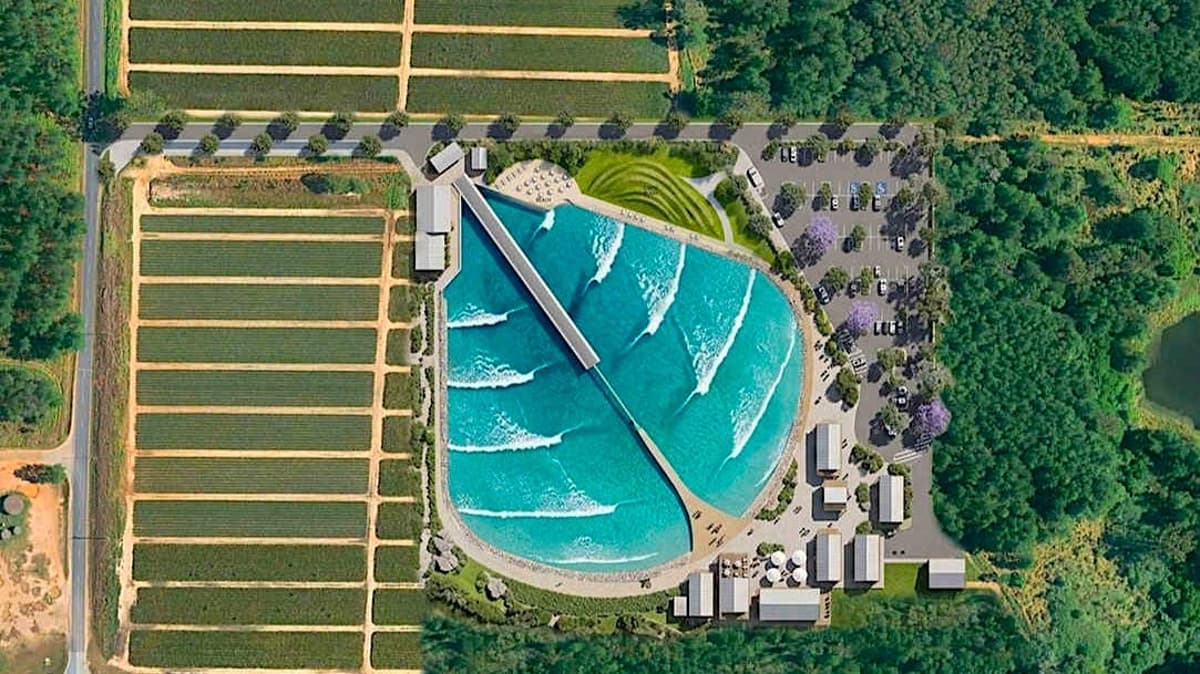
$60M Surf Farm Wave Pool Supercharges Australia's Sunshine Coast
Why It Matters
The $60 million investment positions the Sunshine Coast as a premier surf‑tourism destination, diversifying the regional economy and setting a new performance benchmark for wave‑park technology in the Asia‑Pacific.
Key Takeaways
- •Wavegarden's Surf Farm costs $60 million, slated for 2028 opening.
- •10‑hectare site makes it the largest east‑coast wave park.
- •62‑module Cove system offers programmable waves for all skill levels.
- •Backed by champion Joel Parkinson, boosting Sunshine Coast tourism.
- •Competing wave pool projects signal rapid growth in Australian surf industry.
Pulse Analysis
The wave‑pool sector is entering a phase of hyper‑investment, driven by advances in hydraulic and modular technology that can replicate ocean conditions on demand. Wavegarden’s Cove platform, now expanded to 62 modules, delivers a broader spectrum of wave shapes and frequencies than earlier models, appealing to both recreational riders and professional athletes preparing for events such as the Olympic surf competition. By integrating real‑time wave‑programming software, Surf Farm will set a new standard for consistency and scalability, attracting surf schools, event organizers, and equipment manufacturers alike.
Beyond the technical leap, Surf Farm is poised to become a catalyst for the Sunshine Coast’s tourism economy. The region, traditionally known for its beaches and hinterland attractions, will gain a year‑round draw that mitigates seasonal visitor fluctuations. Local hotels, restaurants, and ancillary services anticipate a surge in bookings, while construction and operational phases are expected to generate hundreds of jobs. The project also creates a competitive dynamic with Mick Fanning’s Gold Coast pool, prompting municipalities to vie for ancillary infrastructure and marketing support, ultimately raising the profile of Australian surf tourism on the global stage.
Strategically, the emergence of large‑scale surf parks aligns with broader trends in experiential leisure and sustainable recreation. Unlike natural surf breaks, wave pools offer controlled water usage, renewable‑energy integration, and reduced environmental impact on coastal ecosystems. Investors are responding to these advantages, channeling capital into venues that can host international championships, corporate events, and community programs. As the industry matures, we can expect further consolidation, technology licensing, and perhaps the standardization of wave‑park design—positioning Australia as a testing ground for the next generation of synthetic surf experiences.
$60M Surf Farm Wave Pool Supercharges Australia's Sunshine Coast
Comments
Want to join the conversation?
Loading comments...