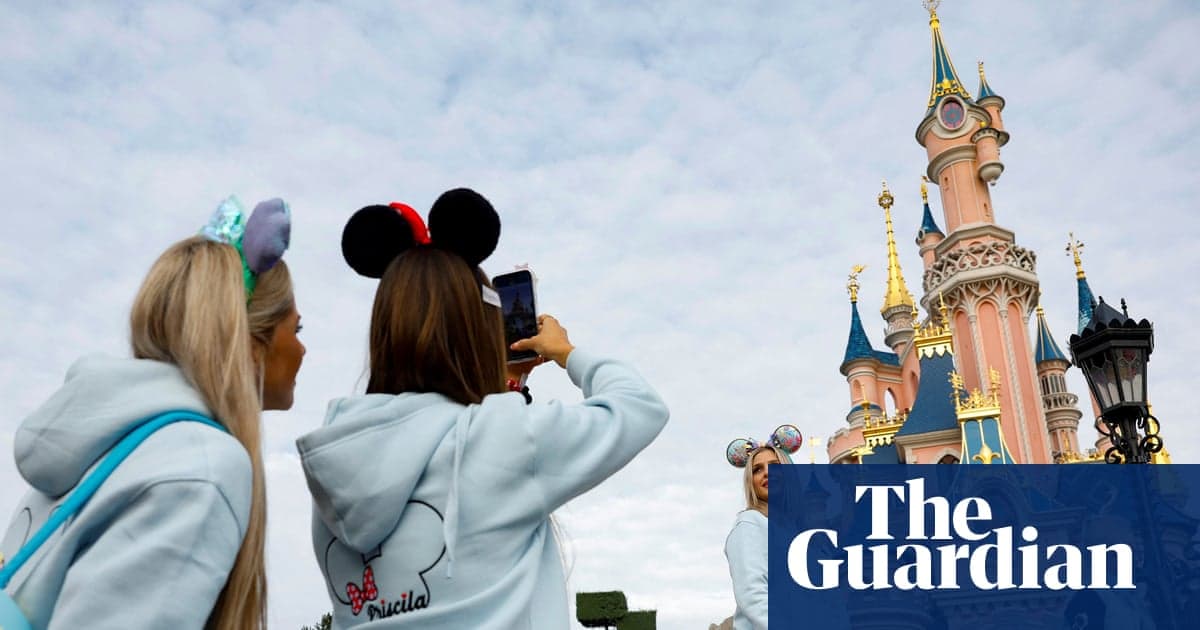
Disney Racks up $4.2bn Deficit on Paris Parks
Companies Mentioned
Why It Matters
The lingering deficit underscores the financial risk of large‑scale international park projects and highlights Disney’s reliance on ancillary revenue streams to justify the investment. It also signals how macro‑economic shocks can prolong payback horizons for capital‑intensive leisure assets.
Key Takeaways
- •Disneyland Paris generated $4 bn revenue, up 8.4% YoY
- •Park attracts 16 million visitors annually, driving Disney’s global theme‑park share
- •Cumulative Euro Disney losses total $3.7 bn since 1992
- •Disney’s $6.8 bn investment still unrecovered, deficit stands at $4.2 bn
- •Management fees and royalties provide $2.4 bn, covering <50% of costs
Pulse Analysis
Disney’s European outpost has become its most lucrative non‑U.S. park, delivering $4 bn in revenue and accounting for roughly 40% of the conglomerate’s theme‑park earnings. The surge stems from dynamic pricing, a refreshed brand experience, and a $2.5 bn Frozen‑themed expansion that attracted record crowds. Yet the financial picture remains clouded by a $4.2 bn deficit, a legacy of the original capital structure that left Disney with a minority stake and heavy reliance on bank loans. The park’s 16 million annual guests mask the fact that cumulative losses have reached $3.7 bn, illustrating the long‑term cost of the 1992 land acquisition and subsequent debt financing.
Strategically, Disney has leaned on ancillary revenue streams to offset the shortfall. Management fees, royalties, and a $2.4 bn payment for character licensing generate steady cash flow, but they cover less than half of the total outlay. Past actions—such as the 2017 buy‑out of public shareholders, the $1.7 bn deleveraging, and asset‑sale‑and‑lease‑back deals—have reduced debt but never eliminated the underlying loss carryforwards. The park’s profitability is further pressured by external variables: rising fuel costs, geopolitical tensions affecting travel, and the lingering impact of the pandemic on tourism demand.
Looking ahead, Disney must balance continued investment in attractions with disciplined cost management to finally turn the Paris venture profitable. The recent expansion signals confidence in demand, yet the company’s ability to fully recoup its $6.8 bn investment hinges on stabilizing visitor numbers and mitigating macro‑economic headwinds. For investors, the Paris park serves as a bellwether for how Disney’s international assets can generate strategic brand value even when direct financial returns lag, emphasizing the importance of diversified revenue streams in the broader entertainment portfolio.
Disney racks up $4.2bn deficit on Paris parks
Comments
Want to join the conversation?
Loading comments...