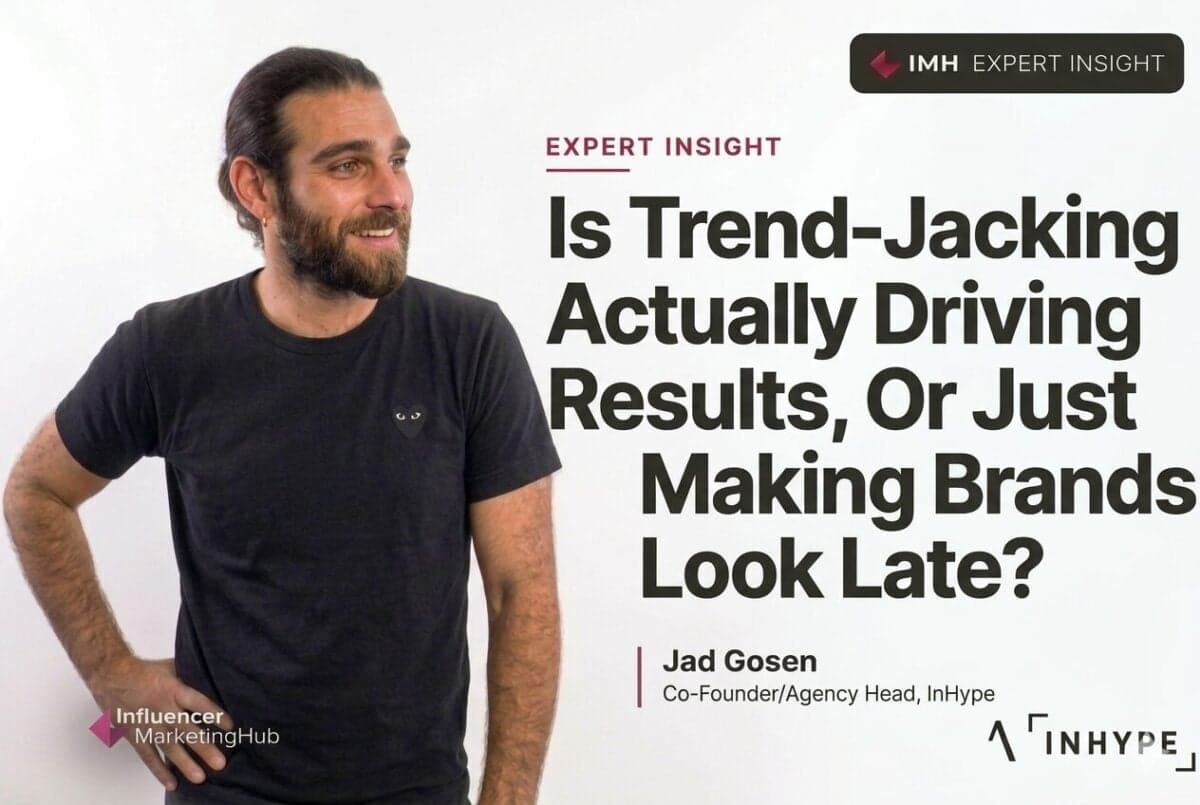
Is Trend-Jacking Actually Driving Results, Or Just Making Brands Look Late?
Why It Matters
Trendjacking can either accelerate brand relevance on fast‑moving platforms or expose a brand as lagging, directly impacting audience perception and sales performance. Understanding the balance is critical for marketers allocating budget to short‑form video strategies.
Key Takeaways
- •Successful trendjacking requires sub‑hour reaction times.
- •Brands that partner with creators see 2‑3x higher engagement.
- •Late adoption can damage brand credibility and audience trust.
- •Authentic alignment with a trend boosts click‑through rates by 45%.
- •Measuring ROI demands tracking both short‑term spikes and long‑term sentiment.
Pulse Analysis
Trendjacking on TikTok has become a litmus test for brands seeking cultural relevance in a fragmented media landscape. Real‑time listening platforms now enable marketers to spot emerging sounds, challenges, or memes within minutes, allowing them to craft bespoke content that feels native rather than forced. When brands collaborate with creators who already own the conversation, the resulting posts inherit the creator’s authenticity, often delivering 2‑3 times the engagement of brand‑only videos. This creator‑first approach also mitigates the risk of appearing opportunistic, a common pitfall for late‑joining brands.
The financial upside of well‑executed trendjacking is measurable. Campaigns that align with a viral trend can see click‑through rates jump 40‑50 percent and generate a short‑term sales lift of up to 20 percent, according to recent industry benchmarks. However, these spikes are fleeting unless the brand integrates the trend into a broader narrative that resonates with its core audience. Marketers are therefore urged to set clear KPIs—such as engagement velocity, sentiment lift, and incremental revenue—to assess whether the buzz translates into lasting value.
Conversely, brands that scramble to join a trend after the peak risk alienating consumers. Late or poorly contextualized attempts can be perceived as inauthentic, eroding trust and prompting negative sentiment. To avoid this, companies should invest in agile creative teams and maintain ongoing partnerships with micro‑influencers who can provide early access to emerging cultural moments. By treating trendjacking as a strategic, data‑driven component of the overall TikTok playbook, brands can harness the platform’s viral engine while safeguarding their reputation.
Is Trend-Jacking Actually Driving Results, Or Just Making Brands Look Late?
Comments
Want to join the conversation?
Loading comments...