Omnicom Launches Frequency Probe, Finds 'Negative Reach'
Why It Matters
Marketers risk eroding brand equity and wasting spend if they rely on outdated frequency caps; the findings force a shift toward data‑driven, platform‑specific pacing to protect ROI.
Key Takeaways
- •Negative reach appears after just two ad exposures for some viewers
- •Nearly 60‑plus percent experience negative reach at four‑plus exposures
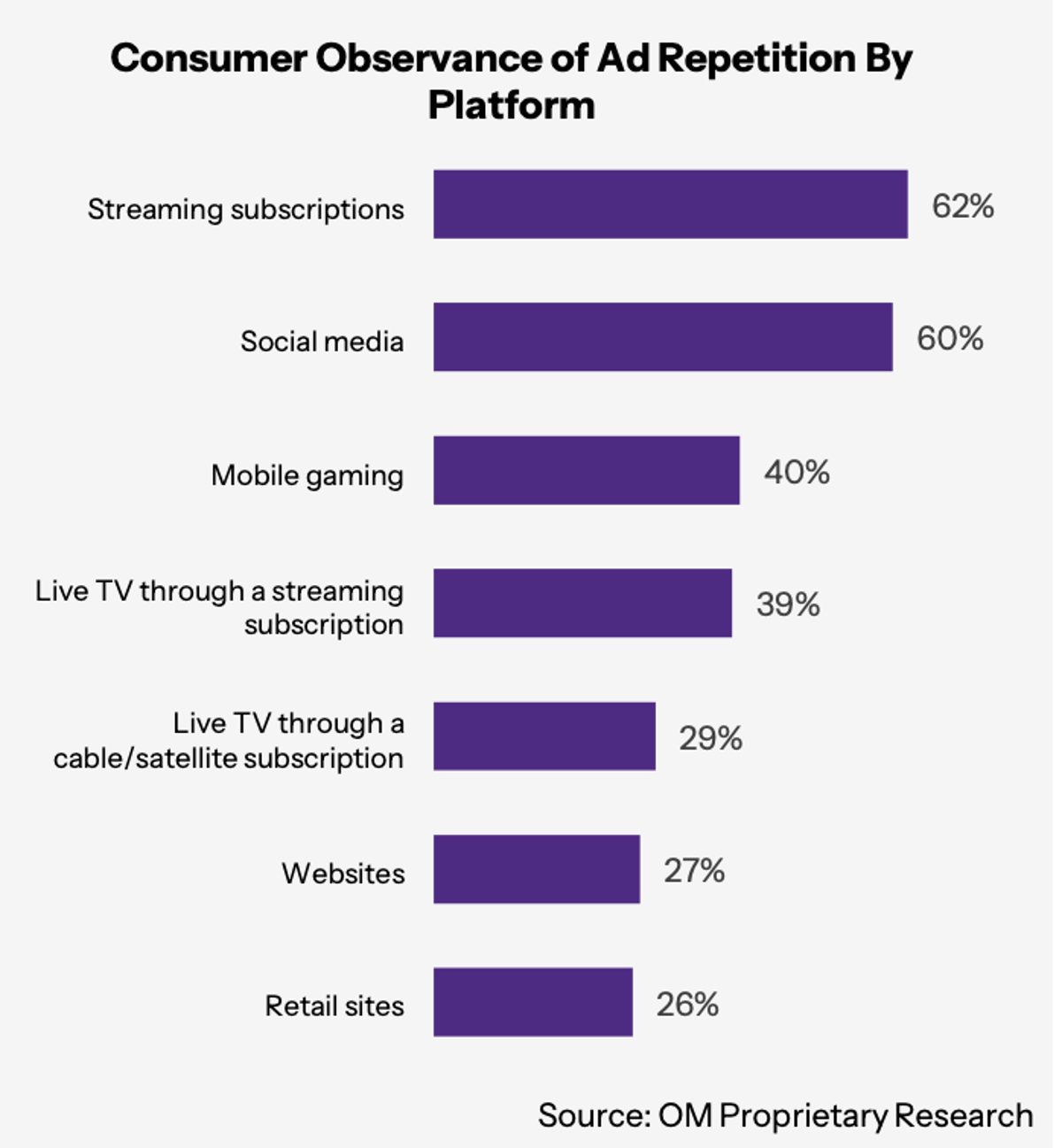
- •Streaming and social platforms generate the highest consumer frustration with repetition
- •Linear TV, websites, and retail sites maintain more positive reach perceptions
- •Omnicom urges data‑driven, platform‑specific frequency strategies over generic rules
Pulse Analysis
Historically, media planners have leaned on a simple rule of thumb—three to five impressions—to achieve brand recall. That heuristic emerged when audiences were concentrated on a handful of linear channels and measurement was limited to reach and frequency metrics. Today’s fragmented media landscape, driven by over‑the‑top (OTT) services, social feeds, and programmatic buying, demands a more nuanced approach. Advertisers now grapple with multiple touchpoints, shorter attention spans, and sophisticated attribution tools that can detect diminishing returns far earlier than traditional models.
Omnicom’s new "Why Frequency Matters" report injects empirical rigor into this debate. By blending a proprietary consumer survey conducted in August 2025 with VideoAmp’s Automatic Content Recognition (ACR) data and bid‑stream signals from The Trade Desk, the study quantifies "negative reach"—a state where repeated exposure breeds brand aversion. The data reveal that two exposures already trigger negative sentiment for a segment of viewers, and the phenomenon escalates dramatically, affecting roughly 60‑plus percent of the audience at four or more impressions. Platform variance is stark: streaming subscriptions and social media generate the highest frustration, while linear TV, website placements, and retail sites preserve more favorable perceptions.
For marketers, the implication is clear: frequency caps must be dynamic, not static. Brands should employ real‑time frequency capping, rotate creative assets, and tailor pacing to each platform’s tolerance threshold. Cross‑channel measurement suites can flag early signs of fatigue, allowing media buyers to reallocate spend before negative reach erodes ROI. As the industry moves toward AI‑driven optimization, integrating these insights will be essential to safeguard brand equity while maximizing the efficiency of ad dollars.
Omnicom Launches Frequency Probe, Finds 'Negative Reach'
Comments
Want to join the conversation?
Loading comments...